
Review · KYOTO
Kyoto: Meet the Geisha Maiko with Gion Walking Tour
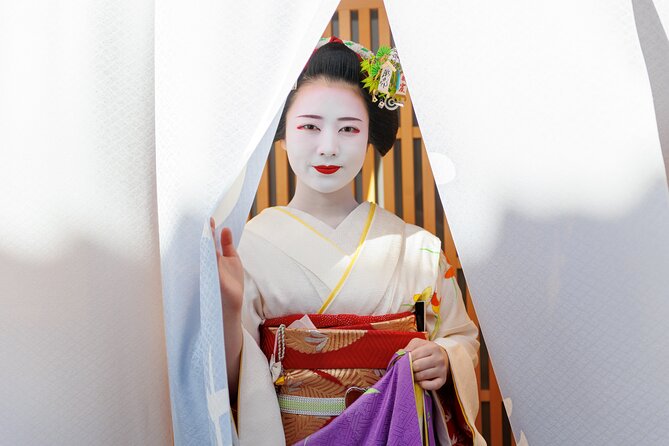
Kyoto’s most unusual cultural encounter happens upstairs in a private ochaya, or traditional tea house, where you meet a maiko and a former geiko face to face. I like that the visit is not just a staged dance: you also get time for questions, personal stories, and photographs. I also like the 70 to 80 minute walk through Gion, which gives you a better sense of the streets where this tradition still operates.
The main drawback is that the dance itself may be brief, sometimes under five minutes, with most of the 90-minute visit given to conversation and Q&A. The schedule can also run longer than expected, so do not book this close to a train departure.
Key points to know before booking
- Private ochaya access: Enter a venue that is normally closed to casual drop-in visitors.
- Two sides of the tradition: Meet a working maiko and a former geiko who can discuss training, work, and daily life.
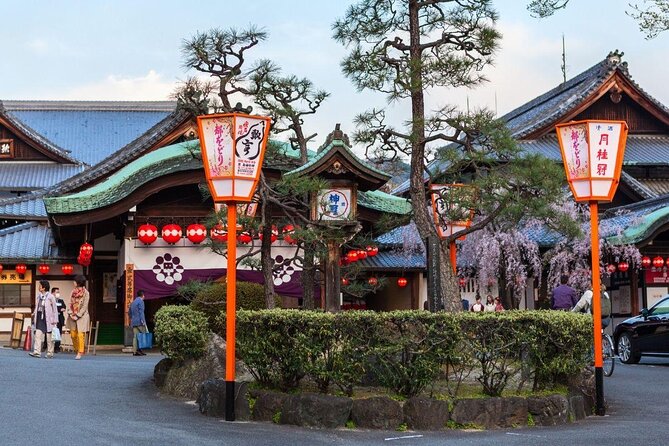
- Gion with context: Walk beside the Shirakawa Canal, see Tatsumi-jinja, pass Hanamikoji Street, and visit the Miyagawasuji area.
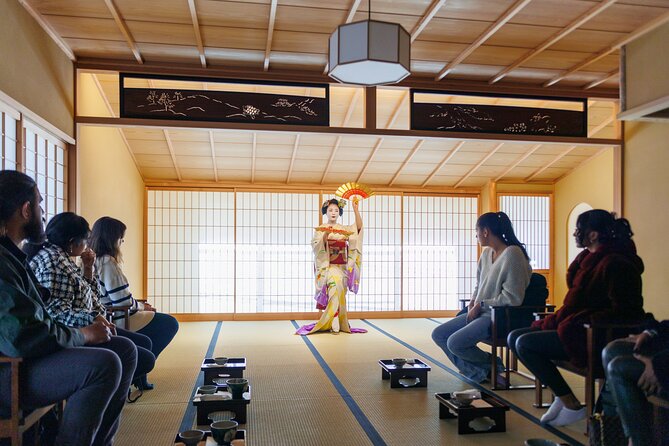
- Performance plus conversation: Expect one or two dances, then a translated Q&A and photo session.
- A practical dress rule: You must wear socks inside the performance venue, and the second floor is reached by stairs.
- Good value for culture-focused visitors: At $106, the cost covers a guided walk, a private cultural encounter, and about 90 minutes at the venue.
What this Kyoto maiko experience really offers
Kyoto’s geiko culture is easy to misunderstand. Costumed performers in tourist areas can make the tradition look like a photo prop, while access to a traditional ochaya is usually limited. This tour gives you a more personal look at the people and training behind the makeup, kimono, music, and dance.
You begin with a local guide in Gion, then finish in Miyagawasuji at a private residence and performance venue. The meeting with the maiko and former geiko is the heart of the day, but the walk matters because it explains the setting before you enter it.
The activity is offered in English, and the guide translates during the conversation. Past guides have included Mika, Naomi, Takuma, Tom, Yuko, Eric, Chiko, Ayako, and Ellie. The individual guide changes, but the strongest departures share the same qualities: clear English, patience, and an ability to explain customs without turning the area into a stage set.
The tour costs $106 per person and takes roughly three to five hours. That is a fair price if you want direct cultural access rather than a quick performance viewed from a distance. It is less compelling if you only want to watch a long dance show, since the performance may last just a few minutes.
More walking tours around Kyoto:
- Kyoto Geisha Walking Tour: Gion District & Hidden Gems
★ 4.7 · 3,273 reviews - Kyoto: Gion Magical Night Walking Tour with Geisha Trivia
★ 4.9 · 2,393 reviews - Kyoto: Gion Geisha District Walking Tour – Stories of Geisha
★ 4.7 · 2,187 reviews
Starting at the Izumo-no-Okuni statue or kimono shop
There are two possible starting arrangements. One begins at the statue of Izumo no Okuni, near the Gion-Shijo area. The other involves the Wargo Kyoto Kimono Rental Gion-Shijo store.
If you choose the kimono option, you change first and then walk to the statue on your own. The walk takes about three minutes, and the guide waits there. This detail is easy to miss, so allow time for changing and do not expect the guide to escort you from the rental counter.
A kimono adds a visual touch to the walk and makes the later photo session more memorable. It also changes how you move through Gion. You will want comfortable socks and sensible pacing, especially in warm weather. One visitor found a hot day uncomfortable during the walk, so summer participants should plan for heat.
The tour takes place in rain or shine. On wet days, bring an umbrella and arrive with dry socks and dry clothing. The venue does not allow wet clothes or socks inside.
Shirakawa Canal: a graceful first look at Gion
The walk typically begins along the Shirakawa Canal, one of Gion’s prettiest stretches. The water, narrow lanes, traditional facades, and quiet atmosphere make this a useful introduction to the district.
Your guide explains how the area functions and points out places connected with geiko and maiko culture. This is not simply a stroll for photographs. You begin to see that Gion is a working neighborhood with strict customs, private entrances, restaurants, residences, and small venues that are not designed for public wandering.
The canal section lasts about 30 minutes. That is long enough to set the scene without exhausting you before the private visit. It is also one of the best parts for photographs, though you should follow the guide’s instructions and avoid treating residents or performers as public displays.
Tatsumi-jinja and Hanamikoji Street
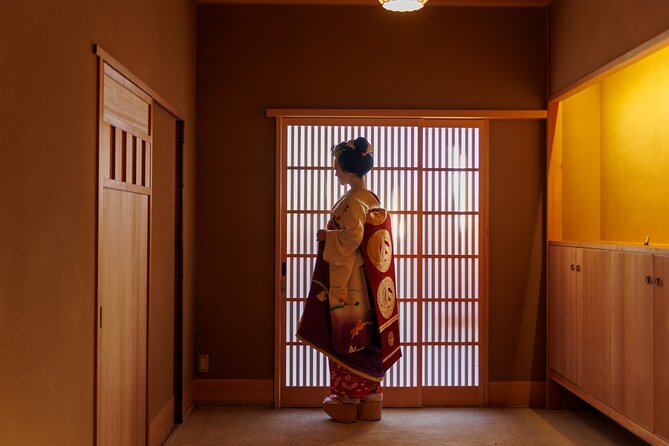
The short stop at Tatsumi-jinja Shrine adds a religious setting to the tour. You spend about five minutes here, so think of it as a brief orientation point rather than a full temple visit.
Hanamikoji Street follows, with about 10 minutes of guided explanation. Its traditional buildings and narrow lanes help you understand why Gion has such a strong visual identity. Your guide may explain how the district relates to the arts, entertainment, and tea houses.
Do not expect a long indoor visit at a major temple during this part of the tour. The stops are designed to support the Gion walk, not replace a dedicated temple tour. If you want detailed time inside religious sites, plan a separate visit.
Same streets, a different story:
- Best of Kyoto: Gion, Geisha, Pagodas & Cobblestones
★ 4.9 · 2,058 reviews - Night Walk in Gion: Kyoto’s Geisha District
★ 4.5 · 2,003 reviews - Kyoto Gion Geisha District Walking Tour – The Stories of Geisha
★ 5.0 · 1,441 reviews - Nishiki Market Brunch Walking Tour (7 Tastings + Brunch)
★ 5.0 · 1,355 reviews
Gion Corner and the route toward Miyagawasuji
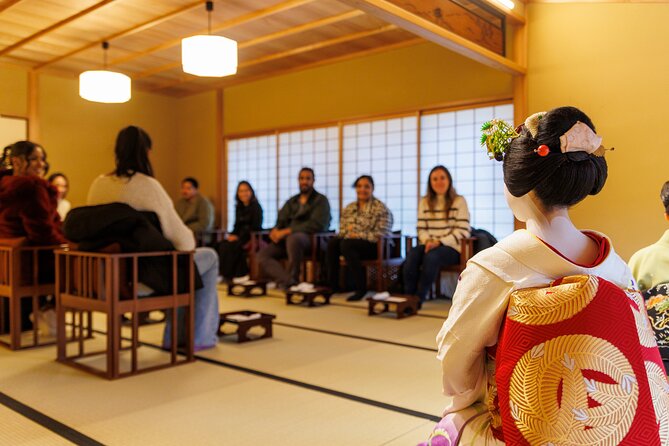
Gion Corner appears as another point of interest along the route. The supplied schedule does not assign a fixed duration here, so the pace can vary by group and guide.
The walk then continues toward Kenninji Temple. You get a photo stop and about 15 minutes of sightseeing and explanation. This is useful for seeing one of Kyoto’s major traditional settings, but the stop is not a full temple tour. If you arrive expecting an extended interior visit, you may find this portion brief.
From there, the route heads toward Miyagawasuji, a flower district associated with Kyoto’s geiko and maiko culture. This area gives the tour a different feel from the more familiar Gion streets. It also brings you closer to the venue where the main meeting takes place.
The total walking portion is advertised at about 70 to 80 minutes. Wear shoes that can handle ordinary city walking and expect some pauses for explanations and photographs.
Entering the private ochaya in Miyagawasuji
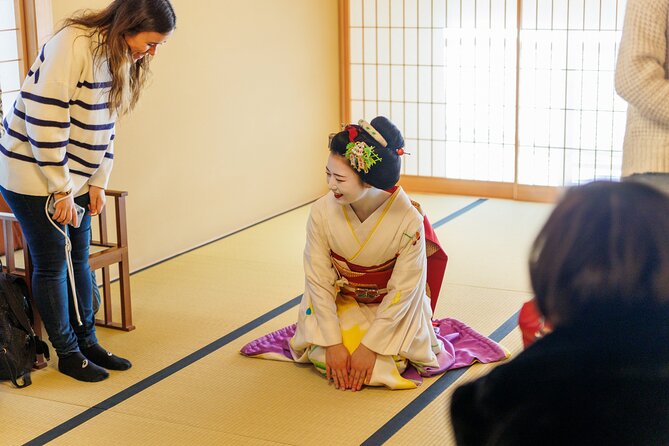
The final section takes place in Miyagawasuji and lasts about 90 minutes. You enter a private residence and venue called an ochaya, then meet a maiko and a former geiko.
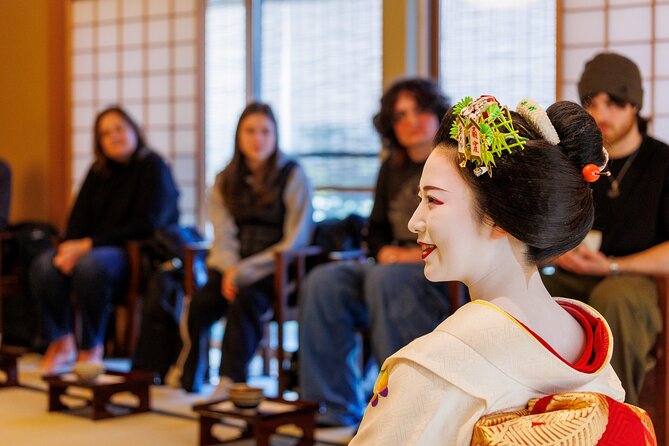
This setting is what separates the tour from a standard stage performance. You are not only watching a costumed artist from a theater seat. You are sitting in a smaller group, hearing explanations, and taking part in a question period.
The former geiko and venue owner help explain the customs and working world behind the performance. Depending on the departure, your guide translates questions and answers into English. This translation matters because it allows the conversation to move beyond memorized facts. You can ask about training, life as a maiko, the path toward becoming a geiko, and the traditions connected with the district.
Past sessions have included warm, detailed conversations and plenty of laughter. The tone is formal enough to respect the setting, but not so stiff that you cannot ask honest questions.
The maiko performance: beautiful but short
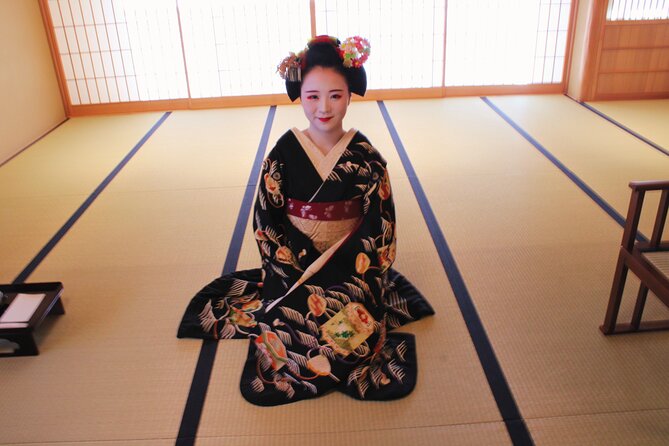
The live performance usually includes one or two dances. The maiko enters in full dress, with an elaborate hairstyle, makeup, and colorful kimono. The effect is striking, especially if this is your first close look at a traditional performance.
The dance may be shorter than you expect. One departure included less than five minutes of performance, followed by a much longer question period. That is not a flaw if you are booking this as a cultural exchange, but it matters if you are expecting a concert-length show.
The short performance also helps you notice details. Watch the controlled hand movements, posture, fan work, and slow changes in expression. The music and choreography are presented in an intimate room, where you can pay attention to the precision rather than simply taking a few quick photographs.
Photography and video are allowed only during the performance and the official photo session. If you want to post a photograph of the maiko online, ask her directly for permission first. Video cannot be uploaded online. These rules are part of treating the encounter with proper respect.
The Q&A and photo session
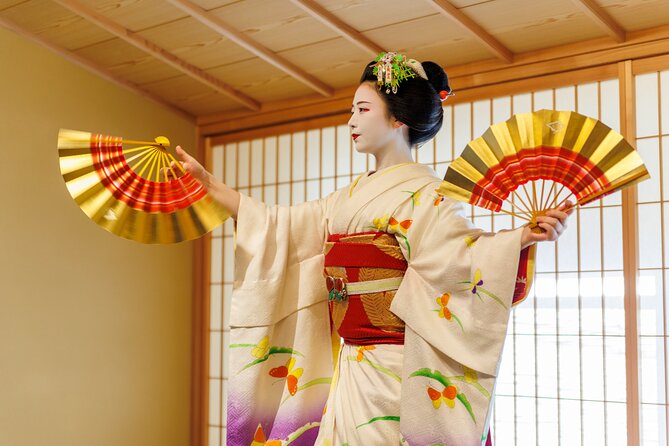
For many people, the conversation is the most valuable part. The maiko and former geiko can speak about their lives and customs in a way a museum display cannot.
Your guide handles translation, so ask questions clearly and allow a little time for the answer to be translated. The Q&A is not an extra tacked onto the end. It is a major part of the scheduled visit and may take more time than the dance.
The photo session follows the performance and conversation. You can take a photograph with the maiko, subject to the venue’s instructions. If you are wearing a rented kimono, this is a particularly good time to take portraits, though you should not assume that every pose or online use is permitted.
The group size can be small, and one reported departure had seven people. Group size may vary, but the small-group format helps everyone hear the conversation and get a reasonable chance to ask questions.
How the $106 price compares with the experience
At $106, this is not a cheap walking tour. You are paying for much more than a guide pointing out old buildings.
The price includes the Gion walk, an English-speaking local guide, the private venue visit, one or two dances, conversation with a maiko and venue owner, a Q&A, and a photo session. Access to an ochaya is the key value. A regular visitor usually cannot simply walk in and arrange this kind of meeting.
I would consider the price fair for someone who has already seen Kyoto’s temples and wants a more personal cultural activity. The value is strongest if you care about understanding the people and traditions, not only collecting photographs.
The value is weaker if you have limited time and want a fast attraction. The activity can last longer than the stated minimum, and the walking route may repeat some information you have already heard on another Gion tour.
Who should book this experience
I would choose this tour if you are interested in traditional Japanese arts, local customs, or the modern life of Kyoto’s geiko districts. It suits adults and older children, although children under 10 cannot join.
It also works well for visitors who want an English-language explanation rather than a performance with no context. Guides such as Tom, Mika, Naomi, and Takuma have been singled out for clear explanations, friendly manner, and strong local knowledge, though your guide will depend on the date.
This is not suitable for wheelchair users or people with mobility impairments. The performance room is on the second floor and can only be reached by stairs. You must wear socks, and wet socks are not accepted on rainy days.
If you have a bullet train or flight soon after the tour, leave a wide margin. The activity may run longer than planned, and one participant found the uncertain ending stressful before a train departure.
Practical advice for a better visit
- Wear clean, comfortable socks because you must wear them at the venue.
- Bring an umbrella in wet weather, but keep your clothing and socks dry before entering.
- Leave several hours free after the scheduled start, since the tour can run long.
- Ask your questions during the Q&A rather than trying to interrupt the dance.
- Ask permission before posting photographs of the maiko online.
- Do not upload video from the experience.
- If you choose the kimono option, go from the rental shop to the Izumo-no-Okuni statue yourself after changing.
- Expect stairs to the performance room.
- Use the walk to ask about the district, then save more personal questions for the maiko and former geiko.
Cancellation is flexible: you can cancel up to 24 hours in advance for a full refund, and reserve now while paying later. The tour runs in all weather, and organizer-caused cancellations are refundable, but incidental hotel or bullet train costs are not covered.
Should you book the Kyoto maiko and Gion tour?
Book it if you want a rare, respectful introduction to Kyoto’s geiko world, with real conversation rather than a quick staged appearance. The private ochaya setting, former geiko, personal Q&A, and photo session give the $106 price solid value.
Skip it if you want a long dance performance, a full temple tour, or a tightly timed activity before catching a train. Go with realistic expectations: the walk sets the scene, the performance is brief, and the conversation is the main event. For the right visitor, that balance makes this one of Kyoto’s more memorable cultural experiences.
FAQ
How long does the Kyoto maiko experience last?
The full activity lasts about three to five hours. The Gion walk takes about 70 to 80 minutes, and the meeting at the venue takes about 90 minutes.
How much does the tour cost?
The listed price is $106 per person.
Is the tour conducted in English?
Yes. The activity includes a live English-speaking guide, and the guide translates during the conversation at the venue.
Where does the tour begin?
There are two possible starting options: the Izumo-no-Okuni statue or the Wargo Kyoto Kimono Rental Gion-Shijo store. The exact meeting point depends on the option booked.
What happens if I choose the kimono rental option?
After changing into a kimono, you walk to the Izumo-no-Okuni statue by yourself. The walk takes about three minutes, and the guide waits there.
Can I take photographs and videos?
Photography and video are allowed during the performance and photo session only. You must ask the maiko directly before uploading photographs online, and videos cannot be uploaded online.
Do I need to bring anything special?
You must bring or wear socks. The venue does not allow wet clothing or wet socks on rainy days.
Is the performance room accessible without stairs?
No. The performance takes place on the second floor of a private house, and access is by stairs only.
Can children join the tour?
Children under 10 are not permitted to join.
Can I cancel for a refund?
Yes. You can cancel up to 24 hours before the activity for a full refund. Reserve now and pay later is also available.
New walking tours around Kyoto
- Kyoto: Private Walking Tour with a Local★ 4.6 · 118 reviews
- Kyoto: Private 2.5 Hour Historical Walking Tour★ 4.9 · 121 reviews
- Kyoto: Imperial Palace & Nijo Castle Guided Walking Tour★ 4.7 · 453 reviews
- Kyoto: Izakaya Bars Guided Walking Tour★ 4.9 · 815 reviews
- Kyoto: Gion Sunset Walking Tour with Local Guide★ 4.7 · 351 reviews
- Kyoto: Gion Walking Tour★ 5.0 · 195 reviews
- Kyoto: Geisha Dinner & Gion Cultural Walk★ 5.0 · 73 reviews
- Kyoto: Gion Hidden Gems & Geisha Culture Tour★ 4.9 · 126 reviews
Kyoto Walking Tours, side by side.
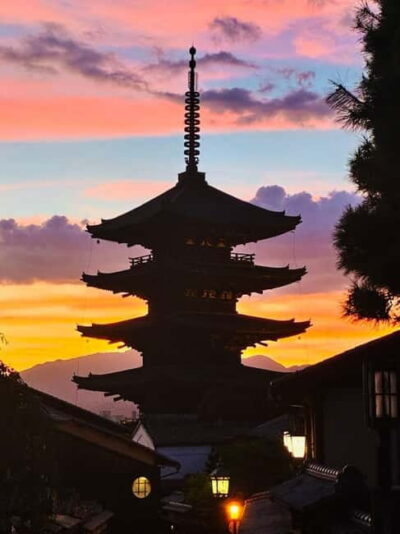
Kyoto Geisha Walking Tour: Gion District & Hidden Gems
Read our review →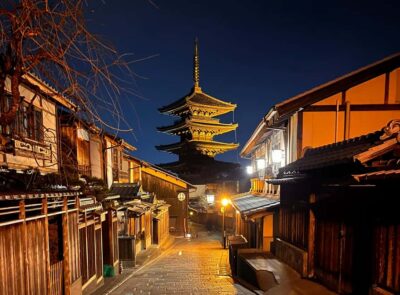
Kyoto: Gion Magical Night Walking Tour with Geisha Trivia
Read our review →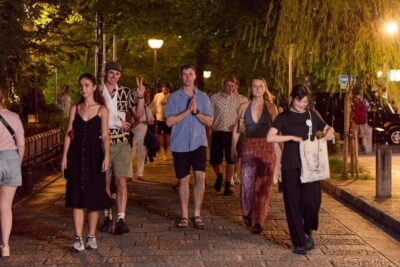
Kyoto: Gion Geisha District Walking Tour – Stories of Geisha
Read our review →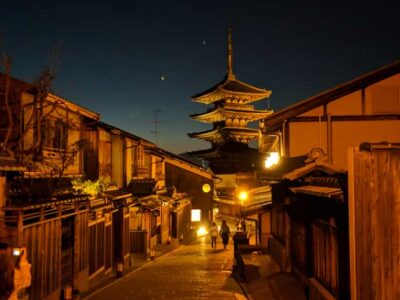
Best of Kyoto: Gion, Geisha, Pagodas & Cobblestones
Read our review →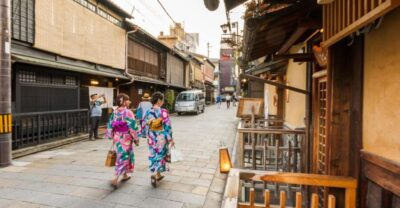
Nishiki Market Brunch Walking Tour (7 Tastings + Brunch)
Read our review →
Kyoto Gion: 2-Hour Geisha Culture & History Walking Tour
Read our review →
Lists this walk sits on