
Review · KYOTO
Kyoto: Gion Hidden Gems & Geisha Culture Tour
Gion is at its most atmospheric when the day visitors begin to thin out. This two-hour walk takes you from the willow-lined Shirakawa Canal to Hanamikoji Street, with old wooden houses, small shrines, stone lanes, and a chance to see a geisha or maiko heading to an evening appointment. The geisha sighting is never guaranteed, but the district itself gives you plenty to see.
I like the route for two reasons: it reaches places you might miss on your own, and the guides explain the customs behind the scenery rather than simply pointing at pretty buildings. Guides such as Uta, Dan, Takumi, Mai, Wajid, and Alex have been praised for clear storytelling and useful restaurant suggestions. The main drawback is the pace. You cover a lot in two hours, and this is not a good choice if you need a slow, step-free walk.
Key points to know before booking
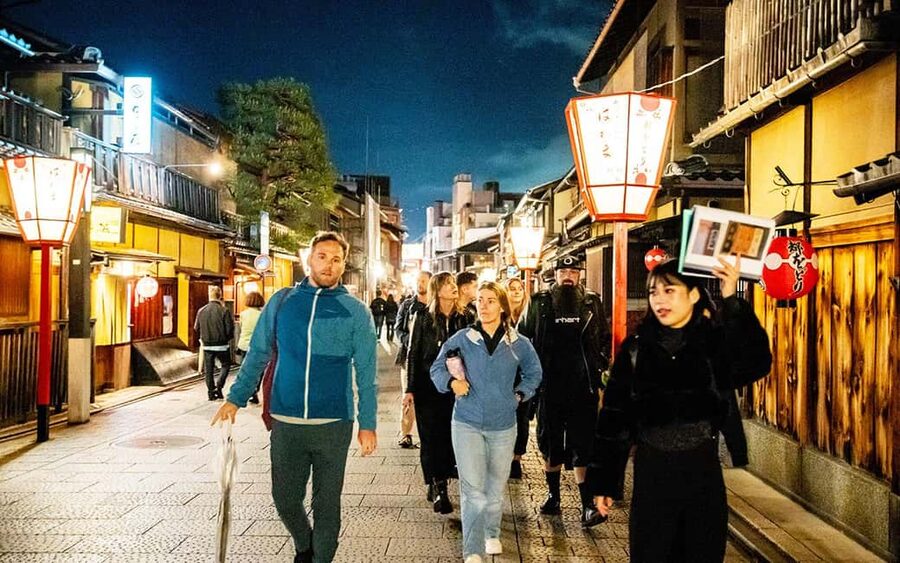
- Gion after dark: Evening tours can bring quieter lanes and a more traditional mood.
- A broad route: You see Shirakawa Canal, Tatsumi-jinja Shrine, Yasaka Shrine, Ninenzaka, Hōkan-ji, Yasui Kompira-Gu, and Hanamikoji Street.
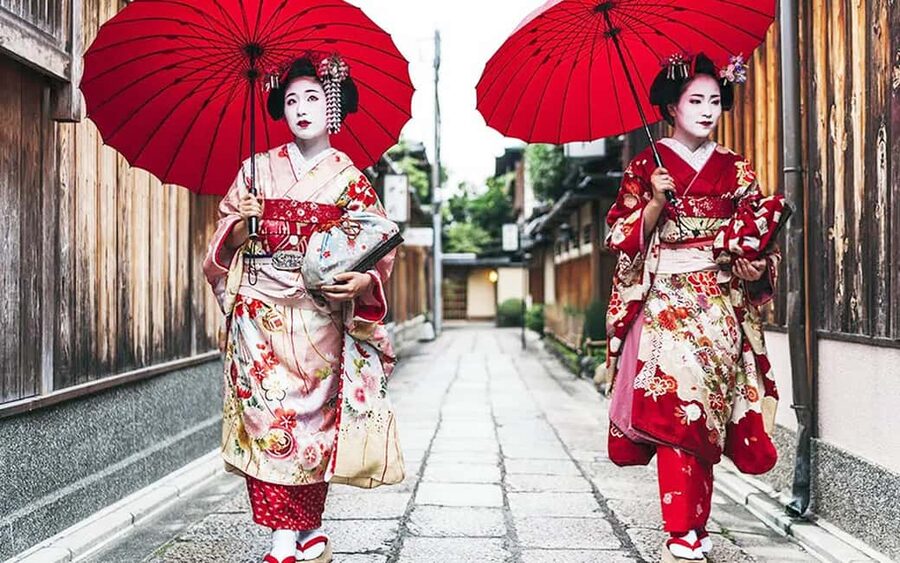
- Geisha culture explained: Learn about geiko and maiko training, dance, kimono craft, and elaborate hairstyles.
- Strong guide element: Uta, Dan, Takumi, Mai, Wajid, Alex, and other local guides have led especially well-received walks.
- Good value at $23: The price is modest for two hours of guided sightseeing in one of Kyoto’s most famous districts.
- Walking matters: Wear comfortable shoes, carry water, and expect rain, steps, and uneven streets.
Why this Gion walk is worth your time
At $23 per person, this is an inexpensive way to get your bearings in one of Kyoto’s most confusing and photogenic areas. You are paying for an English-speaking local guide, but the real value comes from context. Gion can look like a row of beautiful wooden façades if you walk through it without explanation. A good guide helps you understand what these buildings were used for, how the entertainment district developed, and why certain streets have rules about photography and private access.
The route also gives you a useful first look at eastern Kyoto. You pass from the water and tea houses of Shirakawa toward shrines, old lanes, Ninenzaka, and Hanamikoji. That makes the walk a practical introduction to several areas you might later revisit on your own.
The tour has earned a 4.9 rating from 126 ratings, and the most consistent praise is directed at the guides. Uta is described as warm, lively, and especially good with families. Dan is noted for clear historical explanations and restaurant suggestions. Takumi is praised for keeping a large group involved, while Wajid is known for answering questions and explaining Japanese terms in plain English.
Guide quality can vary from person to person, of course, but the format gives you a helpful local voice for the evening. You should book this for interpretation and orientation, not as a guaranteed geisha encounter.
More Hidden Gems Walking Tours in Kyoto:
- Kyoto Geisha Walking Tour: Gion District & Hidden Gems
★ 4.7 · 3,273 reviews - Dublin Highlights and Hidden Gems Guided Walking Tour
★ 5.0 · 6,020 reviews - Explore Berlin: See All The Iconic Sights & Some Hidden Gems
★ 5.0 · 4,429 reviews
Meeting at Shijo Ohashi
The walk begins at the McDonald’s Shijo Ohashi store, at 105-1 Hashimoto-cho, Shimogyo-ku. This is a busy meeting area, so the guide waits at the side of the restaurant with a sign reading Local Guide Stars rather than directly in front.
Give yourself enough time to find the correct side of the building. The meeting point is central, but the surrounding streets can be crowded, especially around the bridge and nearby shopping areas. Look for the sign instead of assuming the guide will be standing in the most obvious spot.
From here, you start on foot. There is no transport between stops, so the two-hour length does not mean a gentle stroll. The walk covers a fair amount of ground, and one guide specifically noted that the pace is quick because the group needs to reach all the main places.
Shirakawa Canal and Gion’s old streets
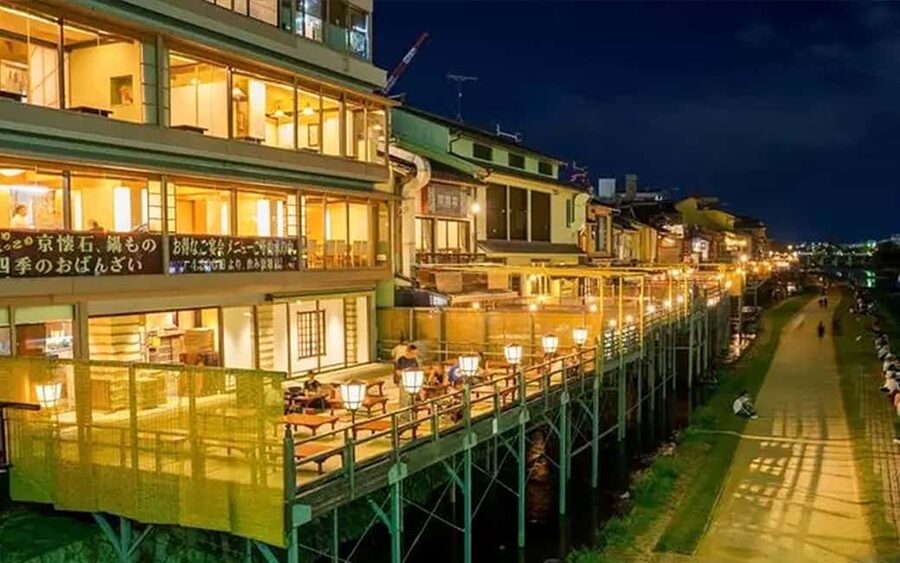
The first scenic stretch follows the Shirakawa Canal. Willow trees, stone paving, traditional tea houses, and the narrow waterway create one of Kyoto’s most recognizable views. This is a good place to take photographs and settle into the character of Gion before the walking becomes more varied.
Your guide can explain why the canal-side streets feel different from nearby commercial roads. The setting is quieter and more formal, with carefully kept façades and a strong sense of privacy. You may see people dressed for an evening out, but you should treat the area as a working neighborhood rather than an open-air stage.
Photography is allowed, but flash photography is not permitted inside temples. Keep your camera ready, but use it politely. You should never block a doorway or photograph people at close range without permission, especially in a district where geisha and maiko are moving to professional engagements.
Tatsumi-jinja Shrine, a small stop with a local feel
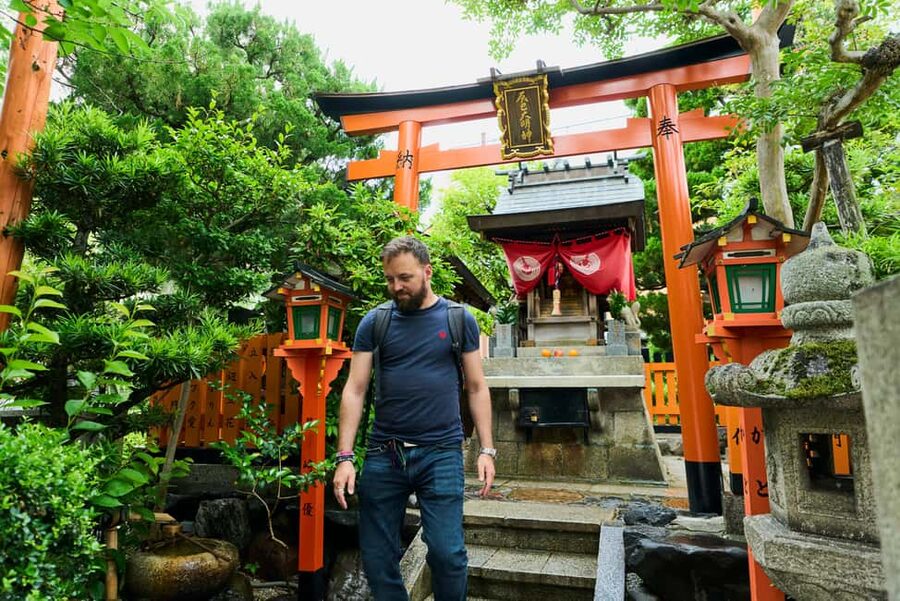
Tatsumi-jinja Shrine gives the route a smaller religious site after the polished canal scenery. The shrine is a useful reminder that Gion is not only about tea houses and evening entertainment. It is also a lived-in district with places of worship woven into its streets.
The guide leads you through the visit and explains what you are seeing. This is where a local guide can add value, since small shrines are easy to pass without understanding their place in the neighborhood.
The stop is short, so do not expect a long temple visit or a large complex. Its appeal is the setting and the explanation. If you prefer a slower visit with plenty of time for quiet reflection, the pace may feel brisk.
More Cultural Walking Tours around Kyoto:
- Kyoto Gion: 2-Hour Geisha Culture & History Walking Tour
★ 5.0 · 1,186 reviews - Kyoto Gion Cultural Walk & Geisha Show with Dining Options
★ 5.0 · 518 reviews - Kyoto: Geisha Dinner & Gion Cultural Walk
★ 5.0 · 73 reviews - Savannah First Squares Culinary & Cultural Walking Food Tour
★ 5.0 · 3,229 reviews
Yasaka Shrine and the larger religious picture
Yasaka Shrine brings a bigger scale to the walk. It is one of the best-known religious sites in the Gion area, and the route includes time for photographs, a visit, and guided explanation.
I like this part because it connects the entertainment district with Kyoto’s religious life. The shrine is not an isolated attraction placed beside Gion for tourists. It helps explain why the area has developed around festivals, tradition, and seasonal customs as well as restaurants and tea houses.
Your guide may pause to explain Japanese words or customs. Tom, who joined a walk led by Wajid, particularly appreciated having Japanese terms broken down in clear English. That sort of explanation helps you avoid treating the shrine as just another photo stop.
Because Yasaka Shrine is larger and more popular than Tatsumi-jinja, you may encounter more people here. The tour can help you move through the area without losing the story, but you should still expect interruptions and a lively public setting.
Quiet backstreets and Edo-period townhouses
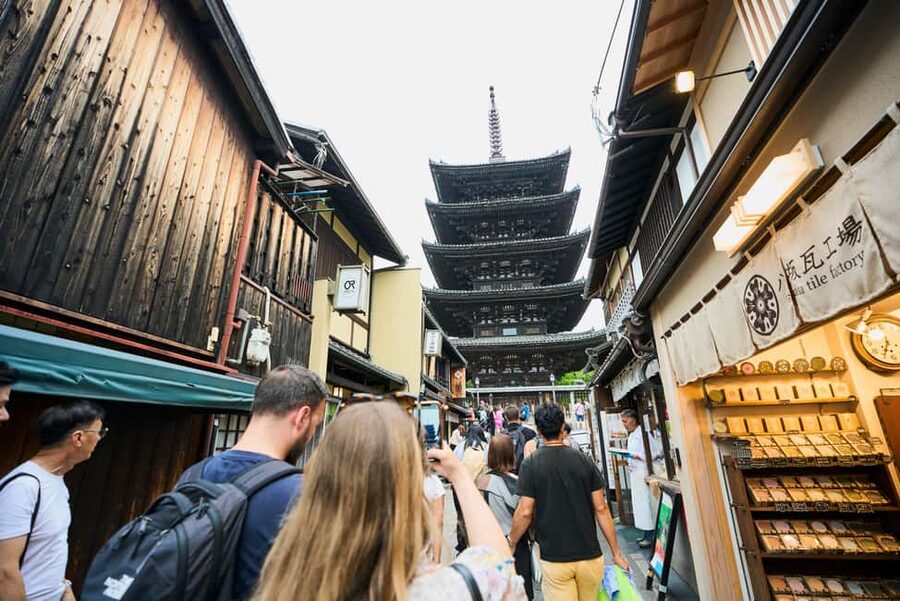
After the major shrine, the route turns toward quieter backstreets. This is one of the best reasons to book the walk. You may find these lanes on a map, but without local guidance you could easily miss their historic character or fail to understand what makes them different from ordinary residential streets.
The wooden townhouses date from the Edo period and show the practical beauty of old Kyoto. Their narrow fronts, timber details, and close-set façades reflect a city built along tight urban plots. You are not simply looking at preserved scenery. These buildings help explain how commerce, homes, workshops, and entertainment once shared the same compact streets.
The quieter lanes also give the tour a welcome change of pace, even if the walking itself remains fairly fast. Guides including Alex and Uta have been praised for bringing these streets to life with stories rather than overloaded lectures.
Be respectful here. Keep voices low, avoid entering private areas, and follow the guide’s lead about where to stop. Gion’s charm depends partly on its residential character, and you should not treat every doorway as a public attraction.
Ninenzaka and Hōkan-ji Temple
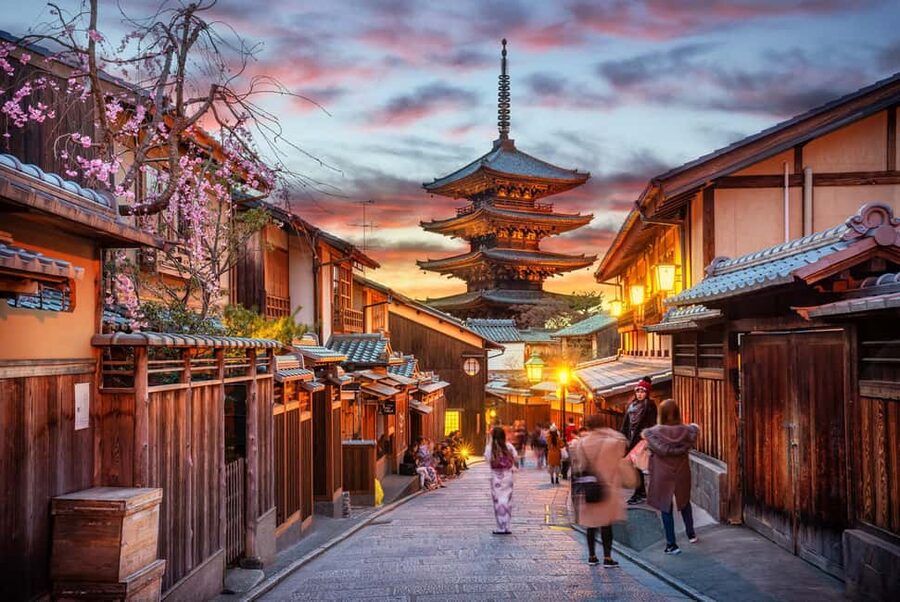
The walk continues toward Ninenzaka, a famous slope lined with traditional buildings and views toward Hōkan-ji Temple. This section is highly photogenic, but it is also one of the places where the tour can feel crowded.
Ninenzaka gives you the classic old-Kyoto scene: sloping stone streets, wooden storefronts, and historic architecture. It is easy to understand why the area appears in so many photographs. It is also easy to forget that you are walking on a busy public street, not through a quiet museum.
Hōkan-ji, often recognized by its tall pagoda, adds a strong visual landmark. The guide explains the temple and points out useful views along the route. You may only stop for photographs and an exterior look, so do not book this walk expecting an extended temple interior visit.
The paving and slope matter. You need comfortable shoes, and anyone with limited mobility may find this part difficult. The experience is not suitable for wheelchair users or people with mobility impairments. Even able walkers should watch their footing, especially in rain.
Yasui Kompira-Gu and the meaning behind the visit

Yasui Kompira-Gu Shrine is another worthwhile stop because it is less obvious than the main sights. The guide takes you inside the shrine area and explains what makes it special.
This is the kind of place that gives the walk its local character. You get a break from the standard postcard route and a chance to ask questions. The shrine visit also adds variety after the long stretch of streets, houses, and temple views.
The exact experience depends on the group pace and the guide’s storytelling. Some people will enjoy the cultural explanation most, while others may wish they had longer to explore. I would treat this as a focused stop rather than a full shrine visit.
Hanamikoji Street and the geisha tradition
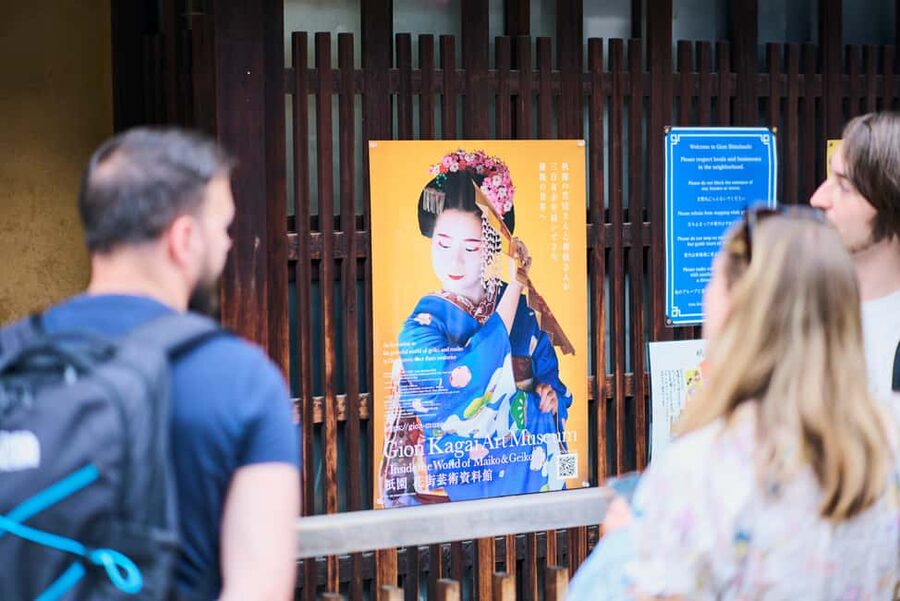
The walk finishes on Hanamikoji Street, the heart of Gion’s geisha district. This is where the tour’s cultural theme comes together. Your guide explains the difference between geiko and maiko, the demanding training involved, their dances, and the work behind their kimonos and hairstyles.
A geisha sighting is possible, particularly during an evening departure, but it remains a matter of timing and luck. Several people have seen a geisha or maiko, including one walk where both appeared, yet no responsible tour should promise this. You may see someone on the way to an engagement, or you may simply gain a clearer understanding of the district where this tradition continues.
The explanation matters more than the sighting. Geisha culture is often reduced to costumes and quick photographs. Here, you learn about performance, training, clothing, hair, and the formal setting in which these artists work. The best guides also explain how to behave: keep your distance, do not obstruct the street, and do not use flash.
Hanamikoji is also a good place to continue your evening. Several guides have offered restaurant recommendations, and one guide prepared a list of places to eat afterward. You should still check opening times and prices yourself, but the advice can be useful when you are hungry and surrounded by unfamiliar choices.
Evening timing, weather, and walking comfort
The late-day and night departures appear especially appealing for this route. With fewer people in the lanes, the atmosphere can feel calmer and more mysterious. One evening tour was praised for reaching places that felt nearly empty, while another participant found the quieter streets ideal before dinner.
That said, darkness changes what you see. Details in the wooden architecture may be harder to make out, and photographs will depend more on available light. If architecture is your main interest, a late afternoon start may suit you better. If mood and the possibility of seeing a geisha matter more, evening is the stronger choice.
The tour runs in rain. Bring an umbrella or raincoat, along with water and sunscreen in warm weather. Kyoto’s humidity can make the walk tiring, and one person specifically noted that the experience remained worthwhile despite uncomfortable humidity.
There is no stated group size, so you should be prepared for a group rather than a private walk. Guides have handled larger groups well, but a bigger party can make narrow lanes and short explanations feel less intimate.
Who should book this $23 experience?
I would choose this tour if you are visiting Kyoto for the first time and want a clear introduction to Gion before exploring alone. It also suits anyone curious about geisha culture but unsure how to approach the subject respectfully.
Families can enjoy it, especially with a patient guide such as Uta. Children may find the walk interesting if they like stories, shrines, and unusual streets, but the pace and length should be considered. The route is not designed for anyone who needs accessible paths or frequent seated breaks.
The price is strong for a two-hour guided walk with several major sights and local recommendations. You are not paying for admission to a special performance, a meal, or guaranteed access to a tea house. You are paying for orientation, explanation, and a carefully chosen route through a district that can be confusing on your own.
Cancellation is free up to 24 hours before the start, and you can reserve now and pay later. Those terms make it easier to fit the walk into a changing Kyoto schedule.
Should you book the Gion Hidden Gems and Geisha Culture Tour?
Book it if you want history, local explanation, and a broad first look at Gion for a modest price. The guides are the strongest part, and the route gives you more than a quick stroll along Hanamikoji Street.
Do not book it expecting a private experience, a guaranteed geisha sighting, or a slow temple meditation. You will walk at a purposeful pace through busy and uneven areas, and the tour continues in bad weather.
For most first-time visitors, I would take it early in a Kyoto stay, ideally in the late afternoon or evening. You will finish with a better sense of where to return, what to photograph, and how to move through Gion with respect.
FAQ
How long does the Gion tour last?
The tour lasts two hours.
What language is the tour conducted in?
The tour is conducted in English by a live local guide.
How much does the tour cost?
The listed price is $23 per person.
Where does the tour meet?
You meet at the McDonald’s Shijo Ohashi store at 105-1 Hashimoto-cho, Shimogyo-ku, Kyoto-shi, Kyoto.
How do I find the guide at the meeting point?
The guide waits at the side of the McDonald’s with a sign reading Local Guide Stars. The front of the restaurant can be very busy.
Can I see a geisha during the walk?
You may see a geisha or maiko, especially during an evening walk, but a sighting is not guaranteed.
Is photography allowed?
Photography is allowed, but flash photography is not permitted inside temples.
What should I bring?
Bring comfortable walking shoes, water, sunscreen, and an umbrella or raincoat if rain is possible.
Is the tour suitable for wheelchair users?
No. The tour is not suitable for wheelchair users or people with mobility impairments.
New walking tours around Kyoto
- Kyoto: Private Walking Tour with a Local★ 4.6 · 118 reviews
- Kyoto: Private 2.5 Hour Historical Walking Tour★ 4.9 · 121 reviews
- Kyoto: Imperial Palace & Nijo Castle Guided Walking Tour★ 4.7 · 453 reviews
- Kyoto: Izakaya Bars Guided Walking Tour★ 4.9 · 815 reviews
- Kyoto: Gion Sunset Walking Tour with Local Guide★ 4.7 · 351 reviews
- Kyoto: Gion Walking Tour★ 5.0 · 195 reviews
- Kyoto: Geisha Dinner & Gion Cultural Walk★ 5.0 · 73 reviews
- Kyoto Gion Cultural Walk & Geisha Show with Dining Options★ 5.0 · 518 reviews
Kyoto Walking Tours, side by side.
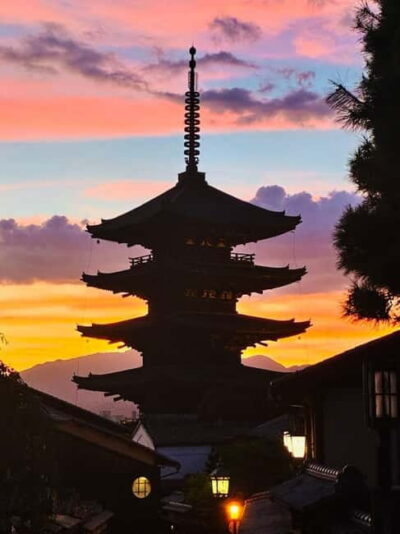
Kyoto Geisha Walking Tour: Gion District & Hidden Gems
Read our review →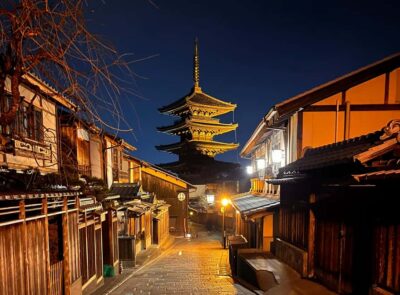
Kyoto: Gion Magical Night Walking Tour with Geisha Trivia
Read our review →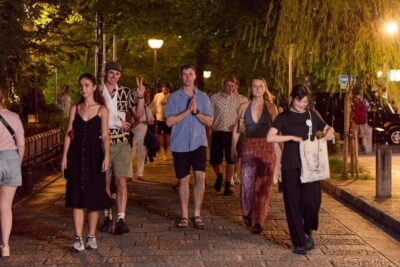
Kyoto: Gion Geisha District Walking Tour – Stories of Geisha
Read our review →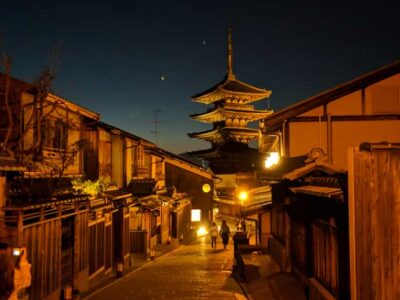
Best of Kyoto: Gion, Geisha, Pagodas & Cobblestones
Read our review →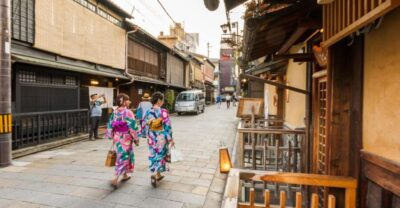
Nishiki Market Brunch Walking Tour (7 Tastings + Brunch)
Read our review →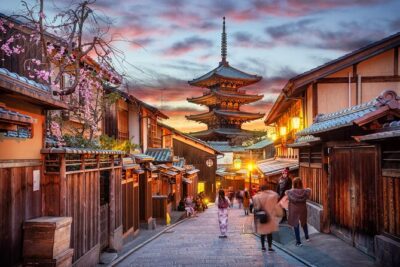
Kyoto Gion: 2-Hour Geisha Culture & History Walking Tour
Read our review →
Lists this walk sits on