
Review · KYOTO
Cool Kyoto: 5-Hour Walking Tour with the Last Samurai
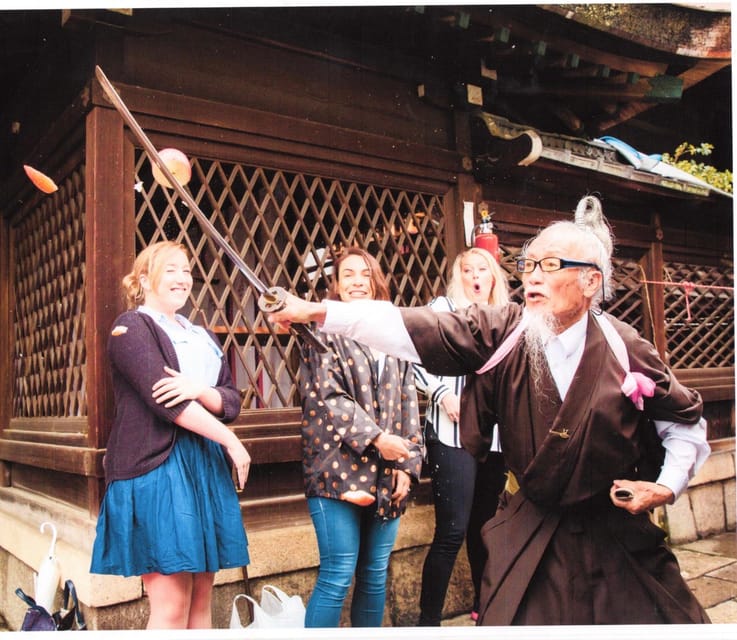
The most unusual part of this Kyoto walk is your guide: Samurai Joe Okada, a local character who leads you through craft shops, temples, markets, and palace grounds before showing his sword skills. This is not a standard checklist tour. It is a personal introduction to Kyoto, shaped by Joe’s stories and long-standing ties with local shop owners.
I like the access to small traditional businesses and the chance to meet people Joe knows. I also like the mix of calligraphy, food, religion, gardens, and martial arts. The main drawback is that the first half can feel more like a shop and tasting walk than a formal historical tour, especially if you hoped for a detailed tour of major monuments.
Key points to know before booking
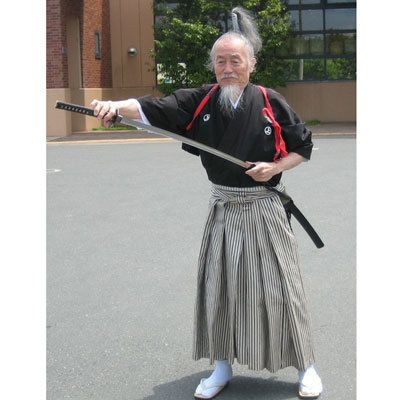
- Samurai Joe Okada leads in English, wearing a samurai kimono and distinctive hairstyle at Kyoto City Hall Plaza.
- The route mixes local life with major sights, including craft shops, a Buddhist temple, a Shinto shrine, and the Kyoto Imperial Palace Forest.
- Food is part of the day, with local snacks and a light lunch at a Japanese market.
- The sword demonstration is hands-on, and a volunteer may help Joe with part of the presentation.
- The tour is private and priced by group, at $491 for up to five people, making the value strongest for a full group.
- Expect a real walking day, with time spent browsing shops and moving between several parts of central Kyoto.
Kyoto is often presented through its temples and gardens. This tour takes a different route. Joe Okada uses his personal connections to show you ordinary streets, specialist shops, food stalls, and corners of the city that can be easy to miss when you follow only the big sights.
The tour begins at Kyoto City Hall Plaza. You should have no trouble spotting Joe, since he wears a samurai kimono and a recognizable hairstyle. The meeting point is central, and the walk ends back there, so you do not need to arrange a taxi or figure out a new return point afterward.
The advertised duration is five hours. Since the day includes walking, shopping stops, tastings, lunch, palace grounds, and a demonstration, you should keep the rest of your schedule fairly open. This is a social tour rather than a fast march from one attraction to the next.
Joe speaks English and uses humor throughout the day. His knowledge covers Kyoto customs, everyday Japanese life, traditional crafts, food, and the city’s political past. He also has an unusual personal story and has appeared on David Letterman, a detail that helps explain why this tour feels more like a meeting with a memorable local figure than a routine guided walk.
One of the early sections takes you through traditional arts and crafts businesses. The exact rhythm can vary, but the stops described include a wood engraver, a brush and ink maker, a paper shop, and other specialist stores.
These visits give you a look at skills that are easy to admire but hard to understand from behind a museum display. At a wood shop, you can see how careful carving supports Japanese printing and decoration. At a brush and ink shop, the focus shifts to tools used in calligraphy and painting.
Calligraphy is one of the more interactive parts of the walk. You may get the chance to write your name in Japanese characters, which gives children and adults a simple way to take part rather than just watch. Some people also choose a decorated folder or frame for their writing, including one described as having gold leaf. That purchase is optional, so you can enjoy the activity without feeling obliged to buy anything.
The craft stops are useful if you want cultural context and local contact. They are less useful if you prefer a nonstop historical tour. You may spend time looking at merchandise, and one part of the experience can feel slow if you are not interested in shopping. I would approach these stores as working businesses and cultural stops, not as a series of attractions built only for sightseeing.
Food appears throughout the walk rather than only at the final meal. You might sample Japanese sweets, sugary treats, a rice-based snack, bakery food, fried items, tofu, sushi, and sake.
This is a good way to understand how Kyoto presents food in small portions and specialist shops. Instead of sitting down for one long restaurant meal, you get a succession of tastes tied to the places you visit. Joe can explain what you are trying and help bridge the language gap with shop owners.
The lunch is described as a light meal of local delicacies at a typical Japanese market. Specific food mentioned from this experience includes sushi, fried chicken, tofu, snacks, and a drink. The amount can be generous enough that you may finish feeling well fed, but you should not book this expecting a formal restaurant lunch with a fixed menu.
Food preferences and allergies are not explained in the available details. If you have dietary restrictions, ask the provider before booking rather than assuming the market can meet them. The same practical rule applies to alcohol: sake appears during the experience, but you are not required to treat the tasting as the main event.
The walk includes a Buddhist temple and a Shinto shrine. These visits are valuable because they let Joe explain the difference between the two traditions in a setting where you can see the details for yourself.
You may learn how the spaces are used, what kinds of customs belong to each tradition, and how Buddhism and Shinto appear side by side in Japanese life. This is a short introduction rather than a specialist religious tour, but it adds useful meaning to sights you may encounter elsewhere in Japan.
The stops also break up the shopping and food portions of the walk. If you are traveling with children, they offer a quieter pause before the more theatrical sword demonstration. If your main goal is major temple architecture, keep your expectations measured. The tour does not promise long visits to Kyoto’s famous temple complexes.
The route continues to the Kyoto Imperial Palace Forest, one of the most appealing parts of the experience for anyone who wants a calmer side of central Kyoto. The forest provides open space and greenery after the narrower shopping streets.
Kyoto served as Japan’s imperial capital from 794 to 1868, and the palace area connects the present city with that long period of court life. Joe explains the setting and its place in Kyoto’s story as you walk.
Be clear about what is included: the description promises the Imperial Palace Forest and its grounds, not a full interior tour of the palace. This matters if you are booking specifically to see palace rooms. The value here is the combination of open paths, historical setting, and Joe’s commentary.
One practical point is worth noting. Mosquitoes have been a nuisance for some people in the forest area. Bring repellent if you are sensitive to bites, especially during warmer months. Comfortable shoes also matter, since the day covers several walking sections rather than one short stroll.
The final major feature is Joe’s samurai demonstration. This is where the tour shifts from cultural walking tour to live performance.
Joe demonstrates katana handling and precision cuts. Details described from the experience include slicing fruit, cutting bamboo, and working with items such as a radish or apple. A volunteer may be invited to help, and some participants have been coached in basic sword movements.
The participation is optional in practical terms, but you should expect the possibility of being asked. If you are traveling with children or teenagers, this may become the part they remember most. Parents should still make sure young participants listen carefully to Joe’s instructions and handle any practice weapon only when invited.
The demonstration is impressive because it is performed by a guide who combines showmanship with a long personal connection to samurai tradition. It is also the part that requires the clearest expectations. This is not a full martial arts class, and you will not leave with formal sword training. Think of it as a carefully staged demonstration with a small amount of audience participation.
Joe’s age and energy are frequently part of the experience’s charm, but the more important point is his ability to keep the group involved. He tells stories, jokes, teaches technique, and makes the demonstration feel personal rather than distant.
The price is $491 for a private group of up to five people. At the maximum group size, that works out to about $98 per person. For four people, the cost is about $123 per person. For two people, it rises to about $246 each.
That makes the tour much better value for a family or group of five than for a solo visitor or couple. You are paying for a private English-speaking guide, a five-hour walk, introductions at local businesses, food tastings and light lunch, and the samurai presentation.
I would not compare this directly with a basic temple walking tour. The product is more personal and more specialized. You are paying for Joe’s time, personality, local contacts, and performance as much as for the route itself.
The value is strongest if you want several types of experience in one morning or afternoon: crafts, food, religion, local streets, palace grounds, and samurai culture. It is weaker if you already have a full schedule of Kyoto’s major temples and only want formal historical interpretation.
Since the tour is listed as a private group, you should have more control over the pace and conversation than on a large scheduled walk. The supplied experiences also describe groups larger than five, so confirm the final group arrangement with the provider before payment if private touring is important to you.
I would recommend this tour most strongly to families, first-time visitors, and people who prefer meeting a memorable local guide over following a standard sightseeing script.
It suits you if you enjoy:
- Talking with shop owners and trying unfamiliar foods
- Learning through stories, jokes, and demonstrations
- Seeing craft shops that are not major tourist attractions
- Giving children a cultural activity they can join
- Visiting Kyoto with a private group
- Having a guide suggest other sights for the rest of your stay
The tour may not suit you if you want a quiet, highly academic presentation or a full day focused on temples and imperial architecture. The shop visits are central, not incidental. If browsing and buying do not interest you, parts of the morning may feel less rewarding.
It is also a better fit for people comfortable with a good amount of walking. The official duration is five hours, and the route includes streets, shops, religious sites, forest paths, and a market. Wear shoes you can use all day and carry some cash for optional purchases and vending machines.
The tour starts and finishes at Kyoto City Hall Plaza. Joe can be identified by his samurai clothing and hairstyle. English is the stated language, and the tour is offered as a private group experience.
Booking is not instant. After purchase, you receive confirmation from Samurai Joe, with confirmation stated within 48 hours. Plan ahead rather than assuming the reservation is final the moment you pay.
Cancellation is flexible up to 24 hours before the activity for a full refund. Starting times vary, so check availability before choosing the day. The tour is especially worth placing early in your Kyoto stay because Joe may suggest other places to visit during the rest of your time in the city.
Book it if you want Kyoto through a local personality, with crafts, snacks, neighborhood streets, palace grounds, and a memorable katana demonstration folded into one half-day. Joe Okada is the reason to choose this experience. His introductions and stories give the walk a human scale that a standard sightseeing route often lacks.
Think twice if your priority is a polished monument-by-monument history tour. The shopping stops take real time, and the palace portion is a walk through the forest and grounds rather than a complete palace visit.
For a group of five, the price is easier to justify, especially if you value a private guide and hands-on moments. For one or two people, compare it with other Kyoto tours before committing. If the idea of meeting a real character, tasting local food, and watching a samurai demonstrate a katana sounds more appealing than ticking off famous temples, this is a strong choice.
FAQ
More walking tours around Kyoto:
- Kyoto Geisha Walking Tour: Gion District & Hidden Gems
★ 4.7 · 3,273 reviews - Kyoto: Gion Magical Night Walking Tour with Geisha Trivia
★ 4.9 · 2,393 reviews - Kyoto: Gion Geisha District Walking Tour – Stories of Geisha
★ 4.7 · 2,187 reviews
Where does the tour start?
The tour starts at Kyoto City Hall Plaza. Joe can be identified by his samurai kimono and hairstyle.
Where does the tour finish?
The activity ends back at the Kyoto City Hall Plaza meeting point.
How long does the tour last?
The stated duration is five hours. Starting times vary, so you need to check availability for the date you want.
Same streets, a different story:
- Best of Kyoto: Gion, Geisha, Pagodas & Cobblestones
★ 4.9 · 2,058 reviews - Night Walk in Gion: Kyoto’s Geisha District
★ 4.5 · 2,003 reviews - Kyoto Gion Geisha District Walking Tour – The Stories of Geisha
★ 5.0 · 1,441 reviews - Nishiki Market Brunch Walking Tour (7 Tastings + Brunch)
★ 5.0 · 1,355 reviews
What language does the guide speak?
The live tour guide speaks English.
Is the tour private?
The activity is described as a private group tour, with the listed price covering up to five people.
What food is included?
A light lunch of local delicacies is included. The experience can also include tastings such as sweets, bakery items, tofu, fried food, sushi, and a drink.
Can I take part in the samurai demonstration?
A volunteer may be invited to help with the demonstration. Joe shows katana skills and may coach a participant in basic sword handling, but participation is not guaranteed for every person in the group.
New walking tours around Kyoto
- Kyoto: Private Walking Tour with a Local★ 4.6 · 118 reviews
- Kyoto: Private 2.5 Hour Historical Walking Tour★ 4.9 · 121 reviews
- Kyoto: Imperial Palace & Nijo Castle Guided Walking Tour★ 4.7 · 453 reviews
- Kyoto: Izakaya Bars Guided Walking Tour★ 4.9 · 815 reviews
- Kyoto: Gion Walking Tour★ 5.0 · 195 reviews
- Kyoto: Gion Sunset Walking Tour with Local Guide★ 4.7 · 351 reviews
- Kyoto: Geisha Dinner & Gion Cultural Walk★ 5.0 · 73 reviews
- Kyoto: Gion Hidden Gems & Geisha Culture Tour★ 4.9 · 126 reviews
Kyoto Walking Tours, side by side.
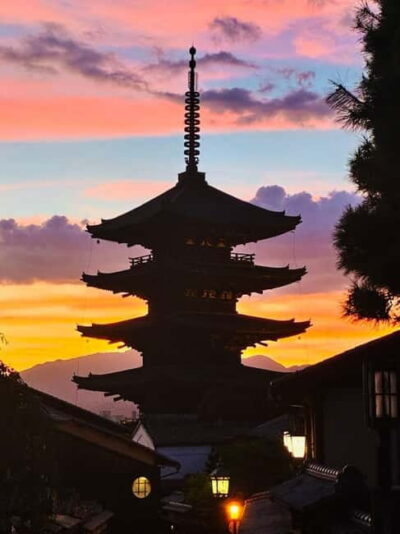
Kyoto Geisha Walking Tour: Gion District & Hidden Gems
Read our review →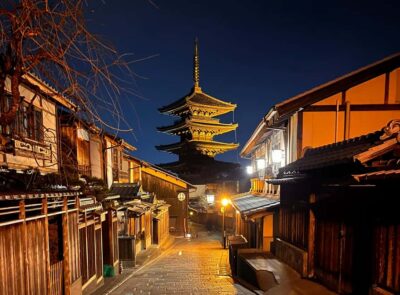
Kyoto: Gion Magical Night Walking Tour with Geisha Trivia
Read our review →
Kyoto: Gion Geisha District Walking Tour – Stories of Geisha
Read our review →
Best of Kyoto: Gion, Geisha, Pagodas & Cobblestones
Read our review →
Nishiki Market Brunch Walking Tour (7 Tastings + Brunch)
Read our review →
Kyoto Gion: 2-Hour Geisha Culture & History Walking Tour
Read our review →
Lists this walk sits on