
Review · GERMANY
Frankfurt: Private or Shared Walking Tour
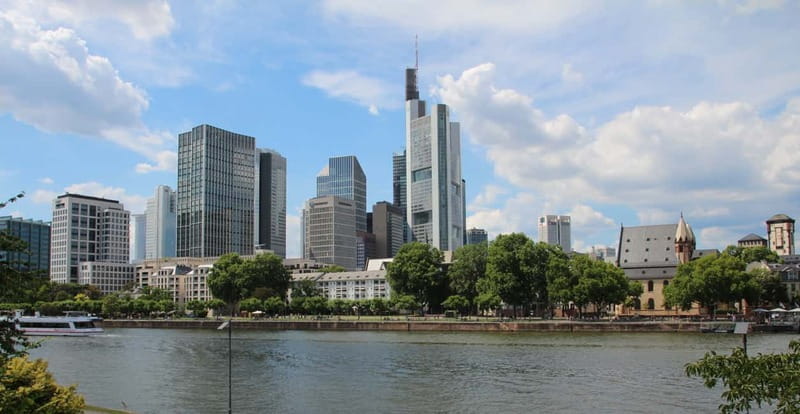
Frankfurt’s compact old center gives you a sharp lesson in how a city can lose much of its past, then rebuild it without hiding the modern skyline. This 90-minute walk links the Eiserner Steg, Römer, Paulskirche, and Neue Altstadt in one easy route.
I like the strong contrast between medieval-looking streets and Frankfurt’s tall office towers. I also like the focus on useful context, not just photo stops, including the 2008 to 2009 rebuilding of the old center and the role of Paulskirche in German democracy. The main consideration is language: the tour is offered in German, so it suits German speakers best.
Key points to know before you book
- The walk starts at Justitia-Brunnen: Meet beside the statue on Römerberg, one of Frankfurt’s most central historic squares.
- The Eiserner Steg dates from 1868: This iron footbridge gives the tour an early landmark and a clear link to Frankfurt’s riverfront.
- The Neue Altstadt is a modern reconstruction: You’ll see how Frankfurt recreated an old-town quarter after wartime destruction.
- Paulskirche connects the walk to German politics: The church hosted the first German national assembly.
- Private and shared options are available: A private group can offer more flexibility, while the shared option keeps the low price.
- The tour costs about $17 per person: That is a fair price for a guided introduction to the central old town.
Frankfurt in 90 minutes: a useful first look
This walking tour works best as an introduction rather than a full study of Frankfurt. In an hour and a half, you get the city’s main historic symbols, a short account of wartime destruction, and a look at how the center now mixes reconstruction with modern business architecture.
I like that the route does not treat old Frankfurt as a sealed museum quarter. You see old-looking facades, rebuilt streets, a historic church, a river bridge, and the towers of the modern city in the same short outing. That contrast tells you more than a string of isolated monuments would.
The meeting point at the Justitia-Brunnen on Römerberg is practical. The statue is an easy landmark in the central square, and starting here places you close to several of the city’s key sights. You do not need to spend time finding a remote office or boarding a bus.
The walk lasts 1.5 hours, so you should expect a steady overview rather than long interior visits. The supplied details focus on seeing locations and learning their story from outside or along the route. If you want extended time inside museums or churches, you will need to plan those separately.
More Private Walking Tours in Germany
- Berlin Private Complete History All Day Walking Tour
★ 5.0 · 474 reviews - Munich Private Tour with a Local – Highlights & Hidden Gems
★ 5.0 · 469 reviews - Private Walking Tour Berlin Third Reich Hitler and World War II
★ 5.0 · 360 reviews
Starting at Justitia-Brunnen and Römerberg
Römerberg is the right place to begin because it brings several parts of Frankfurt together. The Justitia-Brunnen gives you a fixed meeting point, while the square provides the setting for understanding the old center before the walk moves toward other landmarks.
Your guide can use this opening section to explain how Frankfurt developed and how its historic center changed over time. The tour is designed to give you useful information about each attraction, so you should expect context along the way rather than a simple list of dates.
The city’s history is especially clear here because the old center was heavily damaged during World War II. Much of what looks historic today has either survived in altered form or was rebuilt later. That makes Frankfurt different from cities where you can assume every old facade is original.
I find this point important for setting expectations. The rebuilt center can look traditional, but its age and history are not always as straightforward as the architecture suggests. A good guide helps you read the city instead of simply admiring attractive buildings.
Crossing the Eiserner Steg, built in 1868
The Eiserner Steg is one of the tour’s most distinctive stops. This iron footbridge was built in 1868, and it gives you a physical connection between the old center and the riverfront.
A bridge is a useful stop on a short city walk because it changes your view. Instead of looking only along narrow streets and building fronts, you get a broader sense of Frankfurt and its modern skyline. The route uses that contrast well: historic monuments on one side, tall contemporary buildings in the distance.
I also like the bridge as a reminder that Frankfurt has long been a city of movement and commerce. The tour does not present the old town as an isolated relic. You see how the city’s river, public spaces, and business center fit around it.
The Eiserner Steg is still a functioning footbridge, not a preserved display behind barriers. That means the experience remains part of everyday city life. At the same time, the tour information does not promise a long pause or a special viewing platform, so you should think of it as an important route stop rather than a major standalone attraction.
Understanding wartime destruction and the 2008 to 2009 renovation
One of the strongest parts of this experience is the explanation of what happened to Frankfurt’s grand buildings during World War II. The old center was badly damaged, and that fact changes how you should read nearly every historic-looking street in the area.
The later renovation of 2008 to 2009 adds a second chapter. Frankfurt did not simply rebuild once and stop. The city continued working on how its center should look and function, eventually creating the Neue Altstadt project.
This history gives the walk more value than a quick photo tour. You learn why the center contains a mix of old survivors, postwar construction, and new buildings designed to recall earlier forms. I appreciate tours that explain these choices because they help you notice details you might otherwise pass without thought.
The subject can also prompt a useful question: what does it mean to recreate an old town? The walk does not turn that question into a long academic debate, but it gives you enough background to form your own view. Some people prefer original remains, while others appreciate a town center that restores traditional scale and character. Frankfurt lets you see both approaches in one place.
Same streets, a different story:
- Discover Berlin Half-Day Walking Tour
★ 5.0 · 9,624 reviews - Berlin City walk Government District and Places of Democracy
★ 4.7 · 8,467 reviews - Berlin: Third Reich & Cold War Guided Walking Tour
★ 4.9 · 8,378 reviews - Munich: Third Reich & WWII Walking Tour
★ 4.6 · 6,181 reviews
The Römer and Frankfurt’s civic heart
The Römer is one of Frankfurt’s essential landmarks and one of the clearest symbols of the city’s civic life. It belongs near the center of any first visit to the Altstadt, and the walking tour places it within the larger story of reconstruction and public identity.
Your guide provides information about the building and its role among the surrounding historic sights. The value here is not only the facade. You also learn how the Römer fits into the city’s political and urban story.
Because the route is short, you should not expect an extended architectural lecture or a long indoor tour. Instead, you get a focused explanation that helps you understand why this building matters. That format suits you if you want orientation before exploring on your own.
The setting around Römerberg also makes this a good point for photographs and for getting your bearings. If you plan to return later, you will know which nearby streets and buildings deserve more time.
Paulskirche and the first German national assembly
Paulskirche gives the tour a major political and historical focus. The church was the site of the first German national assembly, making it one of the most important stops for understanding Frankfurt’s place in German history.
I like this inclusion because it prevents the tour from becoming only an architecture walk. You move from bridges and reconstructed facades to the development of political ideas and national government. Even with limited time, that adds weight to the route.
The guide explains the site in the wider story of Frankfurt, so you can see why Paulskirche matters beyond its appearance. You should expect a concise account suited to a walking tour, not a full seminar on nineteenth-century German politics.
If this subject interests you, make a note of Paulskirche and consider returning for more time. The tour gives you the essential reason to care about the building. A separate visit would let you explore its setting at your own pace.
Exploring the Neue Altstadt
The Neue Altstadt is the tour’s most unusual feature. It is Frankfurt’s new old town, a recent city project designed to recreate an historic-looking quarter in the center.
This is where the walking route asks you to compare appearance with age. The buildings may suggest a much older town, yet the project belongs to the modern period. That makes the area a useful case study in city planning, memory, and reconstruction.
I would pay close attention to how the rebuilt quarter connects with the surviving parts of the center. The point is not simply to count old-style facades. It is to see how Frankfurt tried to restore a sense of place after the wartime destruction and later changes to the city.
The Neue Altstadt also helps explain why this tour is more useful than a basic highlights checklist. A guide can point out what is original, what was reconstructed, and how the project changed the central area. The supplied information does not identify each individual building, so you should not book this expecting a detailed architectural inventory. You are booking a clear introduction to the project and its place in Frankfurt today.
The guide style and what the reviews suggest
The strongest praise centers on the guides’ ability to make history clear, lively, and easy to follow. Several comments describe the tour as humorous, interesting, and technically strong. That combination matters on a 90-minute walk because dry information can quickly become tiring.
One guide named Sanel is specifically praised for giving a deep look at Frankfurt’s past. Another account describes a private tour that remained flexible when the group had less time than planned, even in rainy evening weather. That suggests the private option may be useful when your schedule is tight.
A family group ranging from age 8 to age 87 also found the walk engaging and accessible. I would take that as a good sign for mixed-age groups, especially if you want a shared activity that does not require a museum visit or a long day on your feet.
The tour’s stated language is German. This is the most important practical limit. If you do not understand German well, the humor and historical explanations may lose much of their value. Confirm the language before booking rather than assuming an English version is available.
Shared or private: which option gives better value?
At about $17 per person, the shared version offers a low-cost way to get oriented in central Frankfurt. You cover several major places in one route, and a guide adds the historical links that you would miss by walking from monument to monument alone.
The private option is more appealing when you care about pace and interaction. A private group can ask more questions, adjust the timing, and keep the explanation closer to your interests. The example of a guide adapting to a shortened private tour shows why that flexibility can matter.
For a solo visitor or couple on a budget, the shared tour is likely the sensible choice. For a family, a small group of friends, or people with a fixed schedule, paying for private guiding may make the experience feel more personal, though the exact private price is not provided here.
The overall rating is 4.5 from 158 reviews, which fits the experience described: a well-liked introduction with particularly strong marks for humor, clarity, and guide quality. The lower ratings are still positive, so I would read them as a sign that the tour may not suit every expectation, especially if you want English, extensive interior visits, or a longer walk.
Who should book this Frankfurt walk?
I would recommend it to you if you want to understand Frankfurt quickly and prefer local explanation to independent wandering. It suits first-time visitors, families with several age groups, and people who want to connect the old center with the modern skyline.
It also works well early in a stay. After 90 minutes, you should know where the Römer, Paulskirche, Neue Altstadt, and Eiserner Steg are, which makes later exploring easier.
You may want something else if your main goal is art, museum collections, nightlife, or a long architectural study. The tour gives you a broad historical frame, not a full day of specialist detail. Its German-only format is another clear limit.
Wear comfortable shoes and check the weather. The route is outdoors, and one private group completed it on a rainy evening, but wet conditions can make a city walk less pleasant. Leave room in your schedule afterward if one of the sights catches your interest.
Practical details and cancellation terms
Meet your guide at the Justitia-Brunnen on Römerberg. The walk lasts 1.5 hours, and starting times depend on availability.
You can choose a shared or private group, with a live guide in German. The booking terms allow cancellation up to 24 hours before the start for a full refund, and you can reserve now and pay later, which helps if your Frankfurt plans are still shifting.
Should you book it?
Book this tour if you want a reasonably priced, focused introduction to Frankfurt’s center and can follow German. I especially like the way it links the Eiserner Steg, wartime destruction, the Römer, Paulskirche, and the Neue Altstadt into one story rather than treating them as unrelated stops.
Choose the private option when flexibility matters or your group includes children and older adults. Choose shared when price matters most. Skip it if you need English guiding or want long visits inside individual buildings. For the right audience, this is a useful first walk that helps Frankfurt’s rebuilt center make sense.
FAQ
Where does the Frankfurt walking tour meet?
The meeting point is the Justitia-Brunnen on Römerberg.
How long does the tour last?
The walking tour lasts 1.5 hours.
What language is the tour offered in?
The live tour guide speaks German.
Is a private tour available?
Yes. You can choose a private group option, or select a shared walking tour.
Which Frankfurt sights are included?
The route includes the Eiserner Steg, the Römer, Paulskirche, and the Neue Altstadt. It also covers Frankfurt’s history, wartime destruction, and the 2008 to 2009 renovation.
How much does the tour cost?
The listed price is $17 per person. The exact price for a private group option may differ.
Can I cancel for a refund?
Yes. You can cancel up to 24 hours in advance for a full refund.
Can I reserve now and pay later?
Yes. The booking option allows you to reserve your place and pay later.
New walking tours around Germany
- Mystical Hamburg – Walking Tour in German★ 4.6 · 168 reviews
- Munich: Raven Black Witches and Executioners Walking Tour★ 4.7 · 294 reviews
- Munich : Private Walking Tour with A Guide (Private tour)★ 4.5 · 85 reviews
- Munich: Guided Food Walking Tour with Beer Tasting★ 4.7 · 183 reviews
- Munich Old Town – Guided Walking Tour in English★ 4.7 · 153 reviews
- Munich: Old Town Guided Walking Tour★ 4.6 · 479 reviews
- Munich: Old Town Walking Tour★ 4.7 · 589 reviews
- Munich: Birthplace of the Third Reich Guided Walking Tour★ 4.6 · 771 reviews
Germany Walking Tours, side by side.
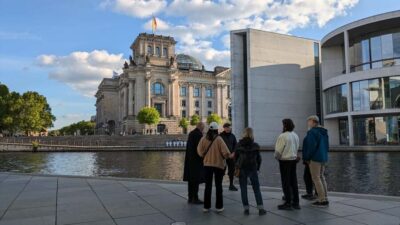
Berlin City walk Government District and Places of Democracy
Read our review →
Berlin: Third Reich & Cold War Guided Walking Tour
Read our review →
Berlin’s Best: 2 Hour Walking Tour Third Reich and the Cold War
Read our review →

Explore Berlin: See All The Iconic Sights & Some Hidden Gems
Read our review →Lists this walk sits on