
Review · TOKYO
Asakusa: A Big-picture History Walk to Know Japan
Asakusa is usually sold as a temple-and-shopping stop, but this two-hour walk gives the neighborhood a much wider job. The Sumida River becomes the starting point for Japan’s long isolation and sudden opening, while Sensō-ji and Asakusa Shrine explain how Buddhism and Shinto have shared space for centuries. I especially like the clear comparisons between Japanese and Western dragons, and the story of how ukiyo-e prints helped shape European Impressionism.
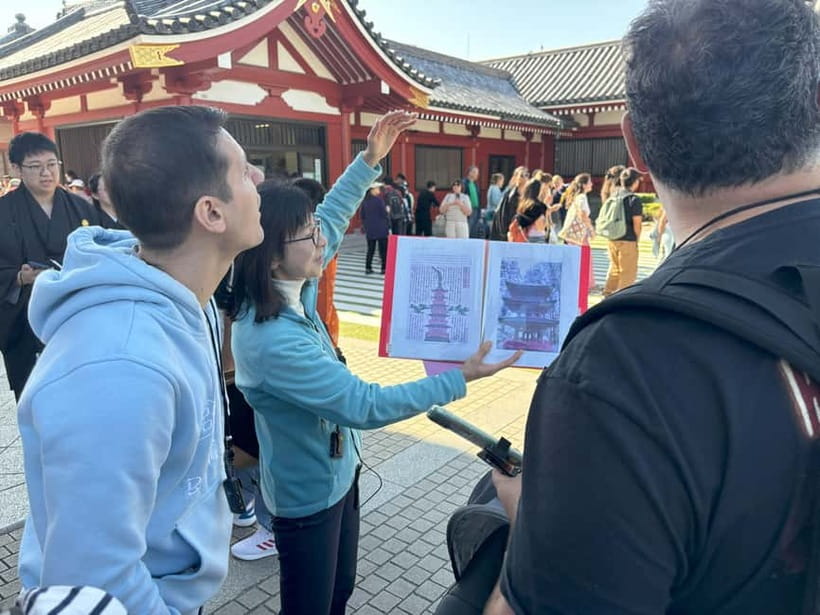
I also like the tour’s compact length and its practical teaching style. Guides such as Choco, Sachi, Amy, and Yoko have been praised for keeping both adults and children engaged, and one guide uses printed images to make tricky ideas easier to grasp. The main drawback is that two hours can only provide a broad framework, not a full study of Japanese history. The headsets can also create an echo for some people, and the walk involves a moderate amount of walking.
Key points at a glance
- The Sumida River sets up Japan’s opening to the world, from the shogunate’s closed policy to Admiral Perry’s arrival.
- Buddhism and Shinto are explained at the start, so the temple and shrine visits make more sense.
- Ukiyo-e connects Asakusa to European art, including the Impressionist painters.
- Kaminarimon’s dragons offer a memorable East-West comparison, with Japanese dragons taking a very different role from Western ones.
- Sensō-ji and Asakusa Shrine share one historic setting, showing Japan’s long religious coexistence.
- The $58 price is fair for a guided history lesson, especially if you want context instead of only photographs.
Why this Asakusa walk is more than a temple visit
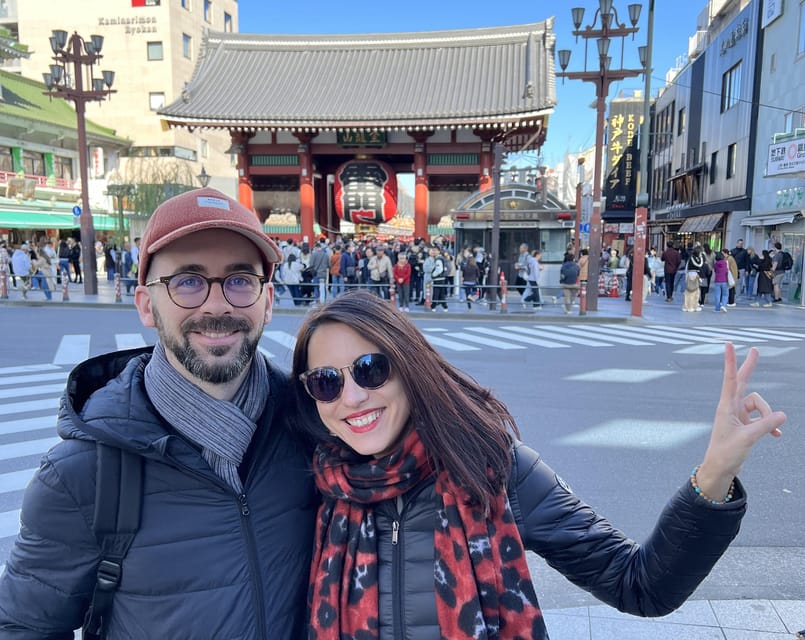
If you have already seen photographs of Kaminarimon’s huge red lantern, you know the visual appeal of Asakusa. The trouble is that a famous gate can remain just that, a famous gate. This tour is designed to connect the sights so you understand what they mean.
The route moves through a small section of Asakusa, but the subjects reach well beyond the neighborhood. You’ll hear about Japan’s feudal government, its restricted foreign trade, its religious traditions, its art, and its links with Europe. The guide uses each stop as a short history lesson rather than treating the walk as a checklist of landmarks.
That approach suits me because Asakusa rewards context. A Buddhist temple beside a Shinto shrine can seem confusing if you expect religions to be separated into neat boxes. Ukiyo-e prints can look like attractive souvenirs until you learn that they changed how Western artists thought about composition and everyday life.
The tour is in English and lasts two hours. That is enough time to build a useful framework without taking half a day from your Tokyo plans. It is best for adults and older children who enjoy explanation, though an eight-year-old was specifically kept interested by the fortune-telling activity near the temple entrance.
More History Walking Tours in Japan
- Tokyo: Imperial Palace and Shogun Historical Walking Tour
★ 5.0 · 2,251 reviews - Kyoto Gion: 2-Hour Geisha Culture & History Walking Tour
★ 5.0 · 1,186 reviews - Tokyo: Imperial Palace Japanese History Walking Tour
★ 4.9 · 987 reviews
Starting beside the Sumida River
The walk begins near Asakusa subway station, outside Exit 4 on the Ginza Line, in front of the Burger King at 2-chōme-20-6 Kaminarimon. From there, the first stop is the Tokyo Cruise Asakusa Pier, where the Sumida River provides the setting for one of the tour’s strongest history lessons.
Here you learn why the Edo shogunate sealed Japan from most foreign contact for more than 200 years. The story is not presented as a vague period of isolation. You hear about the limited exception made for Dutch trade and how information still entered Japan through that narrow channel.
The guide then brings the story forward to Admiral Perry’s arrival and the pressure that forced Japan to reopen. This matters because modern Tokyo can otherwise feel disconnected from the cautious, controlled country that existed before the nineteenth century.
The river setting helps. You are not simply standing in front of a sign while listening to dates. The guide connects the older waterfront to Odaiba’s former gun batteries and to the modern Statue of Liberty replica facing the Pacific. That link between military defense, foreign pressure, and present-day Tokyo gives the opening section a useful sense of place.
The pier stop lasts about 15 minutes. It is a good beginning because it gives you a timeline before the religious sites appear. If you already know Japanese political history, this part may feel familiar. If you are new to Japan, it will help explain why the country changed so quickly after reopening.
Buddhism and Shinto at the information center
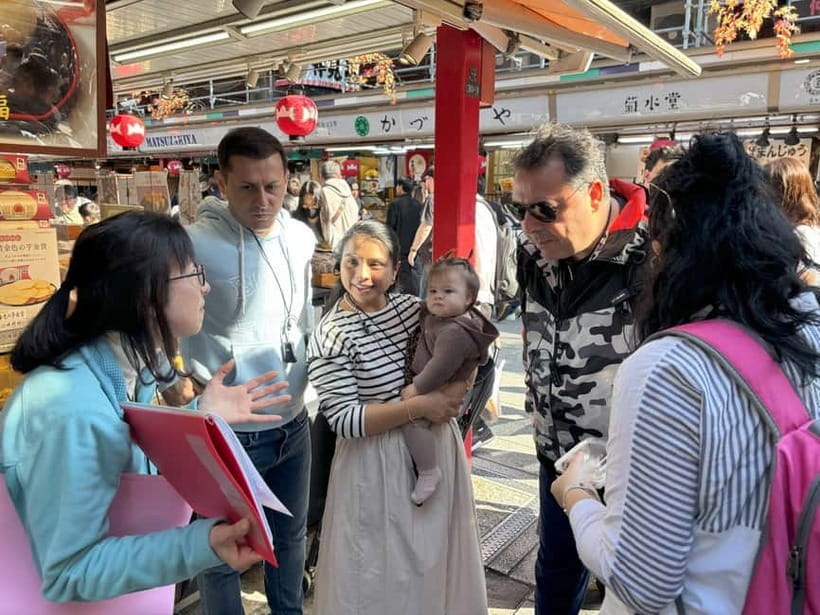
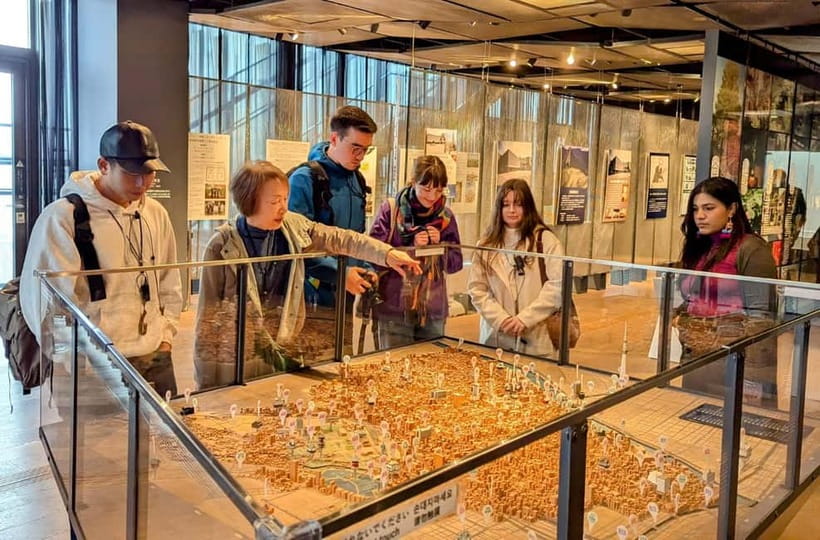
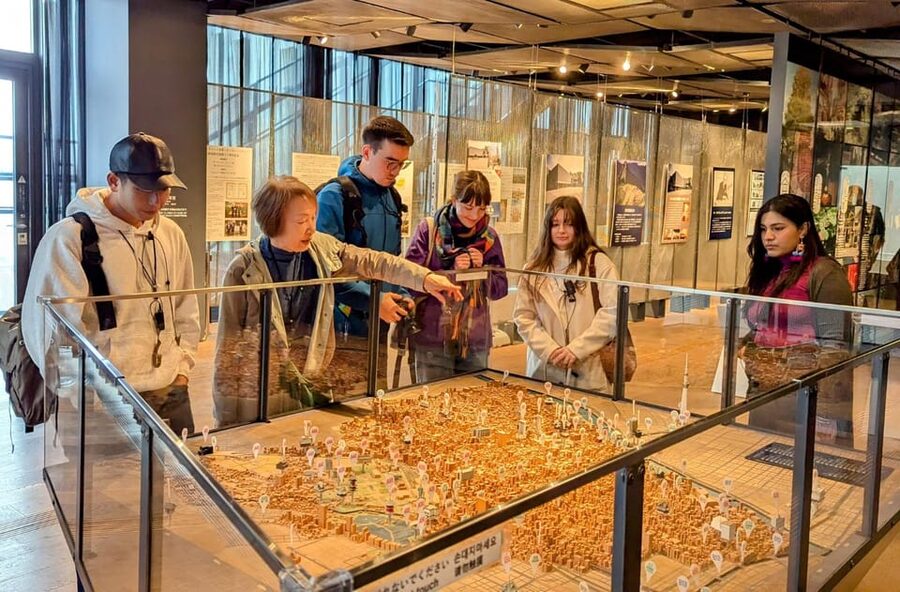
At the Asakusa Culture Tourist Information Center, the guide lays out the basic difference between Buddhism and Shinto. This is one of the most useful stops because many first-time visitors see prayer rituals without knowing which tradition they are watching.
The explanation is meant to be visual and straightforward. You learn the foundation before reaching the temple and shrine, so the later stops do not become a blur of incense, bows, bells, and statues.
This is also where the tour’s teaching style matters most. Several guides have been praised for explaining difficult cultural points in a friendly way, and Amy reportedly brought printed images to make the material easier to follow. You should expect a lesson aimed at clarity rather than specialist detail.
The stop lasts roughly 15 minutes. It will not answer every question about Japanese religion, but it gives you enough structure to approach the rest of Asakusa with more confidence.
Kaminarimon and the opposite role of dragons
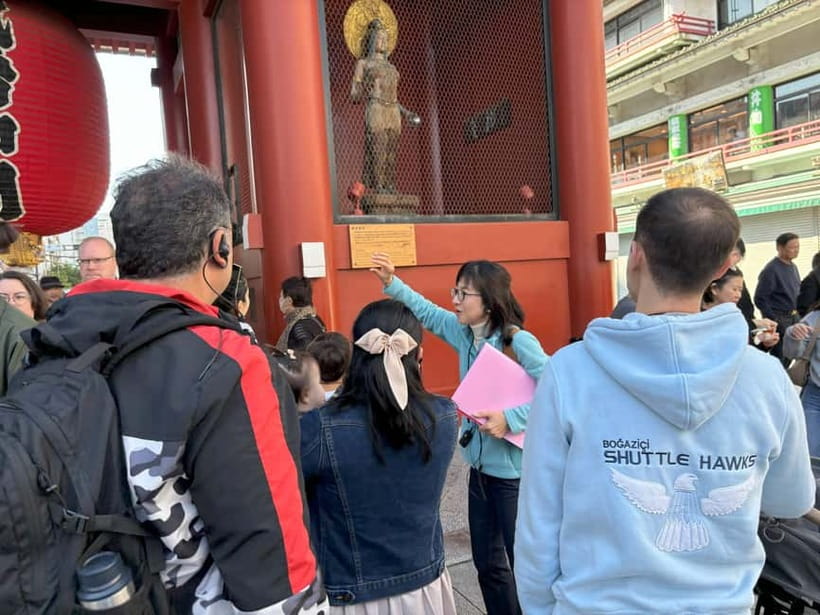
Kaminarimon, or the Thunder Gate, is Asakusa’s best-known entrance. Its giant lantern draws the camera, but the guide uses the gate to discuss something less obvious: the different roles dragons play in Japan and in the West.
That comparison is a clever way to make symbolism memorable. Western stories often place dragons in the role of enemies or monsters. Japanese dragons have a very different place, and the guide explains why the Japanese dragon works as an opposite image to the Western one.
This is a short stop, about 15 minutes, so expect one focused idea rather than a complete lesson in Japanese mythology. The gate can also be crowded, and stopping near a famous landmark is not the same as having a quiet classroom. Still, the visual setting makes the comparison easy to remember.
I like this part because it shows how a guide can turn a familiar photograph into a question about culture. You leave Kaminarimon looking at the details instead of only checking off the entrance to Sensō-ji.
Same streets, a different story:
- Kyoto Geisha Walking Tour: Gion District & Hidden Gems
★ 4.7 · 3,273 reviews - Tokyo Tsukiji Fish Market Food and Culture Walking Tour
★ 5.0 · 3,184 reviews - Kyoto: Gion Magical Night Walking Tour with Geisha Trivia
★ 4.9 · 2,393 reviews - Kyoto: Gion Geisha District Walking Tour – Stories of Geisha
★ 4.7 · 2,187 reviews
Nakamise and the European story of ukiyo-e
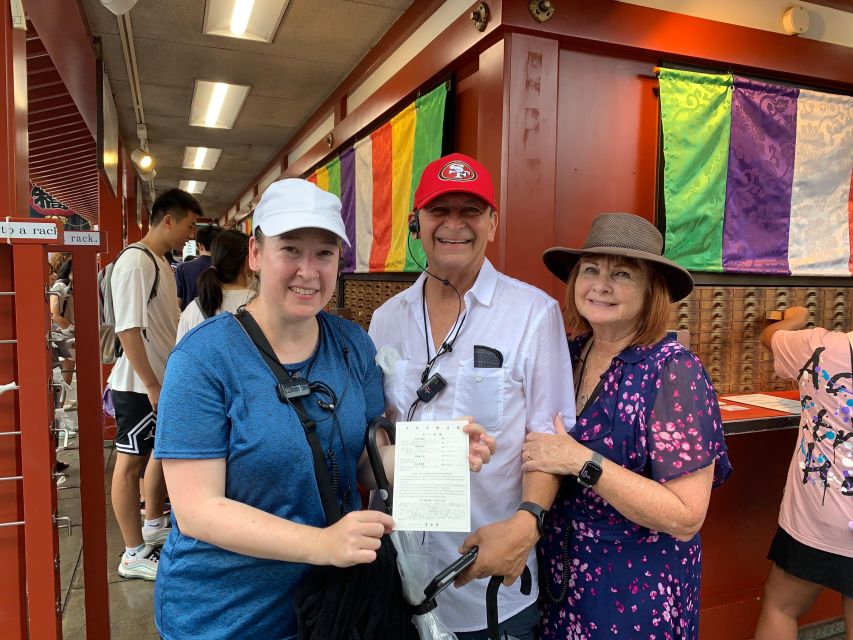
From Kaminarimon, the route follows Nakamise Shopping Street for about 30 minutes. This is the longest stop, and it combines the practical experience of walking through one of Japan’s oldest shopping streets with a lesson in Buddhist imagery and art history.
The guide discusses the vajra, also called tokko, a Buddhist symbol that may otherwise pass unnoticed among the shopfronts and temple decorations. You will also hear about the meaning of objects and images connected with the Buddhist setting, rather than treating the street as a simple path to the main hall.
The major subject here is ukiyo-e woodblock printing. These prints eventually reached Europe and helped inspire Western Impressionist painters. That is a rewarding connection because it links a busy Tokyo shopping street with a large change in European art.
The guide’s point is not simply that European artists admired Japanese pictures. You learn that ukiyo-e offered a different way to frame scenes, show ordinary life, and use visual space. Once you know this, Japanese prints become part of a two-way cultural story instead of an isolated national art form.
Nakamise is also where the tour may feel least calm. It is a shopping street, and the route includes sightseeing and walking rather than a private viewing. If you want time to browse every shop, buy snacks, or take careful photographs, you may need to return later on your own.
Traditional snack tastings are included, which adds a small local touch. The details of the snacks are not fixed in the information provided, so do not book this expecting a full food tour. Think of the tasting as a brief extra within a history walk.
Hōzōmon and the shared ideas of Japan and Europe
At Hōzōmon Gate, the guide makes one of the tour’s more surprising claims: people in Japan and Europe had remarkably similar ways of thinking 1,000 years ago.
This section is useful because it pushes back against the easy habit of treating Japan and Europe as completely separate worlds. The comparison places medieval Japan beside medieval Europe and asks you to notice shared human patterns rather than only cultural differences.
The subject is broad, and the 15-minute stop cannot explore every detail. Still, it gives the tour an international angle that many neighborhood walks skip. You are encouraged to think about Japan in relation to the wider world, not as a country that developed in total isolation from all outside ideas.
Hōzōmon also gives you another chance to look at the temple approach with more awareness. By this point, you have heard about religion, symbols, political history, and art. The route begins to feel like one connected lesson rather than a series of unrelated landmarks.
Sensō-ji and the difference between prayer traditions
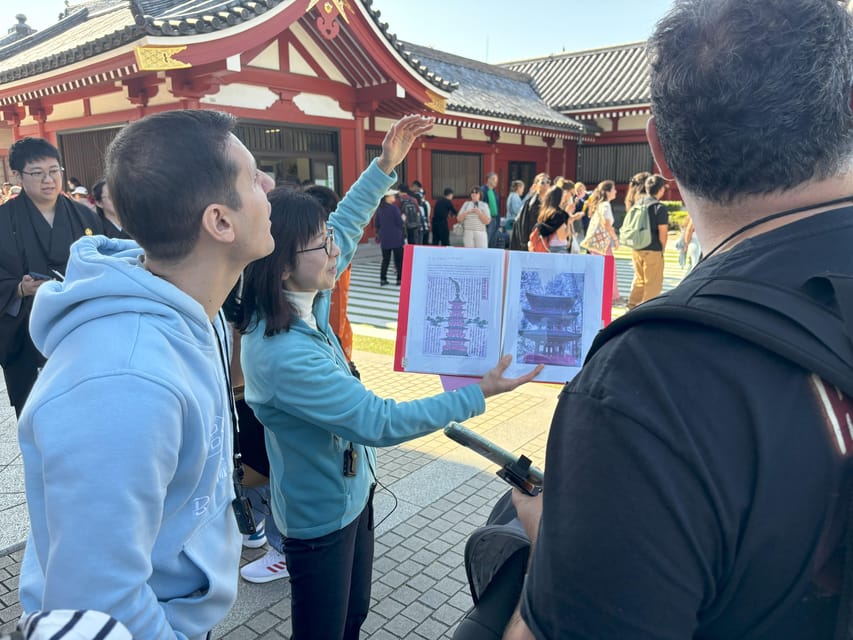
Sensō-ji is the oldest Buddhist temple in Japan, and it is the central stop for many people on the walk. The guide uses the temple to make another comparison between medieval Japan and Europe, then explains how prayer differs in Buddhism and Shinto.
That distinction is especially helpful if you plan to visit several temples and shrines during your time in Japan. You may see people bow, clap, ring bells, light incense, or make offerings. Without context, these actions can look similar. The guide gives you a better sense of why the rituals are not interchangeable.
The Sensō-ji stop lasts about 15 minutes. The temple grounds can be busy, so you should expect to listen while standing and walking rather than sitting through a long formal talk. Wear comfortable shoes and bring water, particularly in warm or wet weather.
Families can manage the timing more easily than they might manage a longer historical tour. One child enjoyed the fortune-telling activity near the temple entrance, which gives younger participants something physical to do while adults take in the explanation. The tour is still aimed more at adults than small children because the main subject is history.
Asakusa Shrine and a thousand years of coexistence
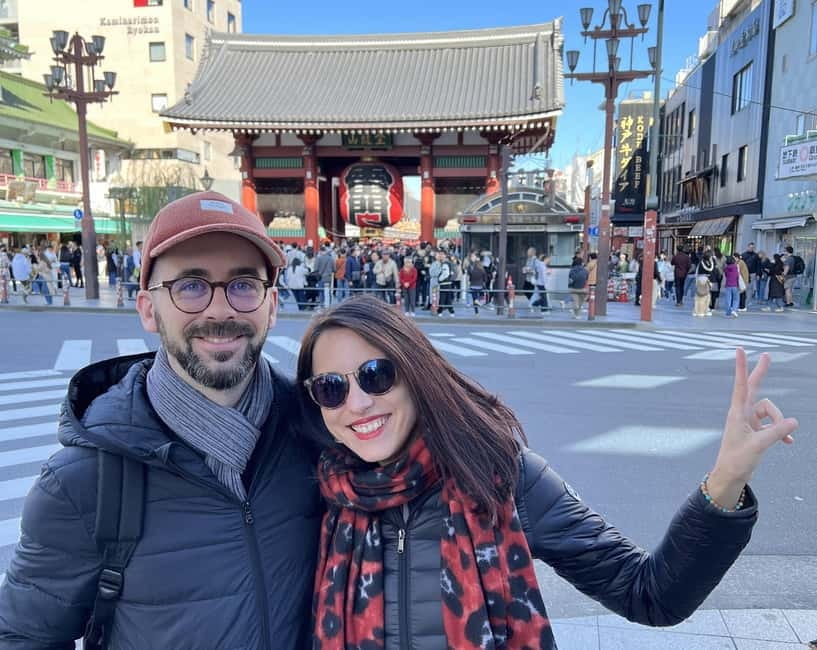
The final stop is Asakusa Shrine, where the tour’s religious story comes together. The shrine and Sensō-ji temple occupy the same wider setting, and the guide explains how Buddhism and Shinto have shared grounds, worshippers, and history for more than a thousand years.
For many people, this is the moment when the earlier explanation becomes real. Japan’s religious life does not always fit the Western expectation that one temple belongs to one faith and one shrine belongs to another with no overlap. Here, the physical closeness of the two sites makes that coexistence easy to see.
The tour ends after about 15 minutes at the shrine. It is a sensible finish because you have moved from political history at the river, through symbols and art, to the living relationship between two religious traditions.
The Sanja Matsuri festival can make this stop especially memorable if your visit happens to coincide with it. During that festival, the mikoshi parade fills the area with activity. The guide can help explain what you are seeing, though festival conditions may also make the route more crowded and less predictable.
The guides and how the tour is taught
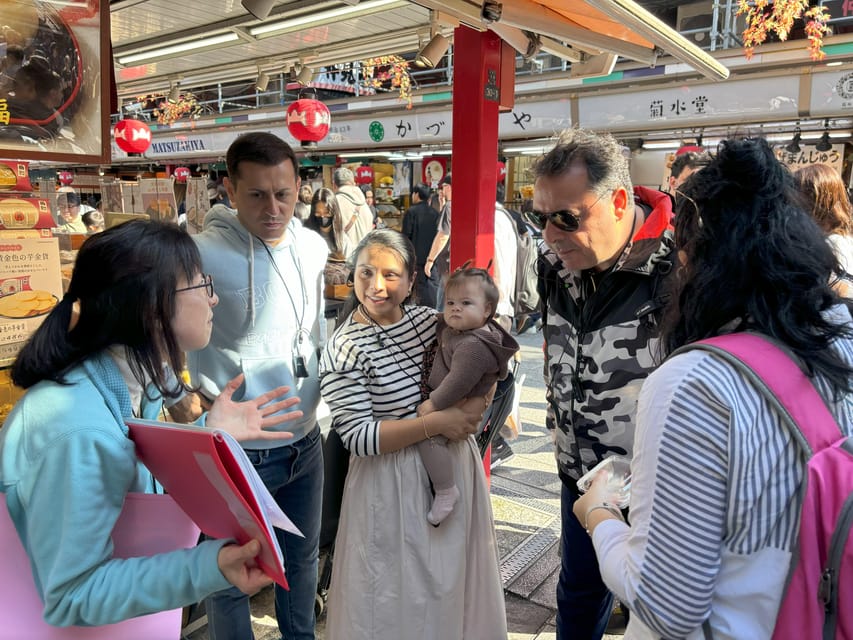
The experience includes a certified English-speaking guide, and individual guide quality matters a great deal on a history walk. Choco has been praised for engaging both children and adults. Sachi has been described as friendly, clear, and especially good at bringing the temple and neighborhood history to life.
Other named guides include Amy, Yasu, Yoko, Kay, and Sachiko. Their approaches may differ, but the repeated pattern is a warm presentation with room for questions. Kay, a Tokyo local, has also been noted for explaining how to approach shrines respectfully and for offering useful information about the area.
Groups of three or more receive headsets so you can hear the guide while walking. This is helpful in a crowded district, although the equipment may add an echo for some listeners. If you find the sound unclear, tell the guide early rather than waiting until the end.
The tour runs in rain or shine. Bring weather-appropriate clothing, water, and shoes you can comfortably wear for two hours. Anyone with mobility concerns should contact the supplier before booking, since the activity is described as moderately demanding and is not recommended for people with mobility impairments.
Is $58 a fair price?
At $58 per person, this is not the cheapest way to walk around Asakusa. You can visit the gates, shopping street, temple, and shrine without paying for entry to this guided experience.
The value comes from the explanation. In two hours, you receive a connected lesson about isolation, foreign trade, religion, symbolism, art, and Japan’s relationship with Europe. You also get traditional snack tastings, a certified guide, and headsets for larger groups.
I would call the price fair if you want a structured introduction to Japan and do not plan to research every site yourself. It is less compelling if you prefer to wander silently, shop at your own pace, or spend a long time photographing the temple grounds.
Free cancellation up to 24 hours before the start and the option to reserve now and pay later make the booking less rigid. The tour needs a minimum number of participants, and if it is cancelled, notice is sent at least 24 hours ahead with a full refund.
Who should book this walk?
Book it if you want Asakusa to make sense before you explore more of Tokyo. The tour works particularly well near the start of a Japan trip, when you are still learning the difference between a Buddhist temple and a Shinto shrine.
It also suits families with older children, couples who prefer ideas along with sightseeing, and visitors who enjoy art history. The ukiyo-e section alone gives the walk a broader reach than a standard temple tour.
You may want to skip it if you have limited walking ability, need a quiet pace, or already know Japanese religious and political history well. The tour covers a lot in a short time, so it favors a broad overview over long pauses.
FAQ
Where does the Asakusa history walk start?
The meeting point is in front of the Burger King next to Exit 4 of Asakusa subway station on the Ginza Line, station G19. The address is 2-chōme-20-6 Kaminarimon.
How long does the tour last?
The tour lasts two hours.
What language is the tour conducted in?
The live tour guide speaks English. An English audio guide is also included.
What places does the walk visit?
The route includes Tokyo Cruise Asakusa Pier, Asakusa Culture Tourist Information Center, Kaminarimon, Nakamise Shopping Street, Hōzōmon Gate, Sensō-ji Temple, and Asakusa Shrine.
Are headsets provided?
Headsets are provided for groups of three or more so you can hear the guide clearly while walking.
Is the tour suitable for children?
Children younger than six may join without charge. Families are welcome, though the historical focus is recommended mainly for adults. An eight-year-old was able to enjoy the fortune-telling activity near the temple entrance.
What should I bring?
Bring comfortable shoes, water, and clothing suited to the weather. The walk operates in rain or shine.
What happens if the tour is cancelled?
The tour may be cancelled if the minimum number of participants is not met. The operator will notify you at least 24 hours in advance, and participants receive a full refund.
Should you book it?
Book this walk if you want a clear answer to the question of how Asakusa fits into Japan’s larger story. Its best features are the river opening, the simple explanation of Buddhism and Shinto, the ukiyo-e connection to European art, and the final look at temple and shrine coexistence.
The walk will not give you every detail, and crowded streets or imperfect headset sound may occasionally get in the way. But for $58 and two hours, it offers a useful foundation that can change how you see the rest of Asakusa. You leave with more than temple photographs: you have a working map of how Japan’s beliefs, art, politics, and foreign connections fit together.
New walking tours around Japan
- Nara: Half-Day UNESCO Heritage & Local Culture Walking Tour★ 4.8 · 250 reviews
- Nagasaki: Private Walking Tour with a Local★ 4.7 · 79 reviews
- Hiroshima: Miyajima Half-day Historical Walking Tour★ 4.7 · 100 reviews
- Kyoto: Private Walking Tour with a Local★ 4.6 · 118 reviews
- Kyoto: Private 2.5 Hour Historical Walking Tour★ 4.9 · 121 reviews
- Kyoto: Imperial Palace & Nijo Castle Guided Walking Tour★ 4.7 · 453 reviews
- Kyoto: Izakaya Bars Guided Walking Tour★ 4.9 · 815 reviews
- Kyoto: Gion Walking Tour★ 5.0 · 195 reviews
Tokyo Walking Tours, side by side.
Tokyo Tsukiji Fish Market Food and Culture Walking Tour
Read our review →
Tokyo: Imperial Palace and Shogun Historical Walking Tour
Read our review →
Tokyo: Shinjuku Local Bar and Izakaya Guided Walking Tour
Read our review →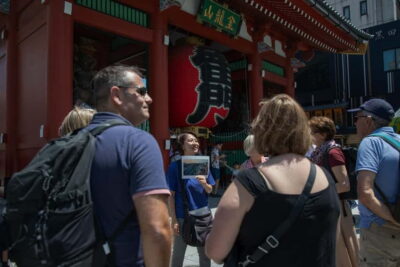
Tokyo: Asakusa Walking Tour with Sensoji Temple Visit
Read our review →
Tokyo: Tsukiji Fish Market Guided Walking Tour
Read our review →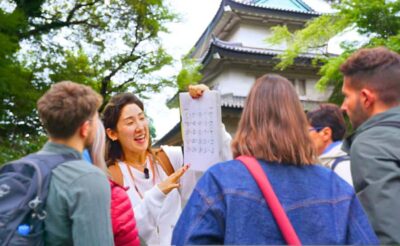
Tokyo: Imperial Palace Japanese History Walking Tour
Read our review →
Tokyo: Private Custom Walking Tour with Local Guide
Read our review →Lists this walk sits on