
Review · JAPAN
Nara Half Day Trip Walking Tour (Private Option Available)
Nara’s deer get the photos, but the Great Buddha at Todaiji and the lantern-lined paths of Kasuga Taisha give this five-hour walk its real weight. You’ll also see an old merchant’s home, a traditional neighborhood, and a hidden Japanese pyramid, so the day reaches beyond the usual park-and-deer visit.
I like the small maximum of eight people, which gives guides such as Shin, Yuki, Miyabi, and Yusuke room to answer questions and adjust the pace. I also like the included lunch, a filling Japanese meal that turns a sightseeing stop into a taste of local life. The main drawback is the amount of walking, especially in hot, humid weather, and dietary requests need advance notice.
Key points to know before booking
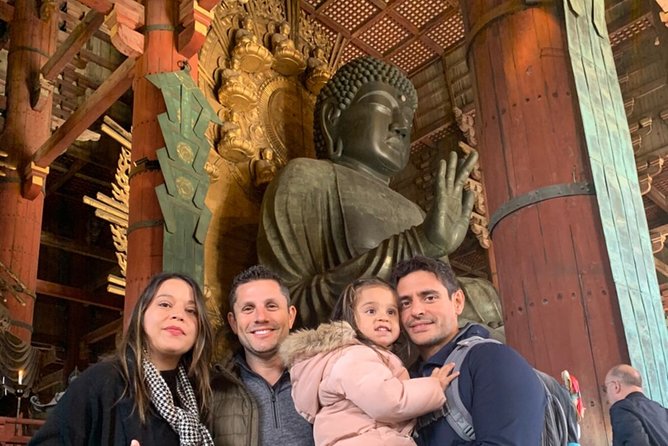
- Todaiji’s Great Buddha is the centerpiece: Enter the enormous temple hall and pass the guardian statues at Nandaimon.
- The deer are part of the day, not a quick photo stop: Your guide explains how to feed them without letting them crowd or push you.
- Lunch is included: You’ll eat at a traditional Japanese restaurant, with additional drinks and snacks at your own cost.
- Naramachi adds a quieter side of Nara: Explore old streets, a merchant’s house, and a townscape far removed from modern Tokyo.
- The group stays small: The tour accepts a maximum of eight people, and a private option is available.
- Plan for weather and food limits: Summer heat can reach 40°C, winter can fall to -5°C, and gluten-free meals cannot be accommodated.
Why this half-day Nara walk works so well
Nara is easy to visit on your own, but its main sights are spread across a large area. You can find Todaiji, Kasuga Taisha, Nara Park, and Naramachi without a guide, yet it takes time to understand what you’re seeing and how the pieces fit together.
This tour gives you a clear route through Nara in about five hours. You begin near the Statue of Gyoki-bosatsu in Higashimuki Nakamachi, then walk through temple grounds, park paths, shrine approaches, and old town streets before returning to the same meeting point.
I see the tour as a useful first look rather than a slow, scholarly study of every site. The schedule gives you enough time to appreciate the major landmarks, but stops are generally 15 to 45 minutes. If you want long photography sessions or quiet time inside each building, you may find the pace brisk.
The group size helps. With no more than eight people, the guide can explain how to bow at a shrine, answer questions about Buddhist and Shinto customs, and make small route changes when the group needs a break. Several guides, including Mari, Shin, and Yuuki, have adjusted the pace for families and different energy levels.
More Private Walking Tours in Japan
- Osaka: Hotspots & Hidden Gems Walking Tour Private or Group
★ 4.9 · 1,300 reviews - Tokyo: Private Custom Walking Tour with Local Guide
★ 4.8 · 533 reviews - Tokyo: Private Walking Tour with a Local Guide
★ 4.9 · 469 reviews
Kofuku-ji and the five-story pagoda
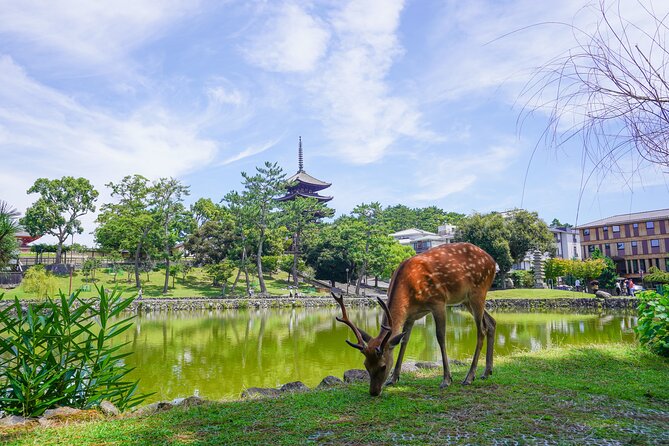
The first stop is Kofuku-ji Temple, known for its five-story pagoda. The pagoda was built by the Fujiwara clan in 730 and remains one of Nara’s most recognizable landmarks.
You get about 15 minutes here. That is enough for photographs and an introduction to the temple complex, but not enough for a long visit to every building. The short opening stop also lets you get oriented before moving toward the larger sights.
This is a good place to begin because the pagoda gives you an immediate sense of Nara’s age and visual character. Your guide can provide context that you might miss if you simply walk past, especially when explaining how the city’s temples connect to its early political and religious life.
Todaiji, guardian statues, and the Great Buddha
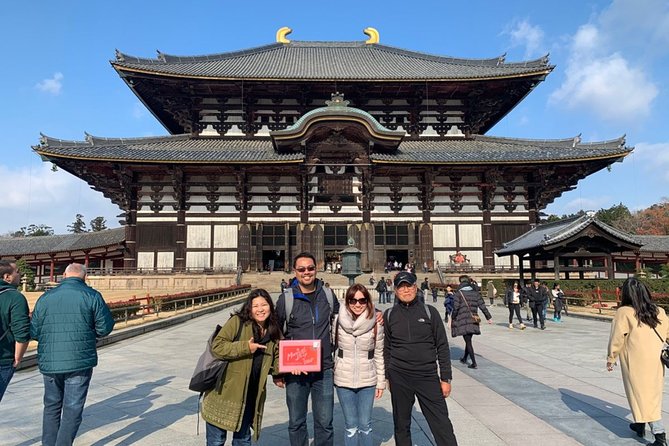
Todaiji is the major temple stop, and admission is included. You approach through Nandaimon, the great gate guarded by two imposing Kongorikishi statues. These muscular figures are designed to protect the temple, and they make a powerful first impression before you even reach the main hall.
Inside, the Great Buddha provides the tour’s biggest visual moment. The scale of the statue and the wooden hall can be hard to grasp from photographs. Your guide helps explain the religious meaning and the building’s place in Nara’s story rather than leaving you with only a quick photo opportunity.
The scheduled visit is about 30 minutes. That is a practical amount of time for a half-day tour, though you should not expect to linger over every detail. Todaiji can also feel crowded, and the open public setting means the experience changes with the day and season.
A good guide can make a real difference here. Shin has helped explain temple customs and how to make a wish, while other guides have used simple comparisons to make unfamiliar religious ideas easier to follow. If this is your first temple visit in Japan, that plain-language help is valuable.
A Japanese lunch in an old town setting
Lunch lasts about 45 minutes at a traditional Japanese restaurant in the old town. The meal is included, and the food has been described as a local set meal with several Japanese dishes rather than a rushed snack.
This is one of the tour’s strongest practical features. Nara sightseeing can stretch across a wide area, and stopping for a proper meal gives you time to sit, regroup, and ask your guide questions. The lunch also adds something you cannot get from a temple entrance ticket: a look at everyday food and dining customs.
Do not assume that every dietary need can be handled. Gluten-free requests cannot be accepted, and allergy-free meals are not guaranteed because the food is prepared in kitchens operated by other businesses. Vegetarian requests should be made by the day before, not on the day itself. Some past meals have accommodated vegetarian and vegan diners, and one lunch was adjusted for a fish allergy, but you should treat that as a possibility rather than a promise.
Bring cash for extra drinks or snacks. You do not need to pay for the guide’s food and drinks, but anything beyond the included meal is your responsibility.
Same streets, a different story:
- Kyoto Geisha Walking Tour: Gion District & Hidden Gems
★ 4.7 · 3,273 reviews - Tokyo Tsukiji Fish Market Food and Culture Walking Tour
★ 5.0 · 3,184 reviews - Kyoto: Gion Magical Night Walking Tour with Geisha Trivia
★ 4.9 · 2,393 reviews - Tokyo: Imperial Palace and Shogun Historical Walking Tour
★ 5.0 · 2,251 reviews
Kasuga Taisha and the forest approach
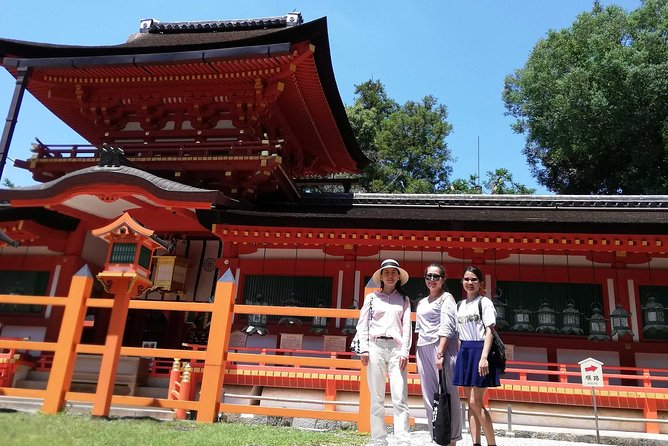
Kasuga Taisha is one of Nara’s most memorable shrines. The route includes the area around Kasugayama Primeval Forest and gives you about 30 minutes to see the shrine.
The approach feels different from Todaiji. Instead of a huge hall and a single monumental statue, you get a sequence of shrine spaces, stone and bronze lanterns, wooded paths, and bright red architectural details. The contrast makes the overall tour more interesting.
Kasuga Taisha is also a good place to learn how Shinto practice differs from Buddhist temple traditions. Your guide can show you how to approach the shrine and explain the customs behind bows, offerings, and wishes. That small guidance prevents the common problem of wandering through a sacred place without understanding what you are looking at.
The short time allocation means you will see the main highlights, not every corner of the shrine grounds. If you want to walk far into the forest or explore at a very quiet pace, consider returning on your own after the tour.
Nara Park and the famously pushy deer
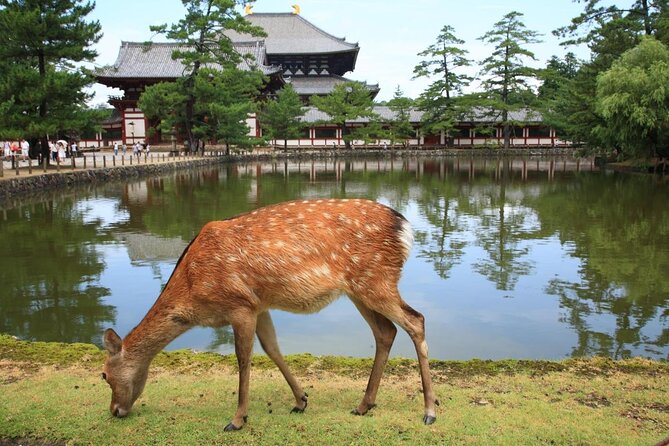
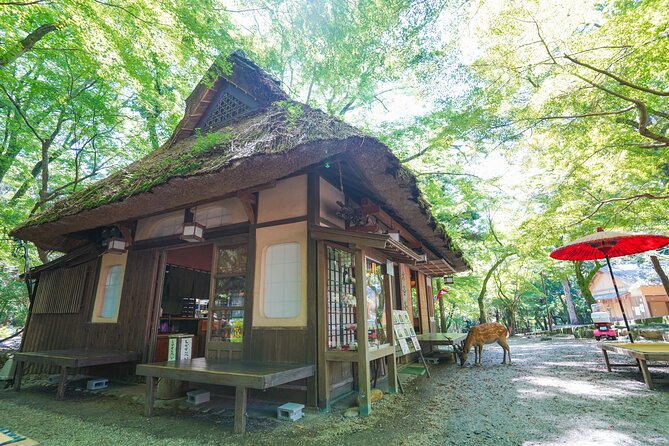
Nara Park is where the tour becomes playful. The deer are used to people, and you may see them bowing for food. They are charming, but they are also wild animals with strong opinions about rice crackers.
Your guide explains how to interact with them respectfully. The useful trick is to feed them and then show empty hands. Deer may crowd you when they think more food is coming, particularly in the morning. A guide can also point you toward calmer areas, including spots near the forest where younger deer may be less pushy.
You should not treat the deer as tame pets. Keep food under control, follow your guide’s instructions, and be ready for an animal to move closer than expected. The tour makes this part more enjoyable because you are learning the right behavior rather than simply buying crackers and hoping for the best.
The park stop lasts about 30 minutes. That is enough for feeding, photos, and a walk through the grounds. Families often find this the easiest part of the day for children, though adults should still watch young children closely around the animals.
Naramachi and the old merchant’s house
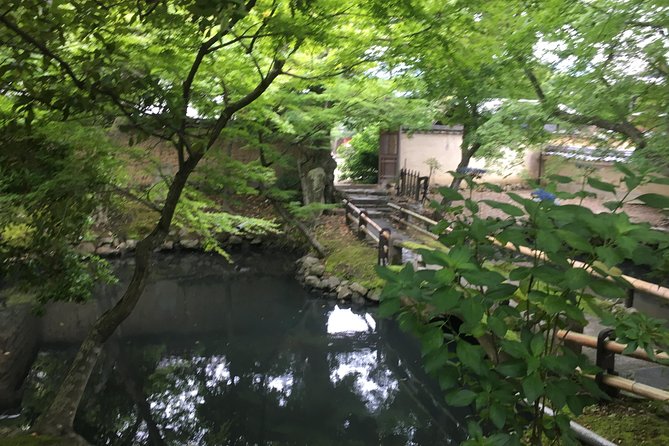
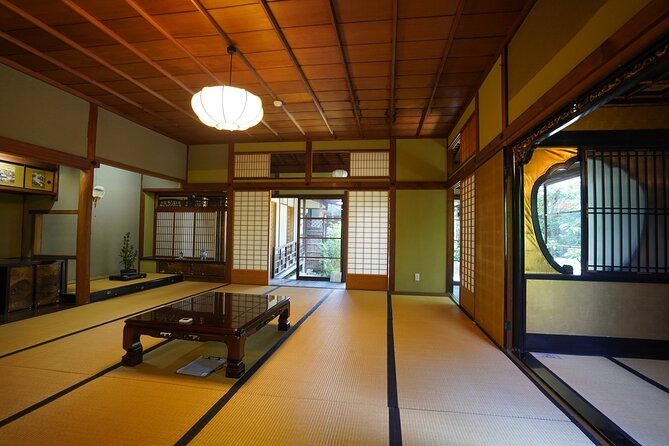
Naramachi changes the tone again. Here, you walk through an older townscape of narrow streets and traditional buildings. The stop lasts about 35 minutes and includes a visit to Naramachi Nigiwai no Ie, an old merchant’s house.
This is an important addition because Nara is more than temples and deer. The merchant house gives you a look at how people lived and worked in the old town. You can see architectural details and a street pattern that feels far removed from modern Tokyo.
The tour also includes a hidden Japanese pyramid, along with opportunities to see local crafts, traditional sweets, and other small shops depending on the guide and the day. Eri, for example, has introduced visitors to artisan goods such as knives and Nara sweets. Other guides have recommended mochi and kakigori shops after the tour.
These small additions are where the guide’s local knowledge matters most. They are not the headline attractions, but they give the afternoon more personality. The exact extra stops can vary, so you should think of them as possible bonuses rather than guaranteed itinerary items.
The guides shape the experience
The route is fixed, but the feel of the day depends heavily on the guide. The provider uses different local guides, including Shin, Yuki, Miyabi, Yusuke, Yuuki, Nao, Eri, Hide, Mari, and others.
The strongest pattern is personal attention. Guides have been praised for explaining religious customs in clear English, taking photographs, answering questions, and changing the route to match a family’s energy level. Some have also recommended restaurants, sake tastings, traditional sweets, and local shopping after the formal tour ends.
You should not book this expecting a lecture delivered word for word. The experience works best when you ask questions and take part. Ask why the deer bow, how to make a wish, what the lanterns represent, or how Buddhist and Shinto sites differ. A small group gives you a better chance to have that kind of conversation.
The English level may vary slightly by guide, but the tour is designed for English-speaking visitors. Names and guide assignments are not guaranteed in advance from the information provided, so book for the structure and local guidance rather than for one specific person.
How much value do you get for $105.45?
At $105.45 per person, this is not the cheapest way to see Nara. You can walk through Nara Park for free and visit some temple grounds without joining a tour. The price makes more sense when you count the included admission tickets, lunch, guide, and route planning.
You are paying for a compact day that covers several major sights without requiring you to research train connections, temple customs, lunch options, or the best way to handle the deer. The small group also gives the tour a more personal feel than a large coach excursion.
For a first visit, I consider the price reasonable if you value explanation and convenience. It is less appealing if you already know Nara well, prefer to move independently, or want to spend an entire morning inside one temple.
The private option can be useful for families, couples, or groups with a specific pace, though the supplied details do not state a separate private price or a different route. Group discounts are available, so compare the final cost if you are booking for several people.
Walking, weather, and what to bring
This is a walking tour with a few short breaks. Most people can participate, and all ages are welcome, but you should be comfortable walking between several sites across temple grounds, park paths, and old streets.
Nara’s weather matters. Summer can be very hot and humid, with temperatures reaching 40°C, so bring water, wear a hat, and use sun protection. Winter temperatures can fall to -5°C, and cold wind can make the open park and shrine paths feel sharper than expected.
Wear comfortable shoes. The route is not presented as a strenuous hike, but the five-hour duration and multiple stops add up. Tell the operator about health concerns in advance so the guide can understand your needs.
The activity requires good weather. If poor weather causes cancellation, you will be offered another date or a full refund. You can cancel for a full refund up to 24 hours before the start time, but late cancellations and changes are not accepted.
Who should book this Nara tour?
I would choose this tour for a first-time visitor who has one half-day in Nara and wants the essential sights with useful explanations. It also suits families, since the deer provide an easy focus for children while the temples and old town give adults plenty to enjoy.
It works well for couples and small groups who want a local guide without joining a large bus tour. The included lunch and admission fees keep the day simple, and the return to the starting point makes the route easy to fit into a broader Japan itinerary.
I would hesitate if you need a strict gluten-free meal, have serious food allergies, dislike walking, or want unlimited time at each site. I would also skip it if your main goal is private photography at a slow pace, unless the private option gives you the flexibility you need.
Should you book the Nara Half Day Trip?
Book it if you want Nara’s main sights, local context, a proper lunch, and a manageable route in about five hours. The best parts are the mix of Todaiji, Kasuga Taisha, deer, and Naramachi, plus the chance to ask a guide about customs that are easy to miss on your own.
The experience is especially useful early in a Nara visit. Afterward, you will know which temple, shrine, shop, or park path deserves more of your own time. Just prepare for weather, confirm dietary needs at least a day ahead, and remember that the deer are polite only until they suspect you have more crackers.
FAQ
How long does the Nara walking tour last?
The tour lasts approximately five hours.
Where does the tour start?
It starts at the Statue of Gyoki-bosatsu, at 27 Higashimuki Nakamachi, Nara, 630-8215, Japan.
Where does the tour finish?
The tour ends back at the meeting point.
What is included in the price?
The price includes a guided walking tour, admission tickets to the included shrines and temples, and lunch at a traditional Japanese restaurant.
Is the tour private?
A private option is available. The standard tour has a maximum of eight travelers.
Does the tour include Todaiji Temple?
Yes. The route includes Todaiji’s main hall and Nandaimon, with admission included.
Will I visit Kasuga Taisha?
Yes. The tour includes Kasuga Taisha and the area around Kasugayama Primeval Forest.
Can I feed the deer?
The tour includes time in Nara Park, where you can see and interact with the deer. Your guide explains how to feed them respectfully.
Can the tour accommodate gluten-free meals?
No. Gluten-free requests cannot be accommodated. Other dietary requests must be made by the day before, and allergy-free meals cannot be guaranteed.
What happens if the weather is poor?
If the tour is canceled because of poor weather, you will be offered another date or a full refund. You can also cancel for a full refund up to 24 hours before the experience begins.
More one-day outings around Japan
- Madrid: 6-Hour Day Trip to Toledo with Guided Walking Tour
★ 4.0 · 1,029 reviews - Madrid: Day Trip to Toledo with Walking Tour & Small Group
★ 4.2 · 111 reviews - 1 Day Trekking in Chiang Rai forest (walk only)
★ 4.9 · 95 reviews
New walking tours around Japan
- Nara: Half-Day UNESCO Heritage & Local Culture Walking Tour★ 4.8 · 250 reviews
- Nagasaki: Private Walking Tour with a Local★ 4.7 · 79 reviews
- Hiroshima: Miyajima Half-day Historical Walking Tour★ 4.7 · 100 reviews
- Kyoto: Private Walking Tour with a Local★ 4.6 · 118 reviews
- Kyoto: Private 2.5 Hour Historical Walking Tour★ 4.9 · 121 reviews
- Kyoto: Imperial Palace & Nijo Castle Guided Walking Tour★ 4.7 · 453 reviews
- Kyoto: Izakaya Bars Guided Walking Tour★ 4.9 · 815 reviews
- Kyoto: Gion Sunset Walking Tour with Local Guide★ 4.7 · 351 reviews
Japan Walking Tours, side by side.
Kyoto Geisha Walking Tour: Gion District & Hidden Gems
Read our review →
Tokyo Tsukiji Fish Market Food and Culture Walking Tour
Read our review →
Kyoto: Gion Magical Night Walking Tour with Geisha Trivia
Read our review →
Tokyo: Imperial Palace and Shogun Historical Walking Tour
Read our review →
Kyoto: Gion Geisha District Walking Tour – Stories of Geisha
Read our review →
Best of Kyoto: Gion, Geisha, Pagodas & Cobblestones
Read our review →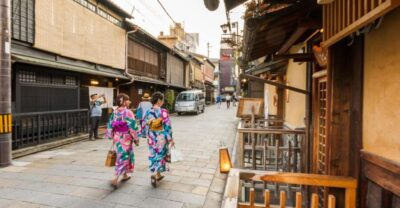

Tokyo: Shinjuku Local Bar and Izakaya Guided Walking Tour
Read our review →Lists this walk sits on