Review · TOKYO
Tokyo: Imperial Palace and Shogun Historical Walking Tour
Tokyo’s Imperial Palace East Gardens give you something many Tokyo tours skip: the remains of Edo Castle beneath today’s quiet royal grounds. You’ll pass massive stone walls, old gates, the former castle keep foundation, and the graceful ponds of Ninomaru Garden while your guide explains how shoguns, emperors, and modern Japan connect.
I like the small group limit of 15, which makes it easier to ask questions and keep up with the guide. I also like the mix of history and scenery: this is not just a talk beside a palace fence, but a walk through gardens and surviving castle structures that buses cannot reach.
The main caution is simple: the quality depends on your guide, and the tour can feel lecture-heavy if the explanations run long. The grounds are free to enter on your own, so you are paying for the stories, direction, and historical setting rather than admission alone.
Key Points at a Glance
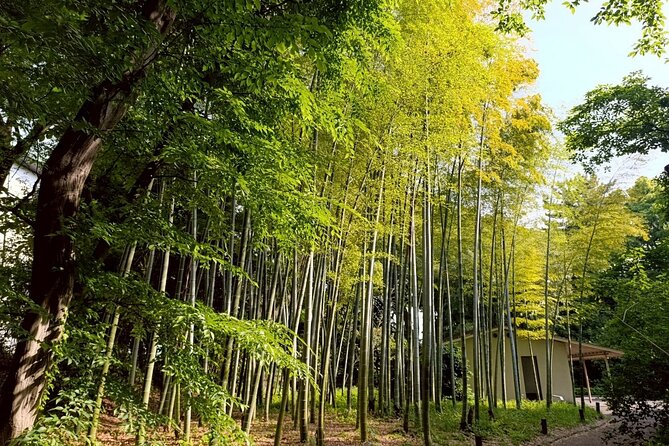
- Edo Castle ruins: Walk over the foundation of the former castle keep and see the scale of the old shogun stronghold.
- Ninomaru Garden: Enjoy ponds, seasonal flowers, and carefully arranged scenery within the East Gardens.
- Guides with different strengths: Jim, Tony, Miguel, Izzy, and others have led tours, with history and storytelling praised most often.
- Small walking group: The maximum group size is 15, a useful balance between company and personal attention.
- Free gardens, paid interpretation: Admission to the gardens can be free, but the tour adds context and helps you notice what you might otherwise pass.
- Allow for slopes: You will walk for roughly two hours, with some uneven ground and inclines.
Why the East Gardens Tell Tokyo’s Story
The East Gardens are more than a pleasant green break in central Tokyo. They occupy part of the former Edo Castle grounds, the political center of Japan during the shogun era. That makes the setting unusually useful: you can look at a stone wall, a garden pond, or a raised foundation and hear how each fits into the city’s earlier power structure.
A guide helps connect the pieces. Without one, the castle ruins can look like impressive masonry with no clear story. With an explanation, the thick walls suggest defense, the elevated foundation shows the importance of the former keep, and the garden design points to the refined culture that developed alongside samurai rule.
I especially like this combination of hard military remains and gentle garden scenery. The route moves from gates and walls to ponds and flowers, then back to the former castle site. That contrast gives you a better feel for Edo-period Japan than a simple list of dates would.
The tour also covers the imperial family and the modern palace area. You should not expect access to the private Imperial Palace buildings. The attraction here is the public East Gardens and the history held in the grounds around them.
More History Walking Tours in Japan
- Kyoto Gion: 2-Hour Geisha Culture & History Walking Tour
★ 5.0 · 1,186 reviews - Tokyo: Imperial Palace Japanese History Walking Tour
★ 4.9 · 987 reviews - Hiroshima Historical Walking Tour – Why A-Bomb was Dropped
★ 4.8 · 893 reviews
Starting at Wadakura Fountain Park
The meeting point is Starbucks Coffee at Wadakura Fountain Park, 3-1 Kōkyogaien, Chiyoda City. This gives you a clear, recognizable place to gather near the palace grounds, and the area is close to public transportation.
Arrive early. One poor experience came from a meeting mix-up, with the group leaving before the participant connected with the guide. Even though the guide later proved helpful, the delay meant less time inside before the palace grounds closed. This is a good reason to confirm the exact meeting instructions and stand where the tour details tell you to stand.
The tour returns to the same meeting point. That is handy if you want to continue around central Tokyo afterward, though the activity itself does not take you on to another neighborhood.
You receive a mobile ticket, so keep it easy to open before you arrive. The supplied information does not specify a particular train exit or a required amount of walking before the start, so use the stated address rather than relying on a general Imperial Palace map.
Through the Gates and Former Castle Grounds
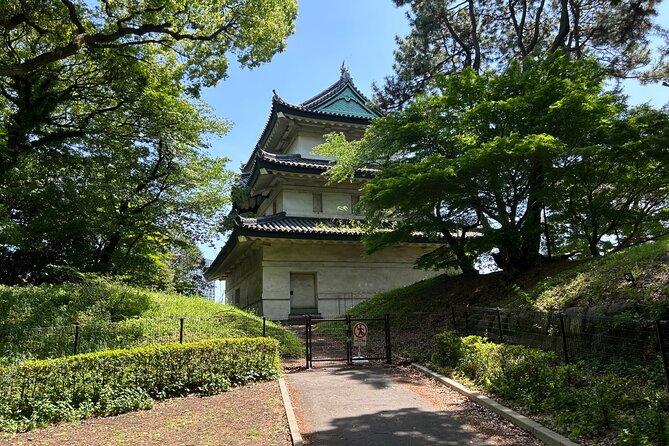
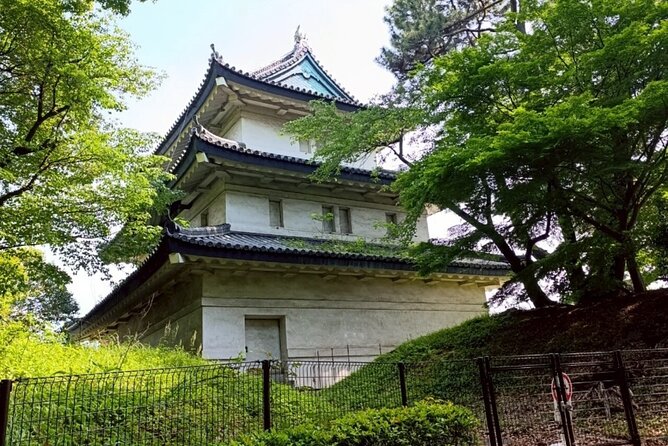
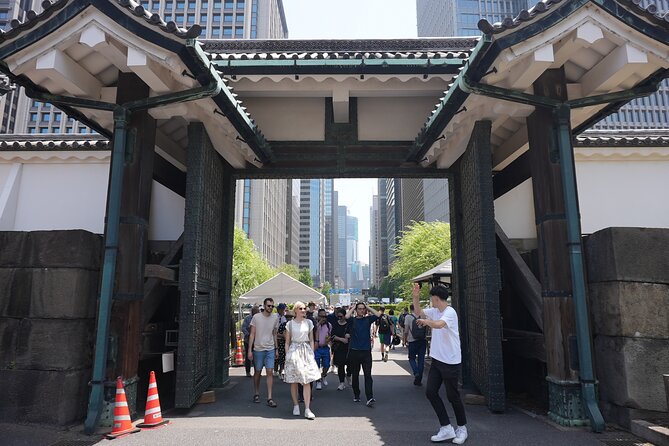
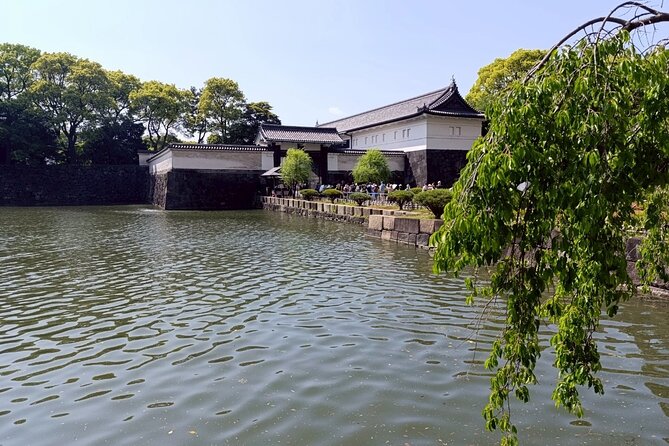
The first major part of the walk takes you through the East Gardens and toward the Edo Castle ruins. Large stone gates and castle walls make an immediate impression. These are not reconstructed theme-park buildings. They are surviving pieces of the old castle grounds, and their size helps you picture how important this site once was.
Your guide explains the role of Edo Castle during the shogun period and places the former stronghold within Japanese political history. Guides such as Jim have been praised for answering detailed questions, while Tony has been noted for explaining the palace, castle grounds, and surrounding area in a way that connects past and present.
The former castle keep foundation is one of the key stops. You can stand on the site of the once-mighty keep and look across the grounds, imagining the castle as the center of feudal authority. There is no grand tower waiting for you at the top, so set your expectations properly. The interest lies in the foundation, the scale of the site, and the story your guide builds around what disappeared.
This is where the tour earns its fee. A self-guided walk can show you the stones, but it may not explain why the site mattered or how the shogunate shaped Tokyo. A good guide turns an empty foundation into a place with political weight.
Ninomaru Garden and the Softer Side of Edo Culture
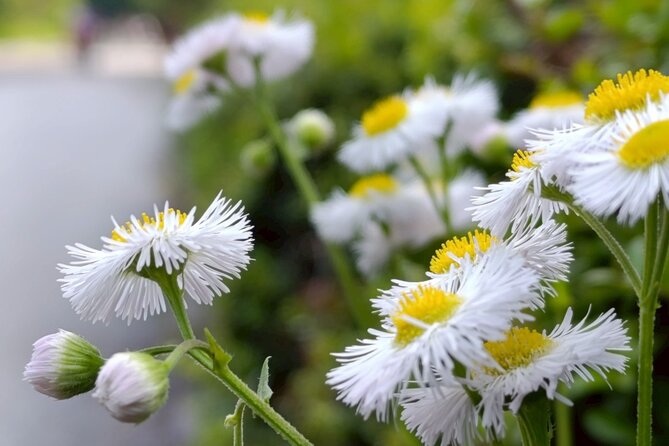
Ninomaru Garden changes the mood. After the defensive walls and castle remains, you enter a more peaceful setting with ponds, seasonal flowers, and carefully arranged plantings. It shows the aesthetic side of the Edo period, where garden design was not an afterthought but part of how power and taste were displayed.
The garden is a good place to slow down. You may find that the tour’s pace is easy, but the guide pauses can be long. One participant felt the explanations sometimes repeated themselves or lasted too long. If you prefer a quick stroll with little commentary, this may feel overly detailed.
I would choose this route for the opposite reason. Tokyo can be visually exciting but historically hard to read. Here, the garden gives you time to listen, look, and connect cultural ideas with a real place. Guides have covered architecture, legends, Japanese customs, the imperial family, and modern life in Japan, not just the basic castle facts.
The setting also rewards different interests. Garden lovers get ponds and seasonal color. History-minded visitors get the former castle grounds. First-time visitors get an introduction to Japan’s political past without having to spend hours preparing beforehand.
More Castle and Palace Walking Tours around Japan:
- Ultimate Osaka Walking Tour: Castle, Dotonbori & Hidden Gems
★ 5.0 · 862 reviews - Kyoto: Imperial Palace & Nijo Castle Guided Walking Tour
★ 4.7 · 453 reviews - Edinburgh Castle: Guided Walking Tour with Entry Ticket
★ 4.7 · 11,699 reviews - Venice: Doge’s Palace and St Mark’s Basilica Walking Tour
★ 4.4 · 6,291 reviews
The Guide Makes or Breaks the Experience
The strongest praise is aimed at the guides. Jim has been described as patient and especially good at answering questions. Tony is noted for clear explanations of the Edo period, the shogunate, the emperor, and the imperial family. Miguel has been praised for history, fun facts, and links between older Japan and modern Tokyo.
Other guides named in the feedback include Blake, Izzy, Lasse, Dylan, Michi, Aya, John, and Maitaki. Their styles differ. Some focus on storytelling and culture, while others give a more structured history lesson. Aya is also associated with explanations of temple customs in one comment, but do not assume that every departure includes a Senso-ji Temple visit. The advertised route is the Imperial Palace East Gardens and Edo Castle ruins.
This range matters because a walking tour is personal. One guide may fill the two hours with dates and political background. Another may use legends, architecture, and daily life to make the past easier to picture. The best approach is to ask questions when something interests you. The small group helps with that.
There is one clear warning. A guide who lacks experience or relies heavily on a supervising guide can weaken the experience. The setting remains worthwhile, but the tour’s main product is interpretation. If the commentary is thin, you are left with a free garden walk that you could have done alone.
What Two Hours Really Feels Like
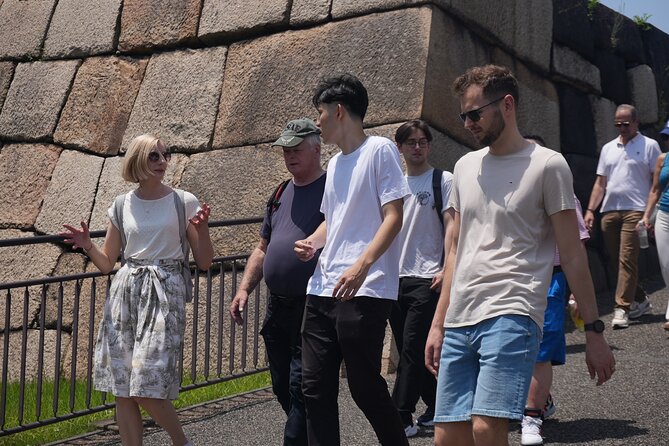
The stated duration is about two hours, with around one hour and 30 minutes listed for the East Gardens and Edo Castle ruin section. You should treat this as an active walking experience, not a seated palace visit.
Several stops may involve standing while the guide speaks. The group needs to stay together, and the route includes slopes. Wear comfortable shoes and be ready for changing conditions in an open garden setting. The information provided does not specify shade, seating, restroom locations, or seasonal weather arrangements, so plan as you would for any outdoor walk.
The pace is described in one positive account as easy, but another person emphasized that the tour involves plenty of walking and some slopes. Both points can be true. You are unlikely to be rushed, yet two hours on your feet can feel long if you expected a short sightseeing stop.
A maximum of 15 people keeps the group manageable. It is not a private tour, but it is small enough for questions and for the guide to check that everyone has caught up. Tony, for example, has been noted for making sure the group stayed together before moving on.
Is the $22 Price Good Value?
At $22 per person, the tour is inexpensive by Tokyo guided-tour standards. The gardens themselves can be visited for free, so the value depends on how much you want interpretation.
If you already know Japanese history and enjoy reading signs, you may prefer to walk independently. You can see the walls, gates, garden, and castle foundation without paying for a guide. The tour does not offer a special private entrance or access to palace interiors.
I think the price makes sense for a first visit. You are paying for a local human guide, two hours of organized context, and the chance to ask questions while standing in the actual places being discussed. That is particularly useful in Edo Castle’s grounds, where the ruins are impressive but not always self-explanatory.
It is also a good low-cost choice early in a Tokyo stay. Several guide styles include practical cultural advice, and the walk can give you a basic framework for understanding the emperor, shogunate, Edo period, and modern city. If you take it late in your visit, it can help tie together things you have already seen elsewhere.
Who Should Book This Walk?
I would recommend it to first-time Tokyo visitors who want history without committing to a museum lecture. It suits couples, families with older children, solo visitors, and anyone who prefers a small group to a large bus.
It is also useful for people who like gardens but want more than pretty scenery. The route gives you a reason to look closely at walls, gates, foundations, ponds, and the layout of the grounds.
You may want to skip it if you dislike guided commentary, have trouble walking or standing for two hours, or already know the story of Edo Castle well. You should also think twice if you need a tightly timed schedule. The group may move at a relaxed pace, and long explanations can stretch how the time feels.
The activity is described as suitable for most people, but no detailed accessibility information is provided. If you need specific help with slopes, surfaces, or rest stops, ask the provider before booking.
Practical Booking Advice
Free cancellation is available when you cancel at least 24 hours before the local start time. Changes or cancellations made less than 24 hours before the start are not accepted for a refund.
Book with the meeting point in front of you, not just the tour name. The start is at Starbucks Coffee in Wadakura Fountain Park, and the activity ends back there. Keep your mobile ticket ready and arrive before the stated time.
Because the gardens have closing hours, a late arrival can cost you part of the route. The earlier meeting problem described above is a useful warning: if you cannot see the guide or are uncertain about the exact spot, contact the provider immediately rather than assuming the group will wait.
Should You Book the Imperial Palace Walking Tour?
Book it if you want the Imperial Palace East Gardens to make sense, not simply look attractive. The castle foundation, stone gates, walls, and Ninomaru Garden are worth seeing, but the guide is what turns them into a story about shoguns, emperors, power, design, and Tokyo’s growth.
At $22, the risk is modest. The main gamble is the guide’s style. You may get a sharp storyteller such as Jim, Tony, Miguel, or Izzy, or you may find the talk too long or less assured. For most first-time visitors, the small group and strong focus on history make it a sensible way to spend two hours in central Tokyo.
FAQ
How long is the Imperial Palace and Shogun Historical Walking Tour?
The tour lasts approximately two hours. About one hour and 30 minutes is allocated to the East Gardens and Edo Castle ruin section.
What does the tour visit?
You walk through the Imperial Palace East Gardens, see Edo Castle ruins, pass stone gates and castle walls, visit the former castle keep foundation, and explore Ninomaru Garden.
Where does the tour begin?
The meeting point is Starbucks Coffee at Wadakura Fountain Park, 3-1 Kōkyogaien, Chiyoda City, Tokyo 100-0002, Japan.
Where does the tour end?
The activity ends back at the meeting point.
How many people can join the tour?
The group has a maximum of 15 participants.
Is admission to the gardens included?
The tour information lists admission to the East Gardens and Edo Castle ruin section as included. It also notes that the imperial gardens can be visited for free independently.
Is the tour suitable for most people?
The activity information says most people can participate. The walk includes slopes, and the tour involves standing and walking for about two hours.
Is the tour near public transportation?
Yes. The meeting point is listed as being near public transportation.
What kind of ticket do I receive?
The tour provides a mobile ticket, and confirmation is received at the time of booking.
Can I cancel for a full refund?
Yes, if you cancel at least 24 hours before the experience start time. Cancellations or changes made less than 24 hours before the start are not accepted for a refund.
New walking tours around Japan
- Nara: Half-Day UNESCO Heritage & Local Culture Walking Tour★ 4.8 · 250 reviews
- Nagasaki: Private Walking Tour with a Local★ 4.7 · 79 reviews
- Hiroshima: Miyajima Half-day Historical Walking Tour★ 4.7 · 100 reviews
- Kyoto: Private Walking Tour with a Local★ 4.6 · 118 reviews
- Kyoto: Private 2.5 Hour Historical Walking Tour★ 4.9 · 121 reviews
- Kyoto: Imperial Palace & Nijo Castle Guided Walking Tour★ 4.7 · 453 reviews
- Kyoto: Izakaya Bars Guided Walking Tour★ 4.9 · 815 reviews
- Kyoto: Gion Sunset Walking Tour with Local Guide★ 4.7 · 351 reviews
Tokyo Walking Tours, side by side.

Tokyo Tsukiji Fish Market Food and Culture Walking Tour
Read our review →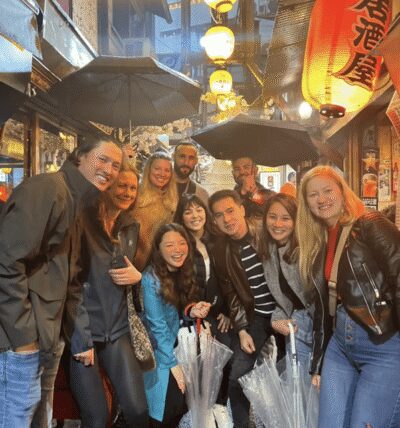
Tokyo: Shinjuku Local Bar and Izakaya Guided Walking Tour
Read our review →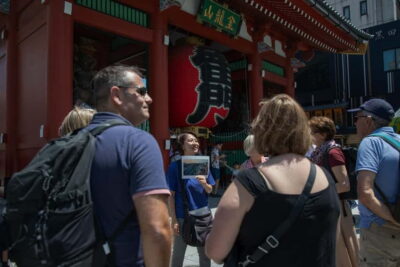
Tokyo: Asakusa Walking Tour with Sensoji Temple Visit
Read our review →
Tokyo: Tsukiji Fish Market Guided Walking Tour
Read our review →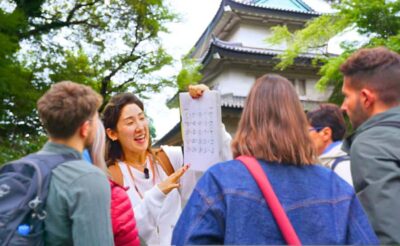
Tokyo: Imperial Palace Japanese History Walking Tour
Read our review →
Tokyo: Private Custom Walking Tour with Local Guide
Read our review →