
Review · BERLIN
Berlin: 2.5-Hour Walking Tour through Kreuzberg 61
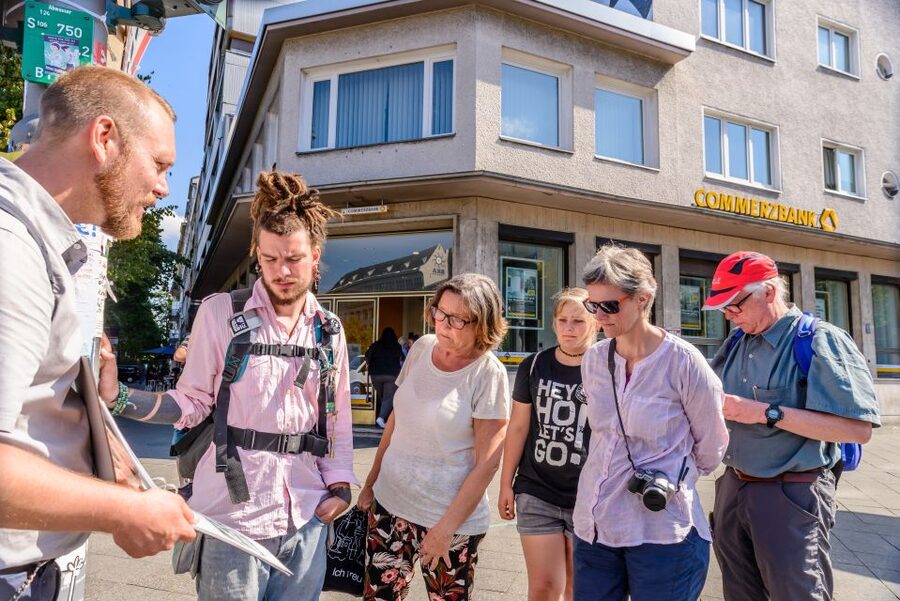
Kreuzberg 61 is the quieter, more architectural side of a district better known for nightlife and Turkish restaurants. This 2.5-hour walk takes you from Platz der Luftbrücke past a waterfall, old courtyards, military buildings, and handsome residential streets to Bergmannstrasse. I like the way it shows you a less obvious Berlin, and I especially like the mix of city views and small local details that are easy to miss alone.
The guides, including Tobias Schwabe on many tours, are praised for making history, politics, architecture, and everyday German life easy to follow. The main drawback is simple: you spend the full tour on foot, with little time set aside for food or coffee. Bring good shoes, and don’t expect a grand parade of Berlin’s headline sights.
What makes this Kreuzberg walk worth your time
- Kreuzberg from above: Viktoriapark gives you a city view from the hill that gave the district its name.
- A close look at architecture: Riehmers Hofgarten, the Sarottihöfe, the Fachwerkhof, and Chamissoplatz reveal several sides of old Kreuzberg.
- History beyond the usual Berlin story: The route covers Prussian monuments, military buildings, urban planning, local politics, and changing neighborhood life.
- A calm break in the city: Viktoriapark and Riehmers Hofgarten provide two welcome pauses from busy streets.
- A strong guide-led experience: Tobias Schwabe is praised for clear stories, friendly conversation, and details you might walk past without noticing.
- A useful final stop: The route ends around Bergmannstrasse and Marheineke Markthalle, where you can continue exploring on your own.
Starting in Kreuzberg 61, not postcard Berlin
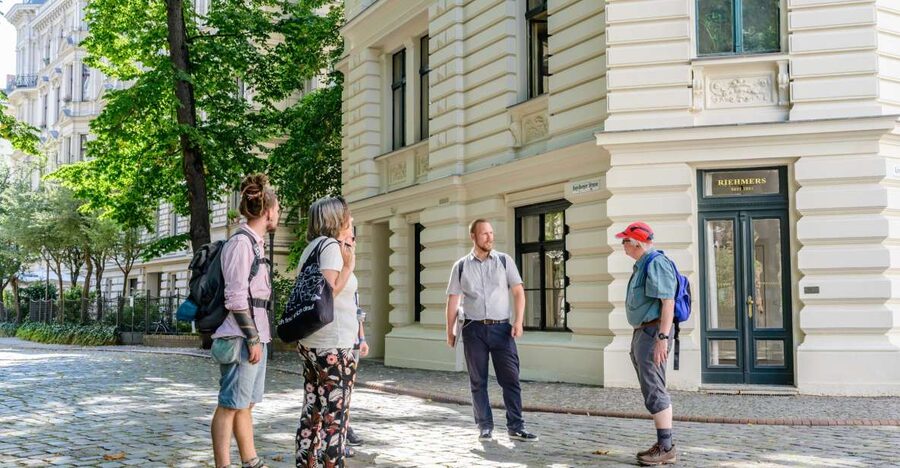
This tour begins around Mehringdamm 129 or another meeting point tied to the option you book. Check the exact starting place carefully, since the meeting point can vary. A special date, time, and meeting point can also be arranged for a private group on request.
The walk focuses on western Kreuzberg, sometimes called Kreuzberg 61. That label helps you picture the part of the district covered here: the streets between Platz der Luftbrücke and Mehringdamm, rather than the club-heavy area farther east.
I like this choice of neighborhood because it gives you a fuller sense of Berlin. You see more than famous landmarks and major memorials. You see how apartment blocks, military sites, gardens, monuments, shops, and public spaces fit together. The guide supplies the connections, which is the real value of this experience.
The walk is offered in English or German. The tone is educational but not formal in a stiff way. The best comments describe guides who mix dates and facts with personal stories, local politics, and observations about German life. That makes the route feel like a conversation rather than a lecture.
More walking tours around Berlin:
- Discover Berlin Half-Day Walking Tour
★ 5.0 · 9,624 reviews - Berlin City walk Government District and Places of Democracy
★ 4.7 · 8,467 reviews - Berlin: Third Reich & Cold War Guided Walking Tour
★ 4.9 · 8,378 reviews
Platz der Luftbrücke and the first layer of history
Platz der Luftbrücke is a fitting place to begin. The name points to the Berlin Airlift, one of the best-known chapters in the city’s Cold War story. Yet this tour does not stay locked in the familiar Berlin checklist.
You begin with roughly 25 minutes around the square and nearby buildings. The guide places the area within Kreuzberg’s wider story, including the large apartment blocks and military structures that shaped the district in the 19th century.
This opening is useful because it gives you a frame for the rest of the walk. Instead of seeing a monument or a square as an isolated stop, you start to notice how transport, military planning, housing, and political change affected the neighborhood.
Next comes the monument to the German Printers Association, or Verband der deutschen Buchdrucker. You spend about ten minutes here. It is a smaller stop, but that is exactly the point. The tour pays attention to memorials and corners that do not usually make it into a first-time visitor’s Berlin schedule.
Give the guide room to explain the people and ideas behind such places. You may not remember every date, but you will come away better able to read the district’s public spaces.
Sixtusgarten and the pleasure of a small detour
Sixtusgarten is a short stop of about ten minutes, with time for photographs and explanation. Small gardens and courtyards can tell you a surprising amount about city life. They show how open space was fitted into a dense residential district and how older parts of Berlin have been reused or protected.
This is also where the tour’s pace becomes clear. You are not racing from landmark to landmark. You stop, listen, look up, and notice details in walls, gates, courtyards, and street plans.
That slower rhythm suits people who like architecture. It may feel less satisfying if you want to cover a large section of Berlin quickly. The guide’s value depends on your willingness to pause for things that might otherwise seem ordinary.
Viktoriapark, the waterfall, and Berlin from the hill
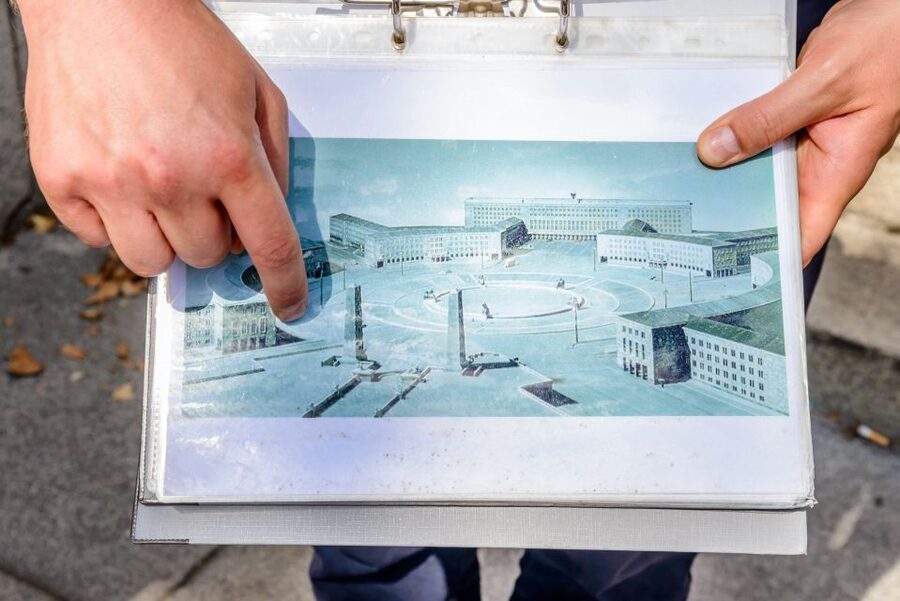
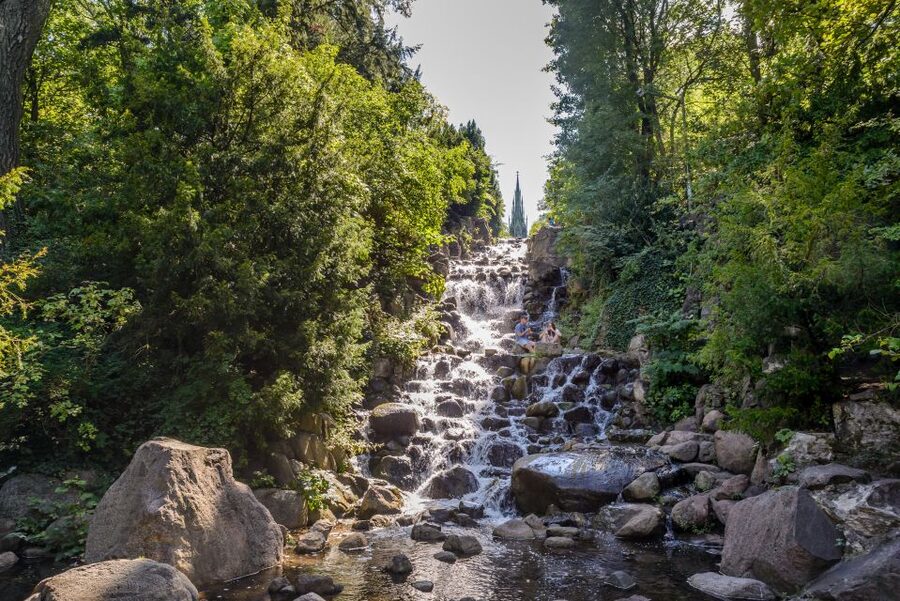
Viktoriapark is the centerpiece of the walk. Plan on about 35 minutes here, including a photo stop, guided commentary, and views along the way.
The park is built on Kreuzberg, the hill that gave the district its name. From the higher ground, you get a broad view over Berlin. The park’s waterfall adds a touch of countryside to a dense urban district, and the contrast is one of the tour’s most appealing moments.
I especially like this part for two reasons. First, it gives your legs and eyes a break from apartment streets. Second, it explains the district’s name through the physical shape of the place, not just through a map or a fact sheet.
The view is a major reason to bring a camera, but don’t treat Viktoriapark as only a lookout. The waterfall, paths, greenery, and monument work together to show how 19th-century Berlin used public parks to provide recreation and civic pride.
The park does involve walking on a hill. The tour information does not give a detailed accessibility assessment, so anyone concerned about steep paths or uneven ground should ask the provider before booking. In practical terms, comfortable shoes are a wise choice.
Same streets, a different story:
- Berlin: Discover Berlin Walking Tour
★ 4.9 · 5,998 reviews - Berlin’s Best: 2 Hour Walking Tour Third Reich and the Cold War
★ 5.0 · 5,486 reviews - Berlin: Hidden Backyards Guided Walking Tour
★ 4.8 · 5,360 reviews - Explore Berlin: See All The Iconic Sights & Some Hidden Gems
★ 5.0 · 4,429 reviews
The Prussian monument and the city’s older power
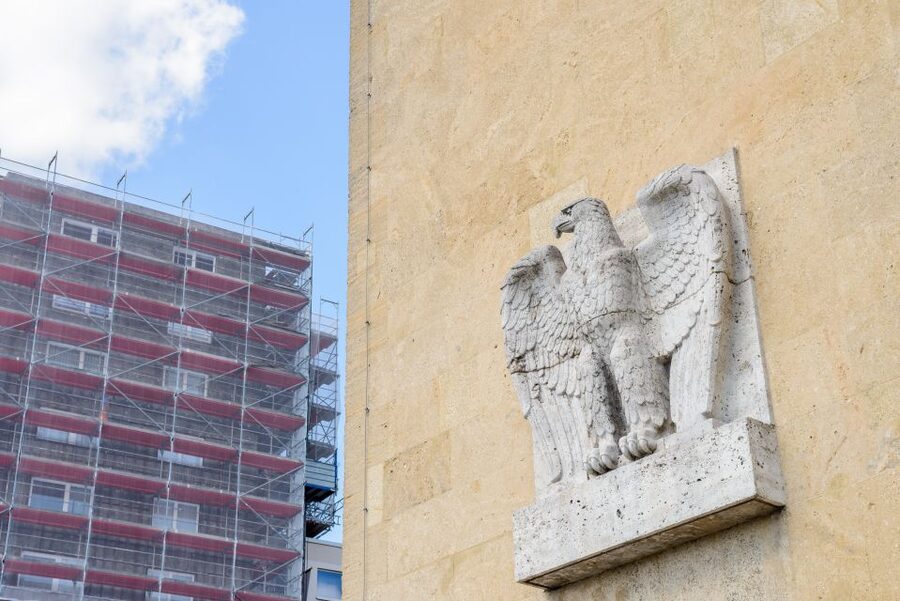
Within or near Viktoriapark, the tour reaches the Prussian Monument for the Liberation Wars. This is another ten-minute stop. The monument links Berlin to the wars against Napoleon and to the public symbols of Prussian power.
The stop matters because Berlin’s story is not only about the 20th century. Many quick city tours concentrate on the Nazi period, the Berlin Wall, and reunification. This walk gives more space to earlier political and architectural layers.
You may find the monument more rewarding after the guide explains its context. On your own, it can be easy to admire the view and move on. With a guide, it becomes part of a longer conversation about how Berlin presented its past in stone and public space.
Riehmers Hofgarten and the character of old housing
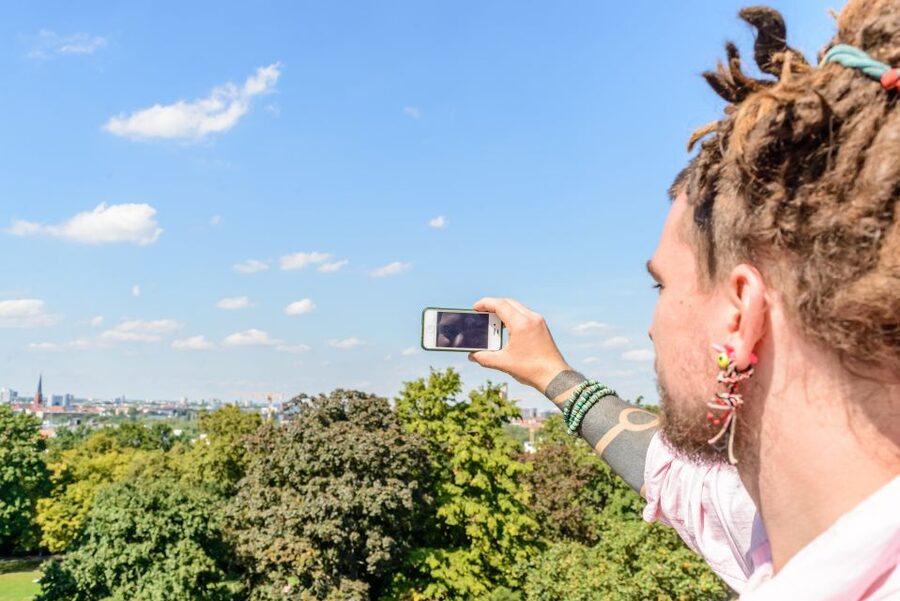
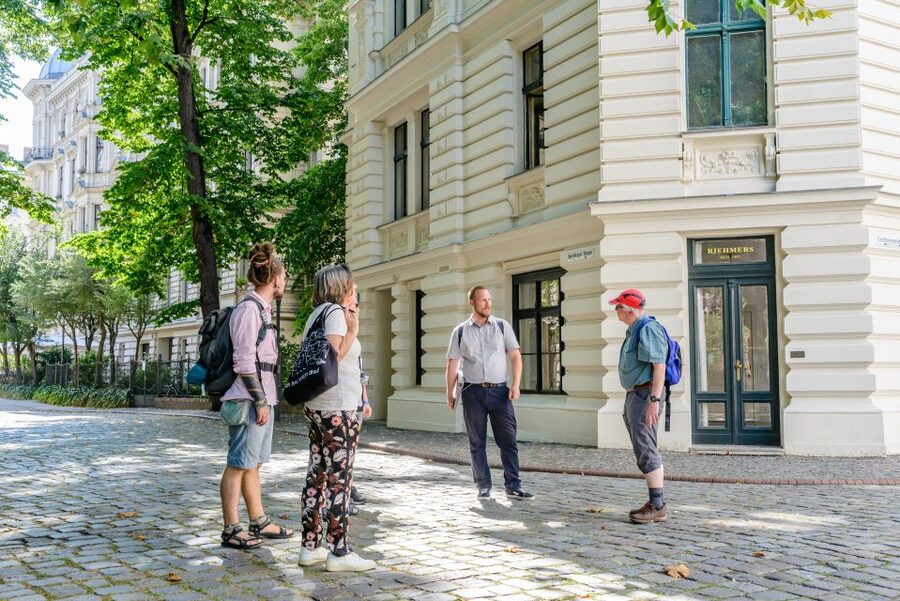
Riehmers Hofgarten is one of the strongest architectural stops. You have about ten minutes for photographs, a walk-through, and commentary.
The name refers to a residential courtyard complex, the kind of urban space that helps explain how Berlin’s population lived as the city expanded. Courtyard housing can look grand from the street and more intimate once you enter the interior spaces. The contrast gives you a clearer sense of how buildings were planned around shared areas.
This is the sort of place that rewards a guide. A casual walk may reveal attractive facades, but it will not necessarily explain the building’s role in Kreuzberg’s growth. The guide can point out design choices and show how the neighborhood differs from the simple stereotype of gritty Kreuzberg.
Architecture fans should pay close attention here. One past participant who had lived in Berlin for four years still found unfamiliar corners on this walk. That tells you something useful: the tour is not only for first-time visitors.
Sarottihöfe and the changing use of city buildings
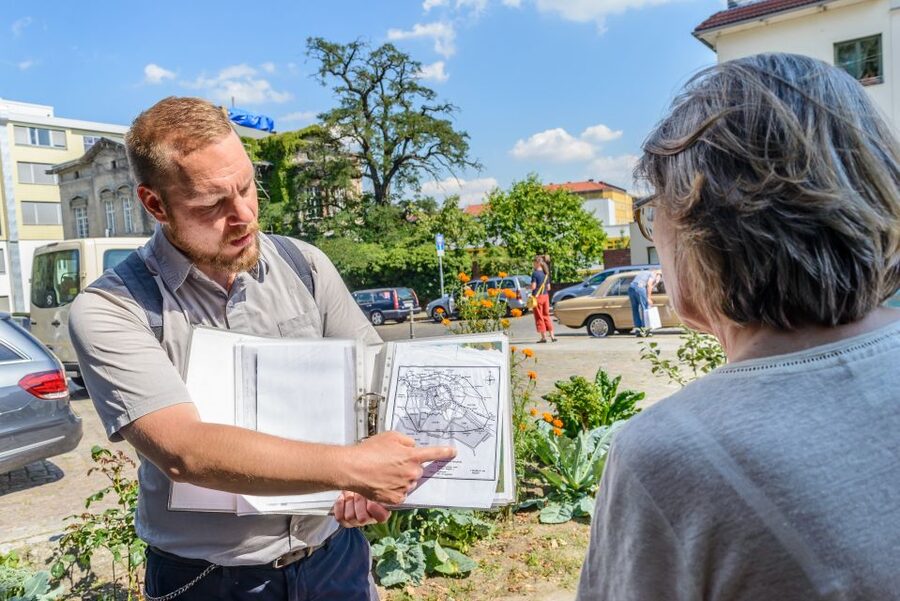
The route continues to Schmelzwerk in the Sarottihöfe, another courtyard and former industrial setting. The stop lasts about ten minutes and includes time for photographs.
Places such as this help you see how Berlin’s older buildings have changed purpose. Industrial and commercial spaces can acquire new lives, while courtyards remain part of the neighborhood’s visual identity. The guide’s job is to connect the building you see now with the work, industry, and urban growth that came before.
This is one reason I would choose this walk over a standard highlight tour if you have already visited the Brandenburg Gate, Museum Island, and the Wall memorials. You get a closer look at the built city and at the everyday structures that shaped it.
The tradeoff is that the tour will not give you long interior visits. Several stops are pass-by locations or brief photo stops. You should book this for interpretation and street-level observation, not for extended time inside every building.
Bergmannstrasse, local life, and the end of the walk
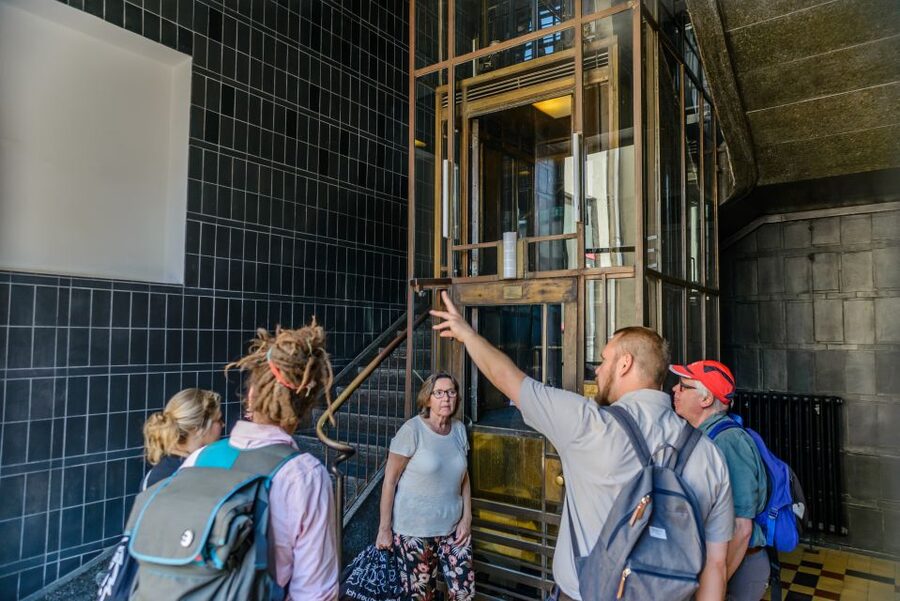
The group spends about 20 minutes around Bergmannstrasse. This is where the tour shifts from monuments and courtyards toward shops, food, and the multicultural character of Kreuzberg.
Bergmannstrasse is a good place to end because you can continue exploring after the guide leaves. The route introduces the area rather than trying to cover every shop. You get a sense of the street’s place in the neighborhood, then have the option to return for a meal, a drink, or more browsing.
The tour also passes the Fachwerkhof in Berlin Kreuzberg, a brief five-minute stop. Its timber-framed appearance provides another change of architectural mood. After the larger residential courtyards and public monuments, a smaller historic building helps underline how varied Kreuzberg can be from one block to the next.
Chamissoplatz receives another short visit of around five minutes. The square is known for its well-preserved architecture, and it is one of the most attractive places on the route for simply looking around. You can appreciate the residential facades without needing a large monument or museum label to tell you what matters.
The walk finishes around Marheineke Markthalle, with roughly five minutes for a guided pass-by and a short break. The market hall gives you a practical ending point. If you want food or a closer look at local shopping, this is where you can continue independently.
What the guide adds to the route
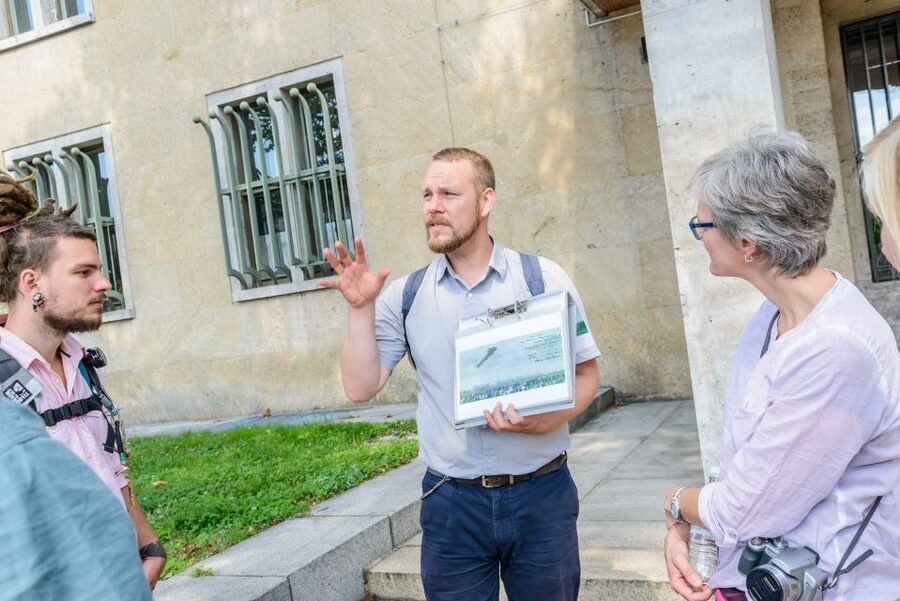
The strongest part of this experience is not the number of stops. It is the way the guide links them.
Tobias Schwabe is specifically praised for his friendly style and for explaining architecture, history, politics, and daily life. Other visitors describe guides who were careful, warm, and willing to exchange ideas. That matters on a neighborhood walk because many of the sights are subtle. A good guide helps you notice why a courtyard is arranged a certain way or why a monument belongs in that particular square.
The information is also broader than war and the Cold War. You get Prussian history, urban planning, architecture, culture, local business, and present-day neighborhood life. One of the tour’s strengths is that it avoids reducing Kreuzberg to artists, nightlife, and Turkish restaurants.
You should still keep your expectations sensible. A 2.5-hour walk cannot explain every building or period in equal detail. The guide will point you toward the important patterns and unusual corners. You will not leave with a full academic history of Kreuzberg, but you will understand the district better and know where to keep looking.
Price, timing, and who gets the best value
At $23 per person, this is a strong value for a live 2.5-hour walking tour, especially if you care about context rather than simply being taken to famous photo spots. The price includes a professional guide, and the route covers a substantial portion of western Kreuzberg.
The value is highest for three kinds of people:
- First-time Berlin visitors who want a neighborhood experience beyond the central sights.
- Repeat visitors and Berlin residents who have already covered the major attractions and want lesser-known streets.
- Architecture and urban history fans who enjoy courtyards, facades, monuments, and changing building use.
It also works well for solo visitors, couples, and groups. The tour is offered in English and German, and a special arrangement can be requested for a group.
The main cost is physical rather than financial. You walk for 2.5 hours, and there is no planned meal stop. One past participant wished for a short refreshment break, which is useful advice. Eat beforehand or plan to use Bergmannstrasse or Marheineke Markthalle after the tour.
The activity offers free cancellation up to 24 hours before the start and a reserve-now, pay-later option. Those terms are useful if your Berlin schedule is still moving, but check the exact conditions when booking.
Practical advice before you go
Wear shoes you can walk in comfortably. The route includes a hill at Viktoriapark and several stretches through residential streets, though the provided details do not specify the exact surface or accessibility arrangements.
Choose a day when you are happy to spend most of the time outdoors. Viktoriapark is especially rewarding in decent weather, but the tour also runs in colder conditions. One winter participant still found the stories absorbing, though warm clothing would clearly help.
Bring water and allow time afterward around Bergmannstrasse. The scheduled break at Marheineke Markthalle is brief, so it should not replace lunch. If you want to shop or eat, treat the final area as the beginning of your own Kreuzberg time.
Confirm the meeting point before setting out. The start may vary by booking option, and the tour provider can arrange a different point, date, or time for a group by request.
Should you book the Kreuzberg 61 walk?
I would book this tour if you want to understand how a Berlin neighborhood works, not just photograph its famous monuments. The combination of Viktoriapark’s view, old courtyards, Prussian monuments, local streets, and Bergmannstrasse gives you a useful reading of Kreuzberg from several angles.
I would skip it if you dislike walking, want long museum visits, or need a tour built around Berlin’s biggest landmarks. The stops are often short, and the pleasure comes from listening closely and noticing details.
For most visitors, $23 is a fair price for the route and the guide’s local knowledge. Tobias Schwabe appears on several praised tours, but the guide can vary, so confirm the language and meeting details when booking. If you want a thoughtful, offbeat introduction to western Kreuzberg, this is an easy tour to recommend.
FAQ
How long does the Kreuzberg 61 walking tour last?
The tour lasts 2.5 hours.
How much does the tour cost?
The listed price is $23 per person.
Which languages are available?
The tour is available in English and German.
Where does the tour start?
The start can vary by the option booked. Mehringdamm 129 is provided as a starting location, and a special meeting point can be arranged for a group on request.
What places does the tour visit?
The route includes Platz der Luftbrücke, the monument to the German Printers Association, Sixtusgarten, Viktoriapark, the Prussian Monument for the Liberation Wars, Riehmers Hofgarten, Schmelzwerk in the Sarottihöfe, Bergmannstrasse, the Fachwerkhof, Chamissoplatz, and Marheineke Markthalle.
Is a professional guide included?
Yes. A professional live guide is included, with English and German offered.
Can I cancel the booking?
You can cancel up to 24 hours in advance for a full refund. A reserve-now, pay-later option is also available.
New walking tours around Berlin
- From Berlin: Potsdam & Sanssouci half day Walking Tour★ 4.9 · 85 reviews
- East Berlin and the Wall: Walking Tour★ 4.9 · 407 reviews
- Cold War, Berlin Wall, Spies and the East Side Gallery★ 4.8 · 254 reviews
- Berlin: Walking Tour of the Top 10 Sightseeing Attractions★ 4.7 · 150 reviews
- Berlin: The Time of National Socialism Walking Tour★ 5.0 · 220 reviews
- Berlin: walking tour about Charité★ 4.4 · 537 reviews
- Berlin: Kreuzberg Guided Walking Evening Tour★ 4.7 · 555 reviews
- Berlin : Must-see attractions Walking Tour★ 4.8 · 83 reviews
Berlin Walking Tours, side by side.
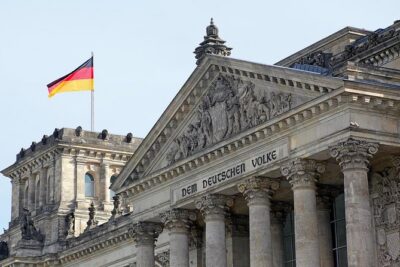
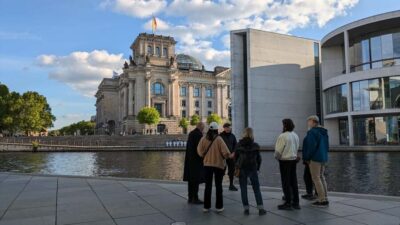
Berlin City walk Government District and Places of Democracy
Read our review →
Berlin: Third Reich & Cold War Guided Walking Tour
Read our review →
Berlin’s Best: 2 Hour Walking Tour Third Reich and the Cold War
Read our review →

Explore Berlin: See All The Iconic Sights & Some Hidden Gems
Read our review →
Third Reich Berlin: Hitler and WWII Walking Tour
Read our review →Lists this walk sits on