
Review · BERLIN
East Berlin and the Wall: Walking Tour
Berlin’s Wall is easy to see and hard to understand. This tour helps bridge that gap, moving from Potsdamer Platz to Bernauer Strasse, Alexanderplatz, and the East Side Gallery while showing how a political border cut through streets, homes, families, and daily routines. The most powerful stop is the Bernauer Strasse Memorial, where original Wall remains and the former death strip make the history physical.
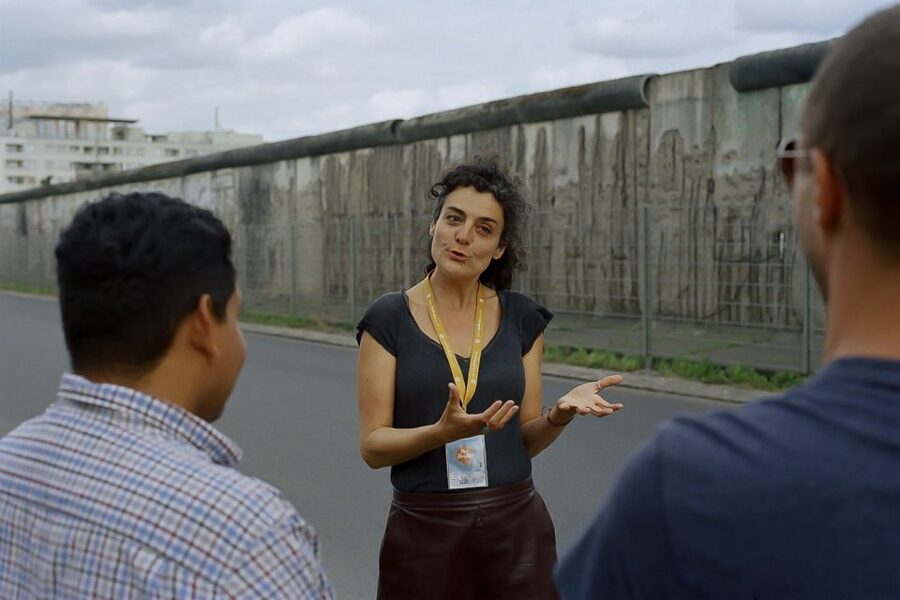
I like the route for two reasons. First, it connects famous sights with less obvious places, including Nordbahnhof, a former ghost station shut for almost 30 years. Second, the guides put ordinary life beside major events. Guides such as Paolo, Elisa, Claudia, and Catherine have been praised for clear storytelling, lively anecdotes, and, in Catherine’s case, a personal family testimony.
The main drawback is that you must pay for your own AB public transport ticket, and the three-hour route involves several train and subway rides. If you want a slow museum visit or a tour focused only on the Wall, this packed itinerary may feel brisk.
Key points to know before you book
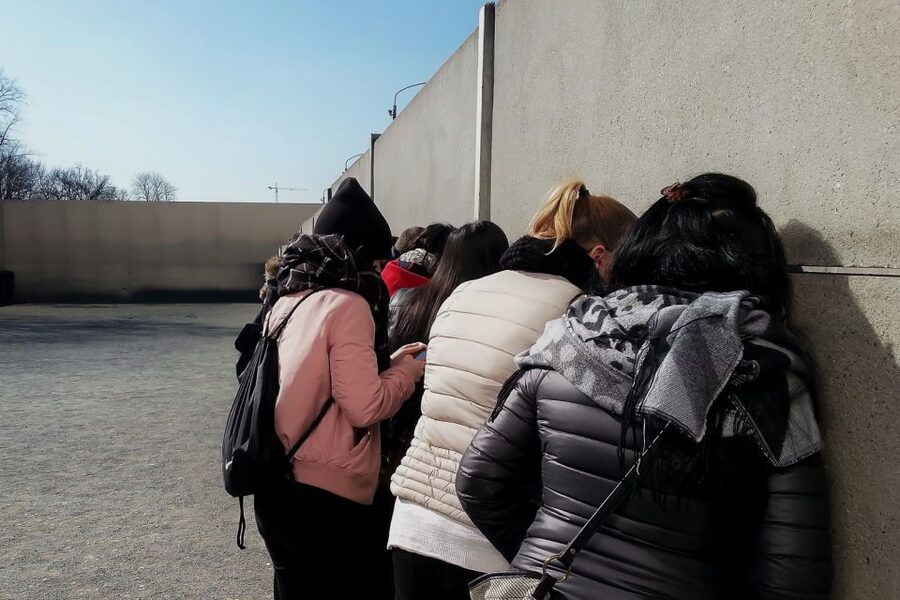
- Bernauer Strasse shows the Wall as a human tragedy: You see original Wall sections, the death strip, and places tied to escape attempts.
- Nordbahnhof adds a rare underground angle: The former ghost station helps explain how Berlin’s divided transport system worked.
- Alexanderplatz links daily life to political change: Socialist architecture provides the setting for the peaceful protests that helped bring down the Wall.
- East Side Gallery supplies a memorable finish: The open-air gallery has 104 murals, including the famous Brezhnev-Honecker kiss.
- The small-group format keeps the history focused: The price is $351 for up to six people, with private groups available.
- You need an AB transport ticket: Trains and subways are part of the route, but the fare is not included.
Starting at Potsdamer Platz and moving through divided Berlin
Potsdamer Platz is a useful starting point because it reflects Berlin’s dramatic changes in one location. Once cut by the Wall, it later became a symbol of the reunited city. From here, the tour sets the postwar story in motion: Berlin was split after World War II, and the Wall went up in 1961.
This opening gives you the basic political frame without keeping you in a classroom. The point is not only that East and West followed different systems. The point is how those systems affected work, money, movement, housing, and family life.
The tour then uses public transport to reach Nordbahnhof. The train ride takes about eight minutes, but it is part of the lesson. You are not simply jumping between attractions in a private vehicle. You are using the same kind of city network that once had sealed platforms, blocked routes, and stations passengers could not use.
More walking tours around Berlin:
- Discover Berlin Half-Day Walking Tour
★ 5.0 · 9,624 reviews - Berlin City walk Government District and Places of Democracy
★ 4.7 · 8,467 reviews - Berlin: Third Reich & Cold War Guided Walking Tour
★ 4.9 · 8,378 reviews
Nordbahnhof and the strange world of ghost stations
Nordbahnhof was a ghost station after the Wall was built. Trains continued to pass through, but they did not stop for passengers, and the station remained closed for nearly three decades.
This short stop has real value because it shows that the Wall was not only a concrete barrier above ground. It also reached below the streets. Berlin’s transport system had to be divided, watched, and controlled. A station could remain physically present while becoming useless to much of the city.
The guided portion here lasts about 15 minutes. That is enough time to understand the basic story, though not enough for a long technical discussion of every altered railway line. I like this stop as a compact introduction to the way political borders changed ordinary errands.
Bernauer Strasse: the tour’s most moving stop
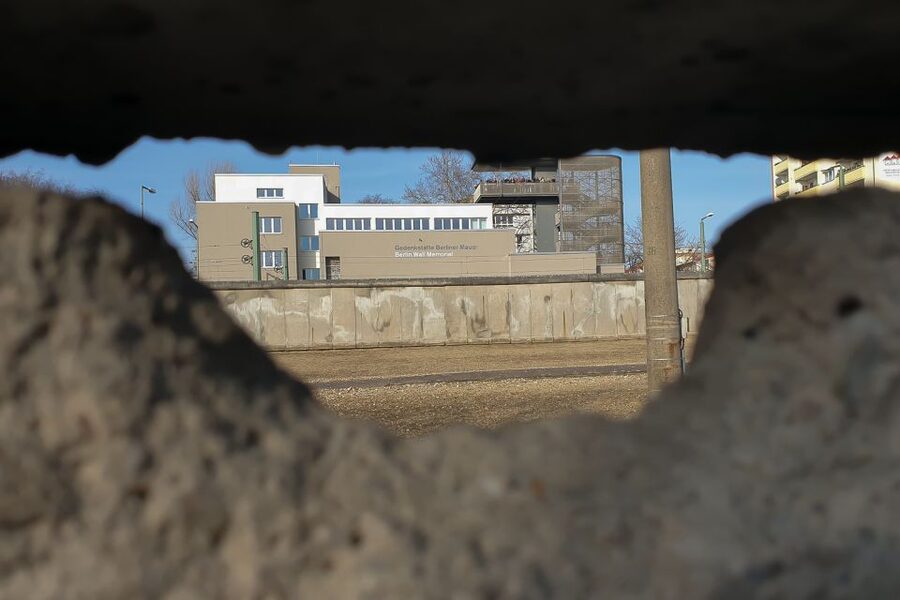
At the Bernauer Strasse Wall Memorial, the past becomes harder to keep at a distance. The street is tied to some of the clearest examples of how the Wall tore through normal life. Buildings, doorways, and nearby streets were caught in a border system that divided residents from neighbors and sometimes from their own front doors.
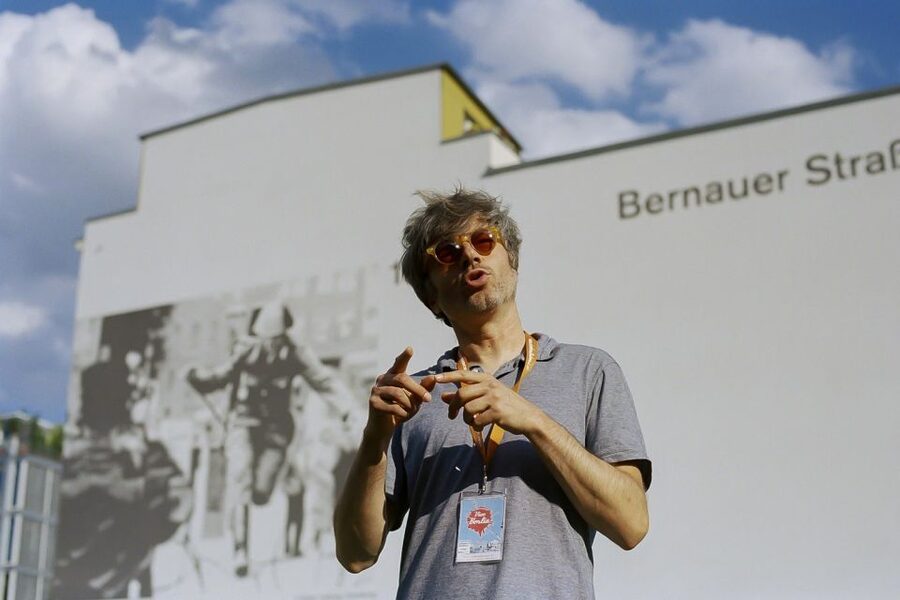
The guided visit here lasts about 50 minutes, the longest single stop. That is the right balance for this subject. You have time to study the remaining Wall structures, hear about escape attempts, and understand the danger faced by people who tried to cross.
The original sections of the death strip are especially important. They show that the barrier was not simply one wall to climb. It was a controlled zone built to stop movement, with serious consequences for anyone who tried to pass.
You will also hear about people who died because of the Wall. This is not presented as a collection of cold statistics. The guide connects individual stories to the physical site, which makes the cost of division easier to grasp.
I would give Bernauer Strasse your full attention. It is the part of the tour where the human stories matter most, and it may feel heavy. The subject is not treated as entertainment, which is exactly right.
Alexanderplatz and the sound of peaceful protest
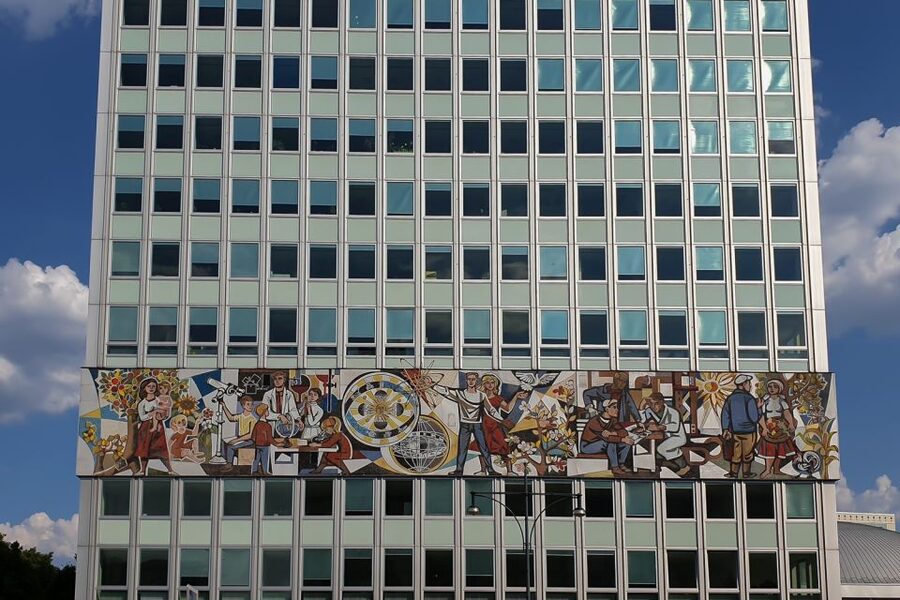
After Bernauer Strasse, the group takes the subway or another metro connection for about 10 minutes to Alexanderplatz. The route uses several public transport sections, so keep your ticket handy and wear shoes that feel good for walking and standing.
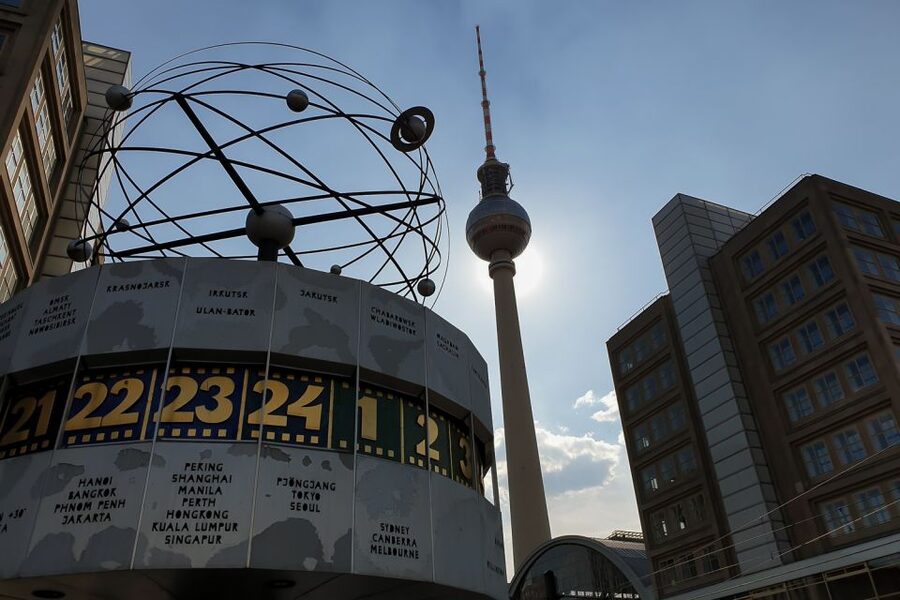
Alexanderplatz presents a different side of East Berlin. Here, socialist architecture and broad public spaces help explain the official image the GDR wanted to project. The setting also recalls the peaceful demonstrations that challenged political repression by the STASI.
The guided portion at Alexanderplatz lasts about 10 minutes. It is brief, but it helps link the earlier Wall stories to the events of 1989. The protests showed that opposition was growing, and they helped create the pressure that led to the Wall’s collapse and the later breakup of the Soviet bloc.
This is one of the tour’s useful shifts in tone. Bernauer Strasse focuses on separation and escape. Alexanderplatz turns to public resistance and political change. You see how private hardship and mass action formed part of the same story.
Same streets, a different story:
- Berlin: Discover Berlin Walking Tour
★ 4.9 · 5,998 reviews - Berlin’s Best: 2 Hour Walking Tour Third Reich and the Cold War
★ 5.0 · 5,486 reviews - Berlin: Hidden Backyards Guided Walking Tour
★ 4.8 · 5,360 reviews - Explore Berlin: See All The Iconic Sights & Some Hidden Gems
★ 5.0 · 4,429 reviews
The TV Tower and socialist Berlin
The tour also includes a short guided look at the TV Tower, with about 10 minutes set aside. The tower is one of the strongest symbols of East Berlin’s public image and socialist ambition.
You should not expect a visit to the observation deck based on the information provided. This is a stop for context, not a separate tower experience. The guide uses the building and its surroundings to explain how East Berlin presented itself and how the city’s architecture reflected the GDR system.
That makes the stop useful for first-time visitors who might otherwise see the TV Tower only as a landmark. You will understand why it mattered to the former East Berlin skyline and why it remains tied to the city’s socialist past.
East Side Gallery and the Wall after 1989
The last major stop is the East Side Gallery, reached by another subway or metro ride of about 10 minutes. The guided visit lasts around 15 minutes and closes the tour with a very different view of the Wall.
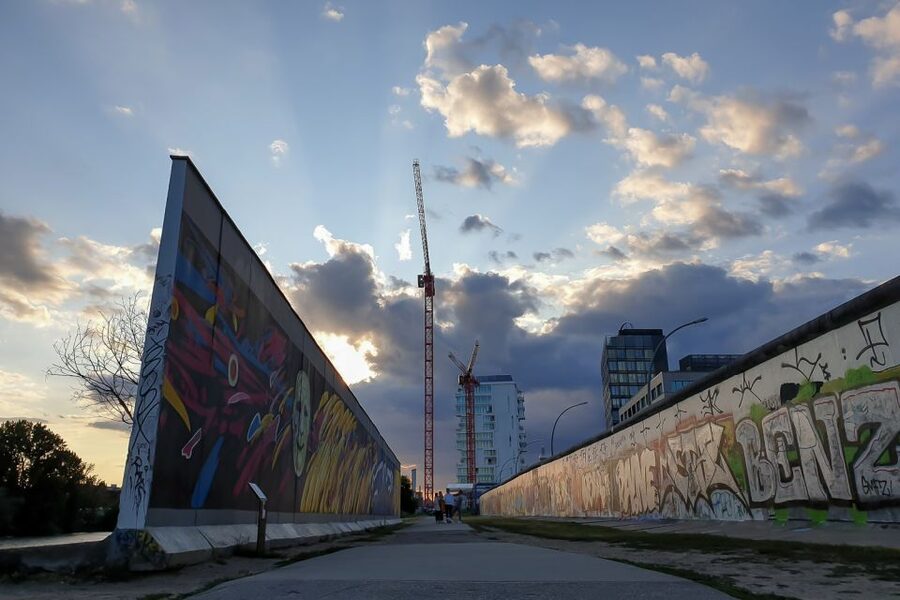
Here, 104 murals cover a long surviving section. The best-known image is the painted kiss between Leonid Brezhnev and Erich Honecker. The artwork turns a former instrument of control into a public gallery, but the cheerful colors should not erase what the structure once did.
I like ending here because it gives you a clear contrast. At Bernauer Strasse, the Wall is linked to escape attempts, death, and separation. At East Side Gallery, it becomes a place where artists and the reunited city can respond to that past.
The gallery is also a reminder that the Wall has several meanings today. Some sections are memorials. Some are works of public art. Some are pieces of a city that continues to change. The guide helps tie those meanings together rather than treating the murals as isolated photo stops.
What the three to three-and-a-half-hour pace feels like
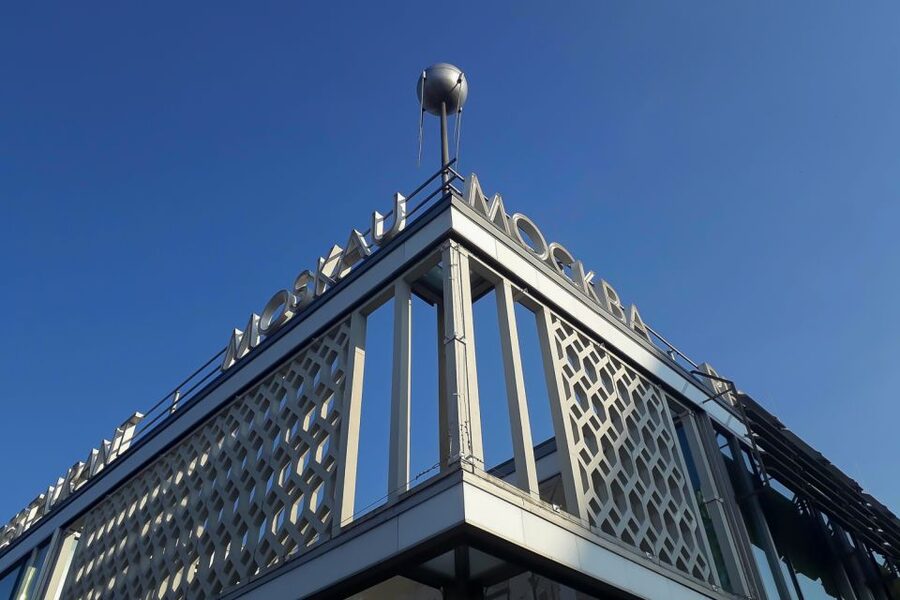
The core guided stops add up to about two hours, with train and subway rides between them. The full experience lasts three to three-and-a-half hours, depending on the selected start time and pickup arrangement.
That pace is fairly active. You will walk, stand, listen, and transfer between parts of the public transport network. Comfortable shoes are essential. I would also plan to stay focused during the transport sections, since the movement between sites is part of the route rather than empty time.
The tour is small group, with private group booking available. The listed price is $351 for a group of up to six people. For six people, that works out to $58.50 per person before transport costs. For two people, the effective price is much higher, but you gain a more personal format and can use the private option if available for your booking.
This price makes the most sense for a family or group of friends who can share the cost. It is less attractive for a solo visitor unless you place a high value on a private guide and a structured route through several parts of the city.
The guides and language choices
The experience is available with live guides in English, French, Italian, Spanish, and German. That matters on a history tour because the Wall story involves political terms, personal accounts, and details that can be easy to miss.
The guide names connected with the experience include Paolo, Elisa, Claudia, Catherine, and Paul. Paolo has been praised for an engaging approach, while Elisa was described as prepared, passionate, and good at keeping the route clear. Claudia has been noted for interesting anecdotes and a welcoming manner.
Catherine is especially useful if you value personal testimony. Her tour included a family story, giving the history an intimate edge beyond dates and political explanations. Paul has also been associated with an interesting and accessible presentation of Berlin’s story.
Of course, guides vary. Still, the pattern is clear: the strongest part of this experience is the human delivery. You are not just standing beside a section of concrete. You are being asked to connect that concrete to choices made by governments and families.
What to bring and what the price leaves out
Bring comfortable shoes. The walking is not extreme, but the route includes several outdoor stops, station transfers, and periods of standing.
You also need a valid AB public transport ticket for the day. The train and subway sections are included in the plan, but the ticket itself is not. Food and drinks are not included either, so eat before the tour or plan a stop afterward.
The meeting point depends on the option you book. Hotel pickup may be available for a private tour, in which case you should wait in the lobby 10 minutes before the scheduled time and provide the hotel name and address when booking. The private arrangement cannot be organized in less than 72 hours, so leave a few days between booking and your visit.
You can cancel up to 24 hours in advance for a full refund, and reserve now while paying later. Those terms help if your Berlin schedule is still shifting, but the transport ticket remains your responsibility during the tour.
Who will get the most from this Wall tour
I would choose this experience if you want a clear introduction to East Berlin and prefer learning through places rather than reading labels in a museum. It suits first-time Berlin visitors, families with older children, and anyone who wants the Wall explained in a connected sequence.
It is also a good fit if you want a guide in French, Italian, Spanish, German, or English. A private group can make sense for relatives or friends who want to move at their own pace and share the cost.
I would hesitate if you dislike public transport, need lots of sitting time, or want to explore each location independently. The route covers several sites, but each stop has a fixed time. Bernauer Strasse receives the most attention, while Alexanderplatz, the TV Tower, and East Side Gallery are shorter visits.
Should you book East Berlin and the Wall?
Book it if you want the Wall explained as part of everyday East Berlin life, not just as a famous Cold War monument. Bernauer Strasse, Nordbahnhof, Alexanderplatz, and East Side Gallery each show a different piece of the story, and the movement between them makes the city itself part of the lesson.
The $351 group price is fair for up to six people, especially if you value a private or small-group guide. Just budget for the AB transport ticket, wear sensible shoes, and expect a brisk morning or afternoon of walking and transfers.
For the strongest experience, choose a language in which you can follow personal stories and political detail easily. If you do that, this tour gives you a thoughtful route through Berlin’s divided past, with enough landmarks for orientation and enough human stories to make the history stay with you.
FAQ
How long does the East Berlin and Wall tour last?
The tour lasts about three to three-and-a-half hours.
What places does the tour visit?
The route includes Potsdamer Platz, Nordbahnhof, the Bernauer Strasse Wall Memorial, Alexanderplatz, the TV Tower area, and East Side Gallery.
Is public transportation included?
No. You need a valid AB public transportation ticket for the tour, and that cost is not included.
What languages are available?
Live guides are available in English, French, Italian, Spanish, and German.
Is this a private tour?
A small-group walking tour is offered, and a private group option is available.
What does the $351 price cover?
The price covers a group of up to six people and the guided walking tour. Food, drinks, and the AB transport ticket are not included.
Can I cancel the booking?
You can cancel up to 24 hours before the tour for a full refund.
New walking tours around Berlin
- Berlin: 2.5-Hour Walking Tour through Kreuzberg 61★ 4.9 · 525 reviews
- From Berlin: Potsdam & Sanssouci half day Walking Tour★ 4.9 · 85 reviews
- Cold War, Berlin Wall, Spies and the East Side Gallery★ 4.8 · 254 reviews
- Berlin: Walking Tour of the Top 10 Sightseeing Attractions★ 4.7 · 150 reviews
- Berlin: The Time of National Socialism Walking Tour★ 5.0 · 220 reviews
- Berlin: walking tour about Charité★ 4.4 · 537 reviews
- Berlin: Kreuzberg Guided Walking Evening Tour★ 4.7 · 555 reviews
- Berlin : Must-see attractions Walking Tour★ 4.8 · 83 reviews
Berlin Walking Tours, side by side.
Berlin City walk Government District and Places of Democracy
Read our review →
Berlin: Third Reich & Cold War Guided Walking Tour
Read our review →
Berlin’s Best: 2 Hour Walking Tour Third Reich and the Cold War
Read our review →
Explore Berlin: See All The Iconic Sights & Some Hidden Gems
Read our review →
Third Reich Berlin: Hitler and WWII Walking Tour
Read our review →Lists this walk sits on