
Review · BERLIN
Berlin: walking tour about Charité
The most unusual thing about this Berlin walk is its subject: 300 years of medicine told through one institution. The Charité began as an 18th-century plague house and grew into one of Europe’s major university hospitals. Along the way, you hear about Rudolf Virchow, Robert Koch, Emil von Behring, Ferdinand Sauerbruch, and the institution’s troubling cooperation with the Nazi regime.
I like the tour’s mix of famous science and difficult history. I also like that it ends inside the Animal Anatomical Theatre, a mysterious old teaching building tucked away in a backyard. The main limitation is clear: you do not enter the Charité Bed House or the hospital grounds, so this is an outside walking tour with one interior visit, not a hospital tour.
Key points about the Charité walk

- Three centuries of medical change: Follow the Charité from plague house to major university hospital.
- Famous Berlin physicians: Learn about Rudolf Virchow, Robert Koch, Emil von Behring, and Ferdinand Sauerbruch.
- A serious look at Nazi-era medicine: The tour includes the institution’s cooperation with the Nazi regime.
- The Animal Anatomical Theatre: Enter Berlin’s oldest surviving teaching building, known as a mysterious medicine temple.
- Outside views of the Charité: See the Bed House from the street, but do not enter the hospital or its grounds.
- German-language format: The two-hour tour is led in German and costs $27 per person.
Why this medical history walk is different

Most Berlin walking tours focus on kings, war, walls, or architecture. This one follows medicine through the people and buildings connected with the Charité. That gives you a different way to understand the city, especially if you enjoy science, social history, or the stories behind major institutions.
The Charité’s story starts in the 18th century, when a plague house was set up outside the city. Over time, it developed into a teaching and research center linked with Berlin’s university world. The tour uses that long arc to show how medicine changed from basic disease control to modern scientific research.
I find that broad time span useful. You are not simply memorizing dates or admiring an old façade. You are watching the role of a hospital change as Berlin itself changes around it. A place created in response to disease became a center for medical education, laboratory work, surgery, and research.
The subject also gives the guide room to discuss life and death in direct terms. That may sound obvious for a medical tour, but it matters here. The Charité story includes scientific progress, personal suffering, professional ambition, and serious moral failure.
More walking tours around Berlin:
- Discover Berlin Half-Day Walking Tour
★ 5.0 · 9,624 reviews - Berlin City walk Government District and Places of Democracy
★ 4.7 · 8,467 reviews - Berlin: Third Reich & Cold War Guided Walking Tour
★ 4.9 · 8,378 reviews
Starting at the Charité Tower and Bed House
Meet your guide in front of the Charité Tower, at the crossroads of Schumannstraße, Charitéplatz, and Charitéstraße. The tour begins on time, so you should arrive with enough margin to locate the exact meeting point.
The first major sight is the Charité Bed House. You view it from outside. This distinction is important because the building remains a working hospital facility, with hygiene and protection rules that prevent this group tour from entering.
That outside stop still gives the guide a useful point of reference. The Bed House connects the modern hospital you see today with the older institution described during the walk. You can look at the building as part of a functioning medical complex rather than as a museum object.
I like this honest setup. The tour does not pretend to offer access it cannot provide. If you expect hospital rooms, medical collections, or a behind-the-scenes look at current clinical work, this activity will not meet that expectation. If you want the story of the institution and its place in Berlin, the exterior introduction is enough to set the scene.
Along Luisenstraße and across the university campus

From the Charité area, the route continues along Luisenstraße and across the university campus. The walk links the hospital to the academic world around it, which is central to understanding the Charité’s importance.
This is where the tour’s focus on doctors and scientists becomes more meaningful. The hospital was not only a place for treating patients. It was also a setting for teaching, research, debate, and the testing of new ideas. The names connected with it are not minor footnotes in medical history.
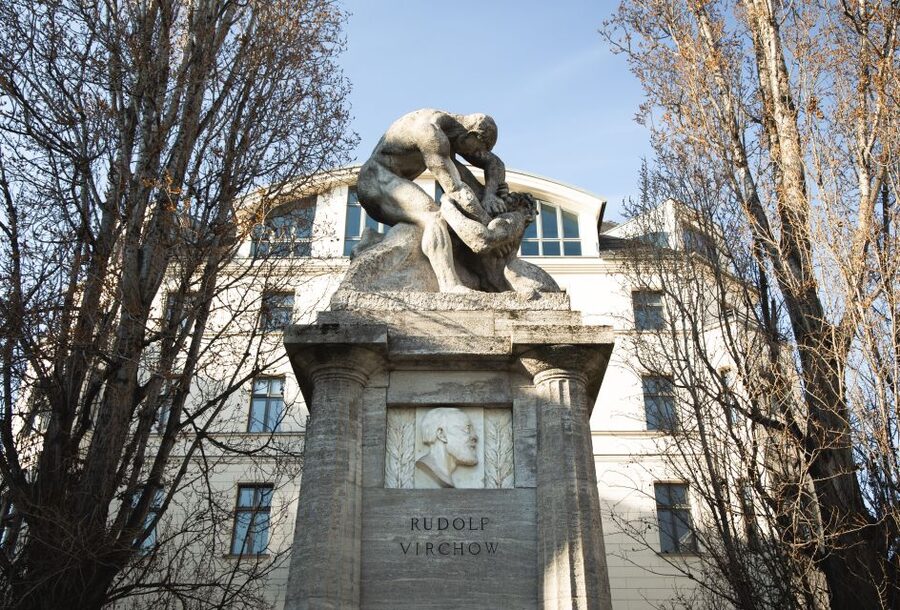
Rudolf Virchow is one of the key figures. Emil von Behring and Robert Koch are also part of the story, as is Ferdinand Sauerbruch. You hear about Berlin’s most famous physicians, scientists, and Nobel Prize winners, with attention to the work and reputation that made them important.
The guide also brings in less familiar details about medicine in Berlin. That balance helps keep the tour from becoming a simple parade of famous names. You get the major figures, but also the odd, obscure, and sometimes uncomfortable details that make institutional history more human.
The route is a walking tour, not a ride between sites. The listed duration is two hours, so you should expect a steady amount of standing and walking. Comfortable shoes make sense, especially since the route includes streets, campus areas, and the visit to the teaching building.
The Charité’s famous physicians and Nobel winners
The tour’s strongest appeal is its connection to medical pioneers. Virchow, Koch, Behring, and Sauerbruch each represent a different part of the Charité’s scientific and clinical identity.
You learn about the people behind Berlin medicine rather than only hearing general claims about progress. Their names help show how research, diagnosis, treatment, and teaching developed within the city.
For me, this is the part that gives the walk real value for anyone interested in the history of science. A standard city tour might point out a university or hospital and move on. Here, those institutions become places where major medical ideas took shape.
Still, you should not expect a technical lecture aimed at medical professionals. The information is presented as a guided city walk, with stories about people, buildings, and events. The supplied experience is in German, so you should book it only if you can follow a German-language guide comfortably.
The rating of 4.4 from 537 reviews suggests a consistently positive response overall. The available written feedback is brief, but the phrase Medizinische Hintergründe points to the medical background as a key strength. That matches the tour’s purpose: it gives you context that a general Berlin sightseeing route would leave out.
Same streets, a different story:
- Berlin: Discover Berlin Walking Tour
★ 4.9 · 5,998 reviews - Berlin’s Best: 2 Hour Walking Tour Third Reich and the Cold War
★ 5.0 · 5,486 reviews - Berlin: Hidden Backyards Guided Walking Tour
★ 4.8 · 5,360 reviews - Explore Berlin: See All The Iconic Sights & Some Hidden Gems
★ 5.0 · 4,429 reviews
The difficult chapter: medicine under the Nazi regime
A worthwhile medical history tour cannot stop at discoveries and famous doctors. This one also addresses the dark period when doctors at the institution cooperated with the Nazi regime.
That section matters because hospitals and universities are not automatically places of ethical conduct. Medical authority can help people, but it can also be used to support harmful political systems. Including this chapter makes the tour more serious and more honest.
You should not come expecting a light sightseeing outing. The subjects include life, death, professional responsibility, and the way medicine functioned during a criminal dictatorship. The tour does not reduce the Charité to a simple story of heroic progress.
I appreciate that this difficult material is part of the main route rather than an optional footnote. It gives you a better sense of the institution as a real place shaped by human choices. The famous scientists and Nobel winners are important, but they do not erase the actions of doctors who worked with the Nazi regime.
This is also one reason the tour suits adults and older students more than very young children. The supplied information does not set an age limit, so you would need to judge your group yourself. The themes are serious even though the walk is only two hours.
Inside Berlin’s old medicine temple
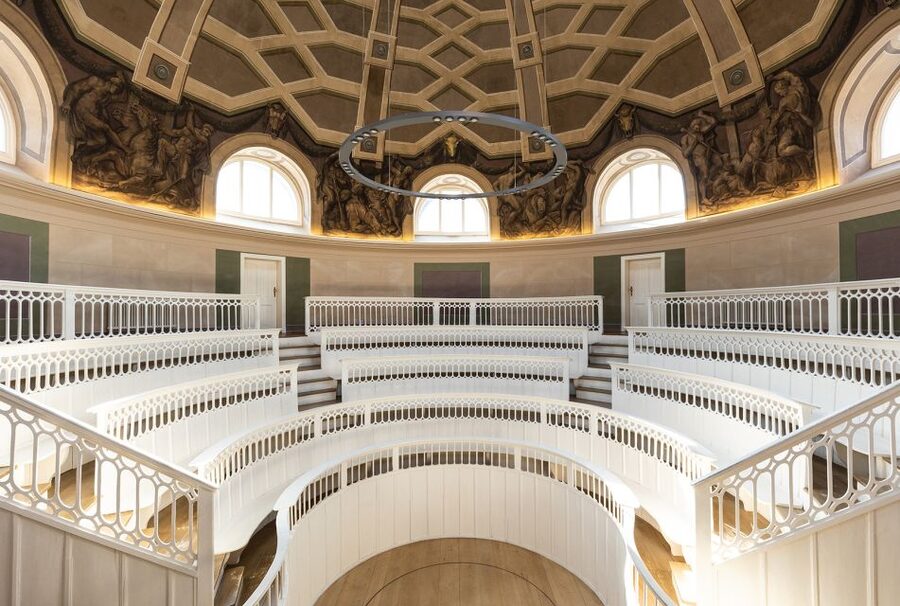
The final major stop is the Animal Anatomical Theatre, also called the TAT. It is described as a mysterious medicine temple and Berlin’s oldest surviving teaching building. Unlike the Bed House, this building is visited from inside.
The TAT gives the walk a strong finish because it turns medical history into a physical space. You are no longer looking at a working hospital from the pavement. You enter an old teaching building connected to the study of anatomy and medical education.
Its location in a backyard adds to the sense of discovery, but the important point is not simply that it is unusual. The building helps you picture how medicine was taught before modern hospital campuses and digital equipment. It also gives the tour a clear architectural focus after the longer discussion of people and institutions.
Opening times can change at short notice when private events take place. The TAT is also closed on public holidays. That means the interior visit is an important point to confirm when choosing your date. If the building cannot open, the experience may lose its most distinctive stop.
The tour description does not promise a broad museum collection or a long self-guided visit inside. You should think of the TAT as a focused stop within a guided walk, not as a separate half-day museum visit.
What you do not see inside the Charité
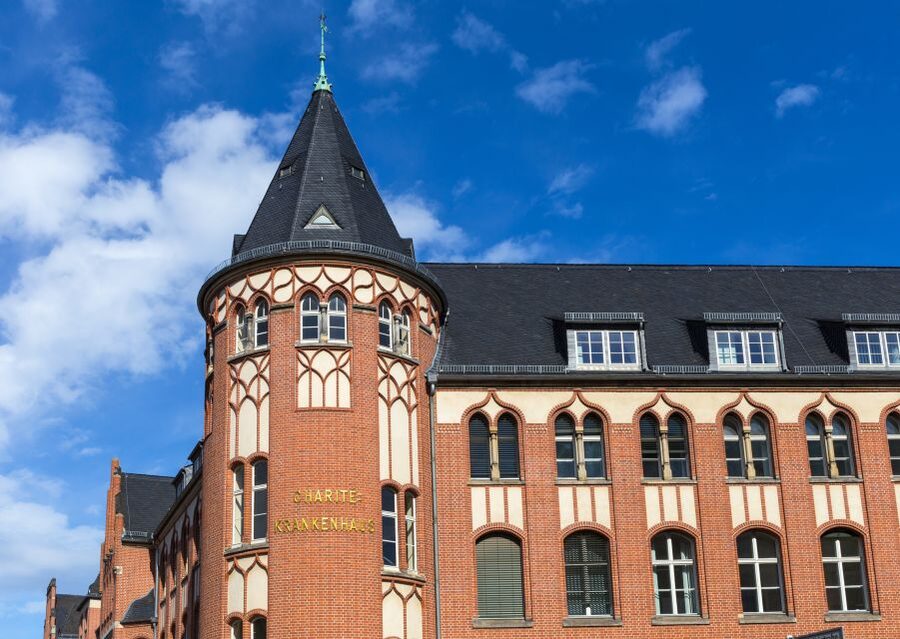
The limits of the route deserve plain explanation. Group tours cannot enter the Charité Bed House, and the Charité Campus Mitte hospital grounds are not accessible to group tours.
This affects the experience in two ways. First, you do not get a look at current hospital operations. Second, much of the story is told from public streets and nearby university areas rather than from the exact rooms where medical work took place.
That is not necessarily a weakness. A working hospital needs privacy, hygiene controls, and protection for patients. Allowing sightseeing groups into clinical buildings would create obvious problems. The outside route lets the guide explain the Charité without turning a hospital into a tourist attraction.
Still, match the tour to your expectations. Book it if you want medical history, famous physicians, and a special historic teaching building. Skip it if your main goal is to see wards, laboratories, hospital collections, or the inside of the modern Charité.
Is $27 a fair price for two hours?
At $27 per person, the value depends on your interest in the subject. You are paying for a two-hour guided walk in German, with a visit to the Animal Anatomical Theatre. You are not paying for entry to the Charité hospital, a large museum, or several paid attractions.
For someone curious about Berlin’s medical past, the price is reasonable. The tour brings together a working hospital’s history, university medicine, major scientists, Nazi-era questions, and a rare historic building. Recreating that route on your own would require research before your visit, and the connections between the people and places would be harder to follow.
For a general first-time visitor with limited time, the calculation is different. Berlin has many major historical sights, and this tour covers a specialized subject. I would place it after the city’s essential landmarks unless medicine, science, architecture, or social history is high on your list.
The reserve-now-and-pay-later option gives you some planning flexibility. Free cancellation is available up to 24 hours before the tour for a full refund. Those terms are useful if your Berlin schedule is still shifting, but you should still check the available starting times and the TAT’s opening situation for your chosen date.
Who will enjoy this Charité experience?
I would recommend this walk to you if you like:
- Medical and scientific history
- The stories of famous physicians and Nobel Prize winners
- Berlin’s university institutions
- Serious discussion of Nazi-era professional conduct
- Historic buildings that are not part of the usual sightseeing circuit
- Guided walks in German
It also suits repeat visitors who have already seen Berlin’s headline sights. The Charité offers a less familiar subject and a different route through central Berlin.
You should think twice if you want an English-language tour, because the live guide language is German. You should also reconsider if entering the main hospital is essential to your plans. The Bed House is viewed only from outside, and the hospital grounds are closed to group tours.
The two-hour length works well as a focused activity. It is long enough to develop the story but short enough to fit around other Berlin plans. Since the tour returns to its starting point, you finish near the Charité Tower rather than at a distant attraction.
Should you book the Charité walking tour?
Book this tour if you want Berlin history told through medicine rather than monuments. The combination of Virchow, Koch, Behring, Sauerbruch, the Nazi period, and the Animal Anatomical Theatre gives you a subject with more weight than a basic sightseeing stroll.
I would especially choose it for a German-speaking visitor who has an interest in science or medical ethics. The $27 price is fair for a specialized, guide-led two-hour walk with interior access to the old teaching building.
Do not book it expecting a hospital tour. You will see the Charité Bed House from outside, walk through public areas near the university, and enter the Animal Anatomical Theatre. If that balance sounds right, this is an unusual and useful way to see a side of Berlin that many visitors miss.
FAQ
Where does the Charité walking tour start?
The tour starts in front of the Charité Tower at the crossroads of Schumannstraße, Charitéplatz, and Charitéstraße.
Where does the tour end?
The activity ends back at the meeting point in front of the Charité Tower.
How long does the tour last?
The guided walking tour lasts two hours.
What language is the tour in?
The live tour guide conducts the tour in German.
Does the tour enter the Charité Bed House?
No. The Bed House is viewed from outside because it is a working hospital facility with protection and hygiene regulations.
Can the group enter the Charité Campus Mitte hospital grounds?
No. The hospital grounds are not accessible for group tours.
Does the tour visit the Animal Anatomical Theatre?
Yes. The tour includes an inside visit to the Animal Anatomical Theatre, Berlin’s oldest surviving teaching building.
Is the Animal Anatomical Theatre always open during the tour?
No. The TAT can adjust its opening hours at short notice for closed events, and it is closed on public holidays.
How much does the tour cost?
The price is $27 per person.
Can I cancel the booking?
You can cancel up to 24 hours in advance for a full refund. You can also reserve now and pay later.
New walking tours around Berlin
- Berlin: 2.5-Hour Walking Tour through Kreuzberg 61★ 4.9 · 525 reviews
- From Berlin: Potsdam & Sanssouci half day Walking Tour★ 4.9 · 85 reviews
- East Berlin and the Wall: Walking Tour★ 4.9 · 407 reviews
- Cold War, Berlin Wall, Spies and the East Side Gallery★ 4.8 · 254 reviews
- Berlin: Walking Tour of the Top 10 Sightseeing Attractions★ 4.7 · 150 reviews
- Berlin: The Time of National Socialism Walking Tour★ 5.0 · 220 reviews
- Berlin: Kreuzberg Guided Walking Evening Tour★ 4.7 · 555 reviews
- Berlin : Must-see attractions Walking Tour★ 4.8 · 83 reviews
Berlin Walking Tours, side by side.


Berlin City walk Government District and Places of Democracy
Read our review →
Berlin: Third Reich & Cold War Guided Walking Tour
Read our review →

Berlin’s Best: 2 Hour Walking Tour Third Reich and the Cold War
Read our review →

Explore Berlin: See All The Iconic Sights & Some Hidden Gems
Read our review →
Third Reich Berlin: Hitler and WWII Walking Tour
Read our review →Lists this walk sits on