
Review · BERLIN
Cold War, Berlin Wall, Spies and the East Side Gallery
Berlin’s Cold War story becomes clearest when you move through the city itself. This three-hour tour links the Palace of Tears, Alexanderplatz, Karl Marx Allee, the former death strip, and the East Side Gallery into one brisk route.
I like the mix of big political events and human stories. I also like that the tour uses public transport to connect places that are too far apart for one easy walk. The main drawback is pace: three hours covers a lot, and the AB day pass costs extra.
Guides vary, but past tours have included Paul, Xavier, Tina, Nikolai, Jim, Klaus, and Jamie. The strongest guides use photographs, personal accounts, and sharp storytelling to explain daily life behind the Wall, not just dates and speeches.
Key points at a glance
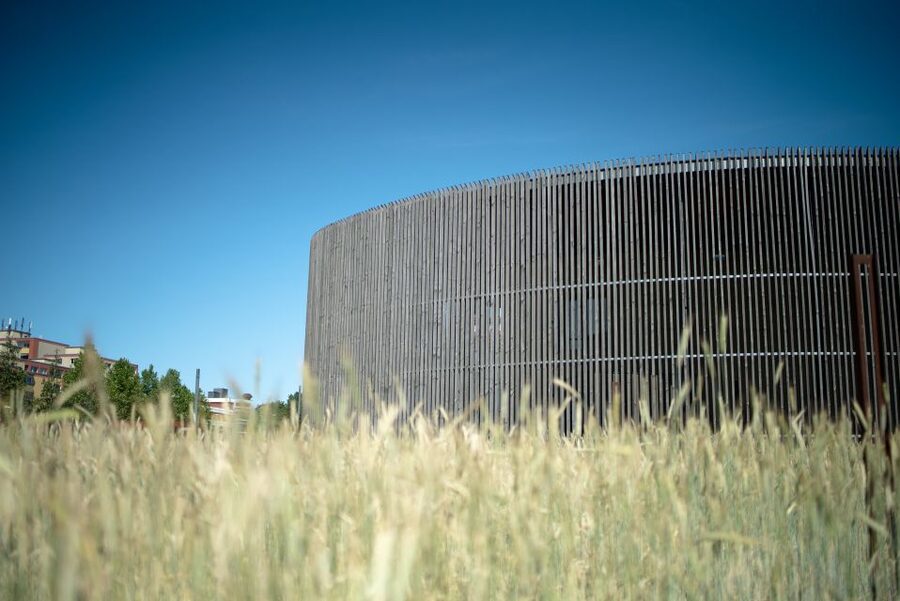
- The Palace of Tears sets the mood: Begin at the former border crossing beside Friedrichstrasse station, where farewells between East and West Germans took place.
- Karl Marx Allee shows communism in stone: Walk beneath monumental apartment blocks and learn how architecture served politics and propaganda.
- The 1953 uprising adds urgency: See the setting connected with East Berlin’s workers’ revolt against the communist government.
- The Wall is more than a painted strip: Follow stories of tunnels, rooftops, escape attempts, informants, and the Stasi.
- East Side Gallery ends the route on a different note: The former barrier becomes an open-air art display, though it can feel crowded and less reflective than the memorial sites.
- You need public transport: An AB day pass is required, so buy one before or with help from the staff on the day.
Why this route helps you understand Berlin
Berlin’s Cold War story can feel scattered. A memorial here, a remaining section of wall there, a museum across town. This tour gives those pieces a clear order.
You begin with separation at the Palace of Tears, move into the planned capital of East Germany, then follow the Wall and finish with the East Side Gallery. The route shows how borders affected travel, housing, work, protest, surveillance, and family life.
The guide does the connecting work. Instead of asking you to read a long panel and then guess why the site matters, you get the background at the place where it happened. That is especially useful if you know only the basic outline: Germany divided after World War II, the Wall went up in 1961, and it fell in 1989.
The tour focuses more on the Berlin Wall and life in East Germany than on military strategy or the full global politics of the Cold War. One past participant wanted more discussion of war and international politics, so keep that in mind. If your main interest is Berlin’s divided streets, escape attempts, state surveillance, and the human cost of the border, the emphasis should suit you well.
More museum stops on the way around Berlin:
- Berlin: Berlin Wall & East Side Gallery Walking Tour
★ 4.9 · 264 reviews - Acropolis monuments & Parthenon Walking Tour with Optional Acropolis Museum
★ 5.0 · 2,678 reviews - Frida Kahlo VIP [Museum Tickets Included] Walk, Markets & Churros
★ 5.0 · 982 reviews
Starting at the Palace of Tears
Meet outside Friedrichstrasse train station, on the square beside the Tränenpalast, also called the Palace of Tears. Look for a guide with a yellow name badge and yellow umbrella.
This is a strong place to begin because the building was a departure hall at a border crossing between East and West Berlin. The name comes from the painful goodbyes made there. For East Germans, crossing rules were strict and travel to the West was limited. Families could meet, but the return journey could be heavy with fear and sadness.
You spend about 20 minutes here. The stop gives the tour an immediate human focus. The Cold War was not only a contest between superpowers. It also shaped whether a parent could visit a child, whether relatives could meet, and whether a person could return home after crossing the border.
The station is easy to reach, but it is also a working transport hub. You will need to stay alert for the group as the tour begins. If you choose the optional pickup service, the arrangements differ, so check the exact meeting instructions attached to your booking.
Alexanderplatz and the public face of East Berlin
A short train ride takes you to Alexanderplatz, where the guide spends around 20 minutes. This broad square is one of the best places to see how East Germany presented its capital.
Alexanderplatz combines modern city life with large GDR-era structures. The architecture was meant to express order, progress, and the power of the socialist state. Your guide explains how the square functioned as both a public gathering place and a carefully shaped civic stage.
This stop works best when you look beyond the individual buildings. Ask yourself what the planners wanted you to feel. Monumental scale can suggest strength, unity, and control. At the same time, Alexanderplatz became a place where dissatisfaction could surface, especially as public protest grew in the final years of East Germany.
You will have time for sightseeing, but this is not a long museum visit. The tour keeps moving. If you want detailed photographs of every building, return later on your own.
Karl Marx Allee and the 1953 workers’ uprising
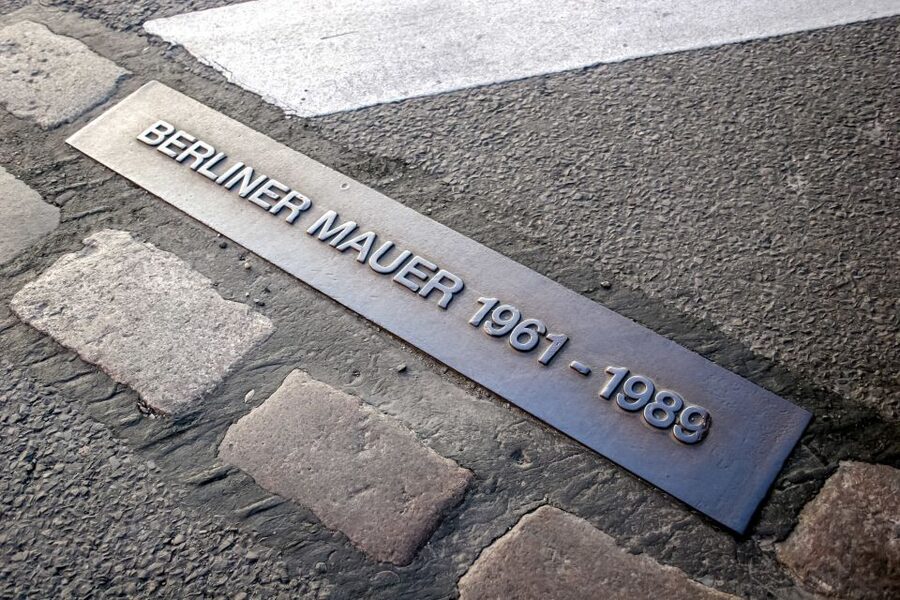
From Alexanderplatz, the group continues along Karl Marx Allee. Allow about 20 minutes for guided sightseeing here.
The boulevard was designed as a showcase of socialist life. Its broad scale and monumental apartment blocks were meant to show that East Germany could build a grand capital for workers. The buildings were not simply homes. They were part of a political message in brick and stone.
The guide also covers the workers’ uprising of June 1953, which began in East Berlin and challenged the communist government. Workers protested over increased work demands, and the unrest spread. Soviet forces were used to put down the revolt.
This is one of the tour’s most useful stops because it links architecture with resistance. You see the official image of a confident socialist state, then learn about the people who challenged that state in the same setting.
The boulevard is long, and the tour only covers part of it. Wear shoes that can handle several hours of walking, standing, and moving between transit stops. There is no promise of a leisurely stroll with long breaks, so plan a separate visit if you want to study the buildings at length.
Same streets, a different story:
- Discover Berlin Half-Day Walking Tour
★ 5.0 · 9,624 reviews - Berlin City walk Government District and Places of Democracy
★ 4.7 · 8,467 reviews - Berlin: Third Reich & Cold War Guided Walking Tour
★ 4.9 · 8,378 reviews - Berlin: Discover Berlin Walking Tour
★ 4.9 · 5,998 reviews
Friedrichshain and the mechanics of the Wall
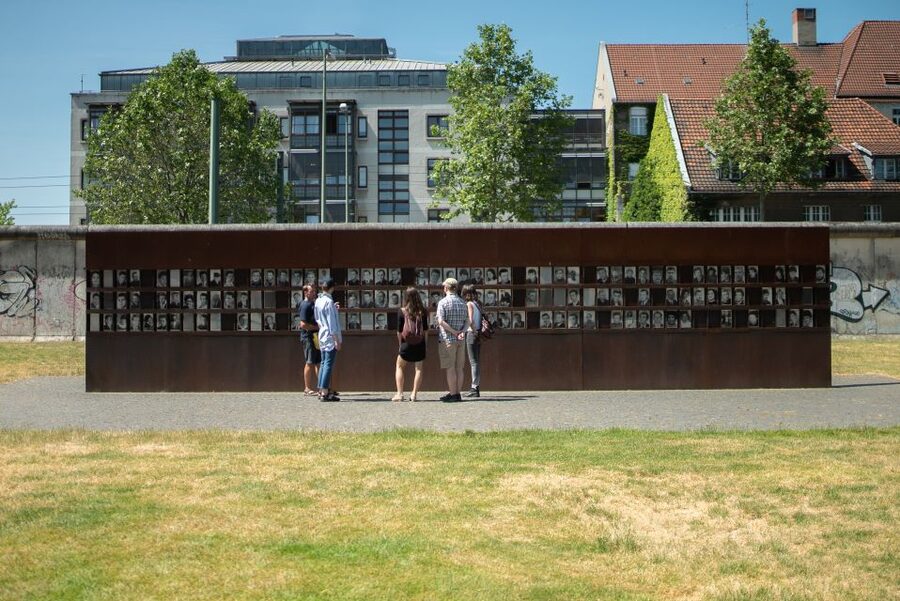
The route continues by train to Friedrichshain, with about 20 minutes of guided sightseeing. Here, the focus shifts from the public image of East Berlin to the physical reality of the border.
The Wall was not one simple slab of concrete. It involved barriers, controlled spaces, guard positions, and a forbidden zone commonly known as the death strip. The guide explains how the system worked and why crossing it was so dangerous.
You also hear about people who tried to escape through tunnels, over rooftops, and across guarded areas. These stories give the border a personal scale. A map can show a divided city, but a story about a family, a worker, or a person planning an escape helps you understand the risks involved.
The Stasi, East Germany’s secret police, is another major part of this section. Surveillance reached into ordinary life through informants and official monitoring. The guide’s strongest task here is to show how fear could exist even when no guard was visible.
Several past guides have been praised for adding personal detail. Nikolai, Klaus, Xavier, and Paul have each been singled out for clear explanations and compelling stories, while guides such as Jim and Jamie have been noted for making the material accessible to people with little prior knowledge. Your guide will vary, but the format is built around live explanation rather than a fixed audio script.
Seeing the former death strip and Berlin Wall
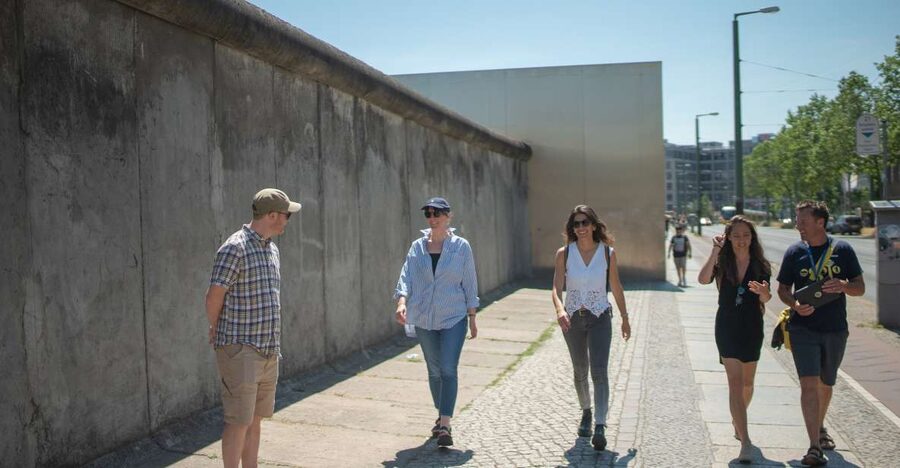
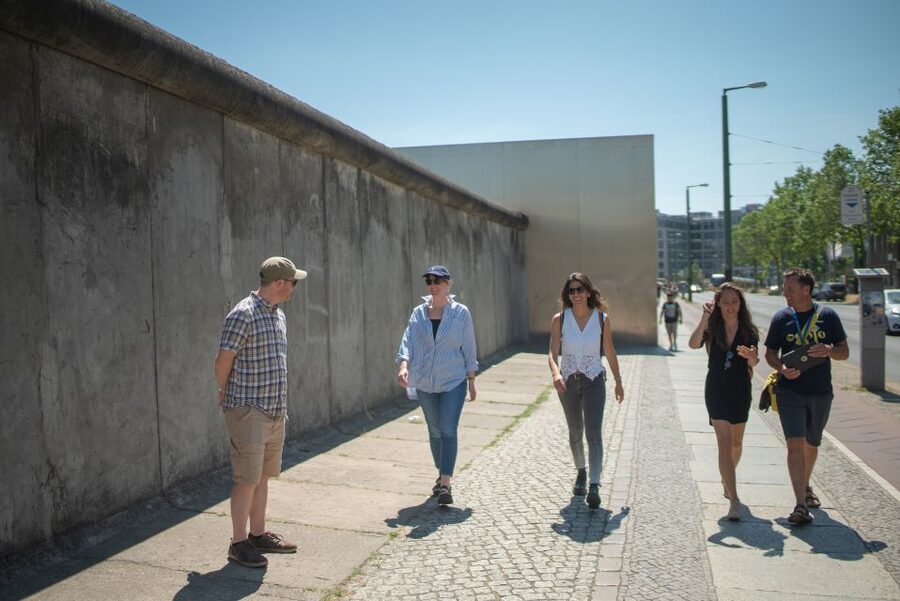
You spend about 16 minutes at a Berlin Wall section before reaching the East Side Gallery. This is a relatively short formal stop, but the subject carries considerable weight.
The former death strip helps you picture the distance and exposure involved in an escape attempt. The Wall separated streets, neighborhoods, and families, while the controlled zone made direct crossings difficult and dangerous. The guide uses the site to explain both the system and the choices people faced.
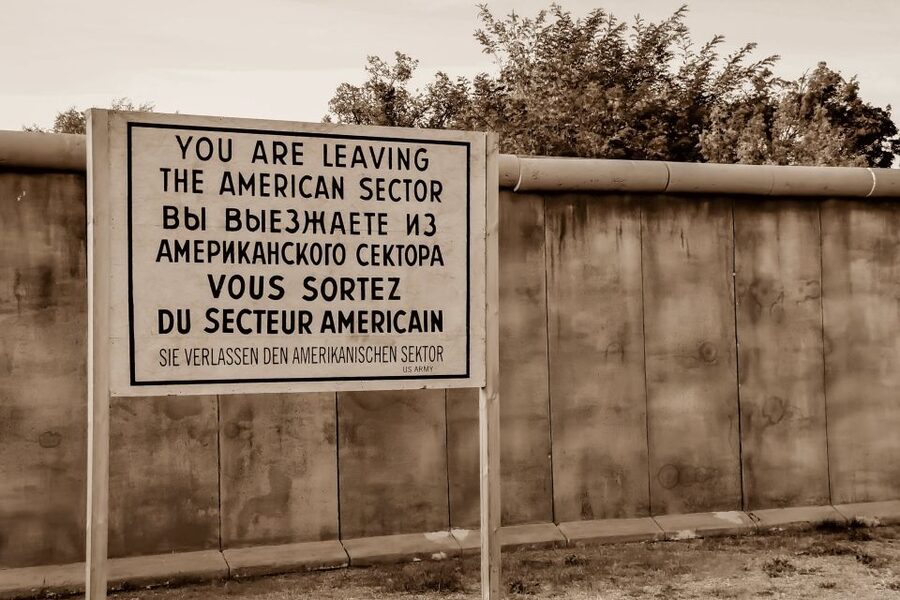
This is also where photographs from the period can help. Several guides have used images on an iPad to show what the area looked like before and during division. Such visual comparisons are valuable because present-day Berlin has changed so much. Without them, it can be hard to imagine how a busy city was cut apart by barriers and guard systems.
Do not expect a large preserved section at every stop. Much of the former border has disappeared or been redeveloped. The point is to read the space with help from the guide, not simply to look at a continuous wall.
East Side Gallery and the Wall after 1989
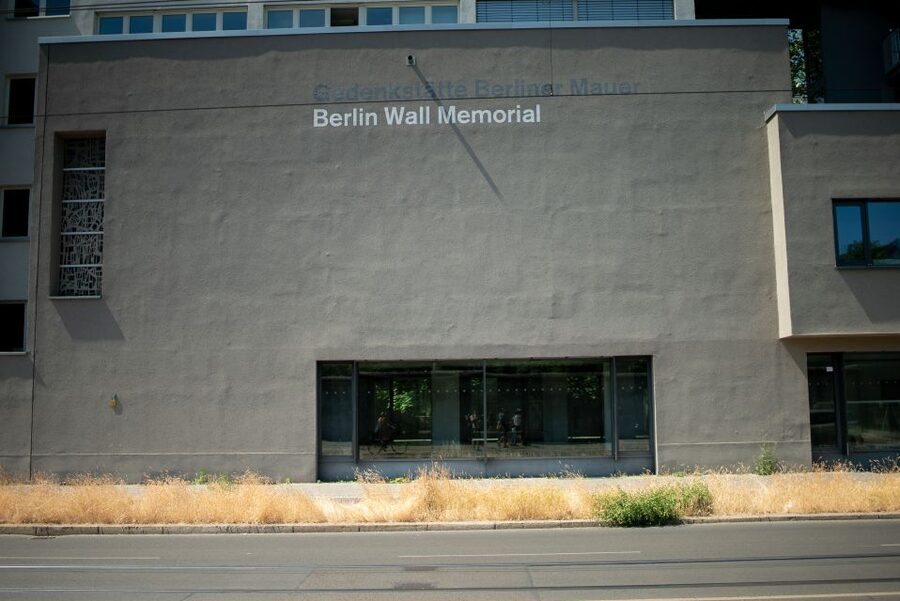
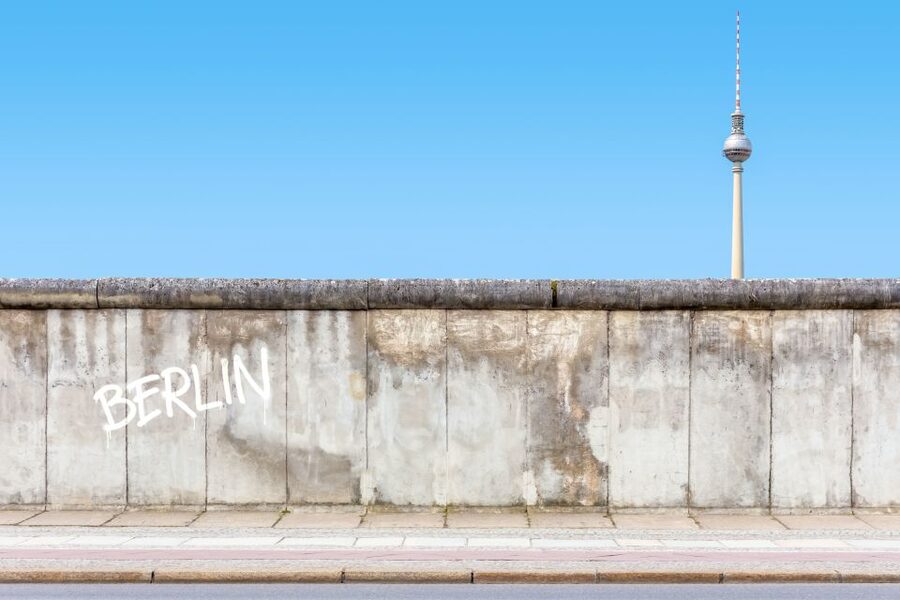
The tour ends with about 20 minutes at the East Side Gallery. Here, a surviving section of the Wall carries murals by artists from around the world.
The mood changes. Earlier stops focus on restriction, fear, and state power. The East Side Gallery shows how the Wall was transformed into public art after its political meaning collapsed. It is now one of Berlin’s most recognizable sights.
The murals are worth seeing, but keep your expectations realistic. This is an open-air gallery along a public route, not a quiet art museum. You may find other people taking photographs, and the tour gives you limited time to examine individual works.
Still, the location makes a powerful ending. The concrete barrier that once divided people now carries images and ideas in public view. The contrast is the point. You finish with the Wall as a record of oppression, a surface for art, and a reminder that political systems can change faster than their physical remains.
The stated drop-off options include Bernauer Straße. That area has its own major Wall memorials, so it can be a useful place to continue your history lesson after the tour if your schedule allows. The tour itself does not promise a full visit there, so treat it as an end point rather than part of the main guided route.
How the transport and timing affect the day
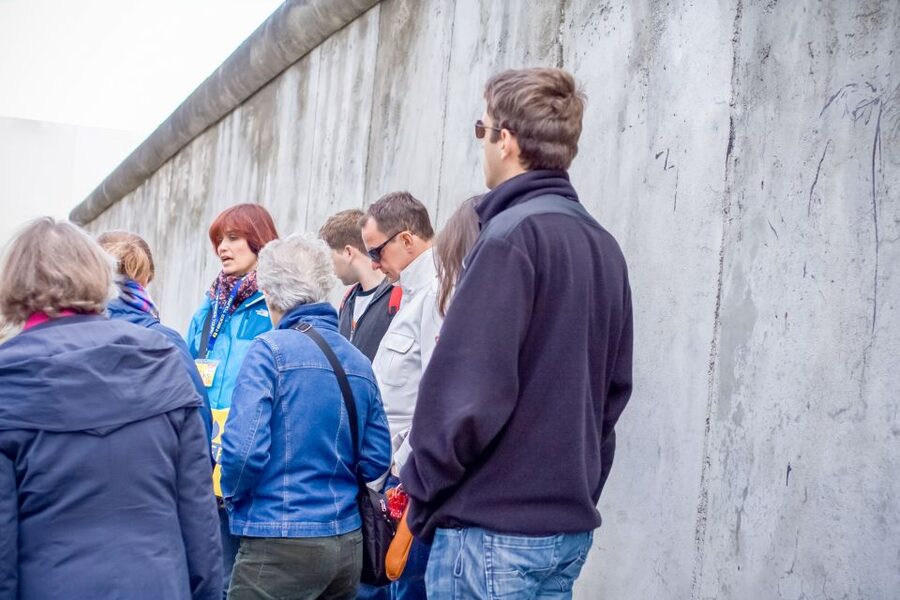
The tour lasts three hours and includes train journeys of roughly five and six minutes. Those rides are short, but they matter because the route covers several parts of Berlin.
You must have an AB public transport day pass. It is not included in the tour price. Staff can help you buy one on the day, but I would allow extra time before the start rather than arrive at the last second and hope the process is quick.
The walking is moderate but spread across multiple stops. You will stand while listening, walk along broad avenues, move through stations, and spend time outdoors. Comfortable shoes and weather-appropriate clothing are essential. The tour runs in poor weather, so bring rain protection or warm layers as needed.
The activity is wheelchair accessible according to the tour information. Since the route includes public transport and outdoor streets, confirm the exact arrangements when booking if you need specific mobility support.
English and German tours are available. Private and small-group options are also offered. A smaller group can make it easier to ask questions and hear the guide, especially on busy streets or in windy weather. Large groups may be less personal, and one past participant noted that a guide had to project their voice when attendance was high.
Is $18 good value?
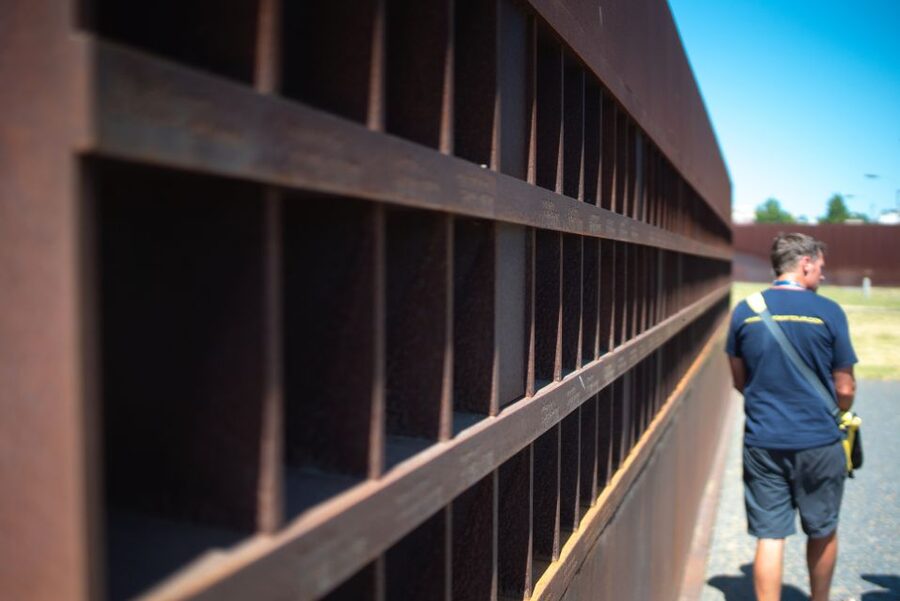
At $18 per person, this is a low-cost way to organize a substantial introduction to Cold War Berlin. The price covers three hours with a live guide and links several sites that would take planning to visit independently.
The real value lies in the interpretation. You can reach Alexanderplatz, Karl Marx Allee, and the East Side Gallery by yourself. What is harder to arrange is a logical sequence that explains how each place connects to the Wall, the East German state, the Stasi, protest, and reunification.
The extra AB day pass changes the final cost, so include it in your budget. Food and drinks are also not included, and neither is hotel transport on the standard option.
For history-focused sightseeing, the price is strong. For someone who wants long museum visits, extensive free time, or a relaxed photography walk, it may feel too compressed.
The guide makes the biggest difference
The feedback about this experience is unusually consistent on one point: the guide carries much of the tour.
Past guides named Paul, Xavier, Tina, Nikolai, Klaus, Jim, Jamie, Eran, and others have been praised for clear explanations, humor, patience, and strong storytelling. Several have brought personal experience of East Germany or life close to the former Wall. That can add a human layer that a textbook cannot provide, though the exact guide is not guaranteed.
The best approach is to ask questions. The guides are expected to answer them, and the material benefits from discussion. You can ask about escape attempts, daily life, the 1953 uprising, the Stasi, the Wall’s construction, or the changes after 1989.
The tour is suitable for beginners. You do not need a detailed grasp of postwar German politics to follow it. It also works for history fans who want local context and personal accounts, though you should not expect an academic seminar on every Cold War crisis.
Who should book this Berlin tour?
I would choose this tour if you want the Berlin Wall to be the main thread of your visit. It is especially useful early in a Berlin trip because it gives you a framework for understanding the city’s former East and West sides.
It suits adults, older children, and teenagers who can manage several hours of walking and public transport. One guide was praised for keeping the subject clear for two teenagers, and the storytelling format can work well for families who find museums too static.
You should think twice if you dislike fixed schedules, outdoor walking, or moving quickly between locations. The route covers a lot in three hours. You will receive context at each stop, but you will not have long to linger.
Book it if you want human stories, escape attempts, architecture, and the Wall in one compact experience. Skip it if your priority is only the East Side Gallery or only international Cold War politics. For most first-time visitors with an interest in divided Berlin, the combination offers good value at $18, plus the required transport pass.
FAQ
How long does the Cold War Berlin tour last?
The tour lasts three hours, including walking, guided sightseeing, and short train journeys between sites.
Where does the standard tour meet?
The meeting point is outside Friedrichstrasse train station, on the square beside the Palace of Tears. Look for a guide with a yellow name badge and yellow umbrella.
Which places does the tour visit?
The route includes the Palace of Tears, Alexanderplatz, Karl Marx Allee, Friedrichshain, a Berlin Wall and former death strip area, and the East Side Gallery.
Is public transport included in the price?
No. You need an AB public transport day pass, which is not included. Staff can help you purchase one on the day.
Is the tour offered in English?
Yes. Live tours are available in English and German.
Is hotel pickup available?
Pickup is optional. If you select it, you should wait in your hotel lobby five minutes before the scheduled pickup time. The supplied information also gives a drop-off meeting point at the Tourist Information office by Brandenburg Gate for that option.
What should I bring?
Bring comfortable shoes, a camera, comfortable clothing, and clothing suited to the weather. The tour runs in all weather conditions.
New walking tours around Berlin
- Berlin: 2.5-Hour Walking Tour through Kreuzberg 61★ 4.9 · 525 reviews
- From Berlin: Potsdam & Sanssouci half day Walking Tour★ 4.9 · 85 reviews
- East Berlin and the Wall: Walking Tour★ 4.9 · 407 reviews
- Berlin: Walking Tour of the Top 10 Sightseeing Attractions★ 4.7 · 150 reviews
- Berlin: The Time of National Socialism Walking Tour★ 5.0 · 220 reviews
- Berlin: walking tour about Charité★ 4.4 · 537 reviews
- Berlin: Kreuzberg Guided Walking Evening Tour★ 4.7 · 555 reviews
- Berlin : Must-see attractions Walking Tour★ 4.8 · 83 reviews
Berlin Walking Tours, side by side.
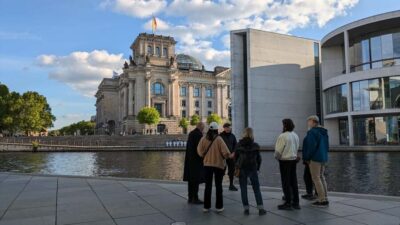
Berlin City walk Government District and Places of Democracy
Read our review →
Berlin: Third Reich & Cold War Guided Walking Tour
Read our review →
Berlin’s Best: 2 Hour Walking Tour Third Reich and the Cold War
Read our review →
Explore Berlin: See All The Iconic Sights & Some Hidden Gems
Read our review →
Third Reich Berlin: Hitler and WWII Walking Tour
Read our review →Lists this walk sits on