
Review · BERLIN
Berlin’s Best: 2 Hour Walking Tour Third Reich and the Cold War
Berlin’s most important 20th-century sites are spread across central Berlin, but this tour ties them together in one brisk walk. In two hours, you move from the reunited city at Brandenburg Gate through Nazi power, wartime destruction, the divided capital, and the fall of the Berlin Wall.
I like the strong route and the way each stop adds another piece to the story. I also like the guides’ mix of facts, old photographs, humor, and care when discussing murder, dictatorship, and war. The main drawback is the pace: two hours gives you a sharp introduction, not time to study every memorial or museum.
Key points to know before you book
- Brandenburg Gate to Checkpoint Charlie: The route links two of Berlin’s best-known landmarks in a logical east-west walk.
- Hitler’s bunker site: You stand above the former bunker location while hearing about the final days of the Nazi regime.
- A serious look at the Berlin Wall: The route includes a large remaining section of Wall and the stories of people who tried to cross it.
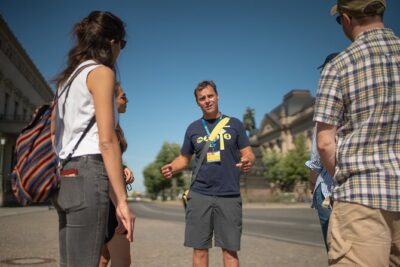
- Guides who welcome questions: Guides including Glen, Maggie, Mikey, Peter F., Tom, and James are praised for clear explanations and friendly delivery.
- Good value at $24.07: You see many major sites without paying separate admission, though the walk itself is outdoors.
- Simple meeting plan: Meet 15 minutes early at the Tourist Information office by Brandenburg Gate and look for the pink umbrella.
Why this two-hour Berlin walk works
Berlin can feel like a history book with the pages scattered across the city. A Cold War checkpoint sits near a Nazi government building. A Holocaust memorial occupies land close to Hitler’s former bunker. Soviet tanks rest in the Tiergarten, only a short walk from the Reichstag.
This tour gives those places a sequence. You begin with the symbol of modern Germany, move through the machinery of dictatorship and war, then finish with the split between East and West and the Wall’s collapse. That order helps you understand how one period led into the next.
The walk is offered in English and has a maximum of 30 people. That is large enough for a lively group, but still manageable on city streets. The guide’s ability to gather everyone at each stop matters, so arrive early and look for the pink umbrella at the meeting point.
The tour costs $24.07 per person. Since the listed stops are free to enter, you are paying mainly for the route, the guide, and the interpretation. I consider that good value if you want a fast introduction to Berlin’s 20th-century past. You are not paying for museum entry, and the tour does not replace time inside the Reichstag, the Topography of Terror, or other exhibitions.
More two-hour walks around Berlin:
- Budapest City Landmarks Walking Tour in 2 Hours
★ 5.0 · 2,048 reviews - Leipzig: 2-Hour Guided Walking Tour in German
★ 4.8 · 1,612 reviews - Lucca: 2-Hour City Center Walking Tour
★ 4.7 · 1,314 reviews
Brandenburg Gate and the meaning of reunification
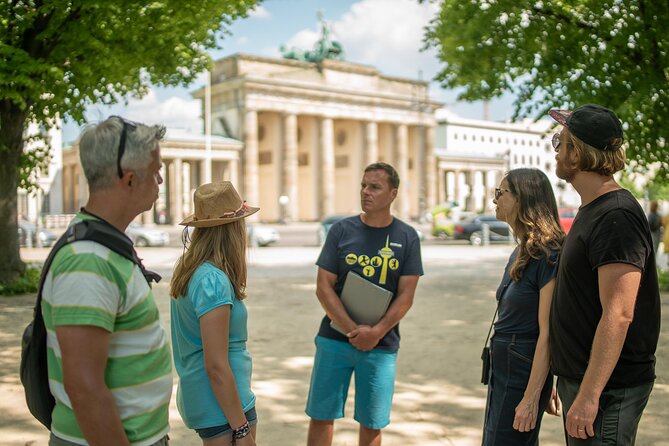
The walk starts at Brandenburg Gate on Pariser Platz. This is a useful starting point because the monument is more than a fine neoclassical gate. It has become a symbol of a Germany reunited after decades of division.
Your guide explains why this particular place carries such weight. The gate once sat near the edge of divided Berlin, and today it represents a capital that is no longer split by a fortified border. You get an early lesson in the tour’s main theme: Berlin’s buildings often carry several layers of political meaning.
The gate is also an easy meeting point near public transportation. You should arrive 15 minutes before the scheduled start and meet in front of the Tourist Information office on the Pariser Platz side.
The Reichstag, fire, and Hitler’s seizure of power
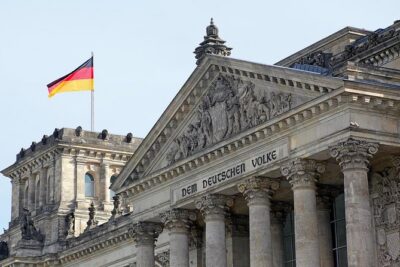
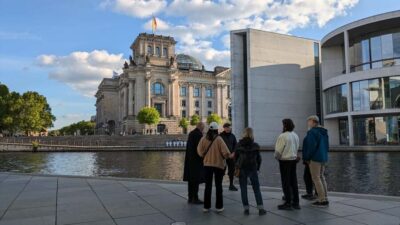
From Brandenburg Gate, the group continues to the Reichstag Building, home of Germany’s parliament. The building helps connect imperial Germany, the Weimar Republic, Nazi rule, postwar division, and the modern federal republic.
The key story here is the Reichstag fire in 1933. Your guide explains how Hitler used the event to attack political opponents and tighten his grip on power. That context is essential. The building itself is impressive, but the important lesson is how a democratic system can be weakened through fear, emergency measures, and the removal of civil rights.
You view the Reichstag from outside, and the stop lasts about 10 minutes. That is enough for a clear explanation, but not a visit inside the building. If you want to see the parliamentary interior or its famous glass dome, you will need separate arrangements.
Soviet tanks in the Tiergarten
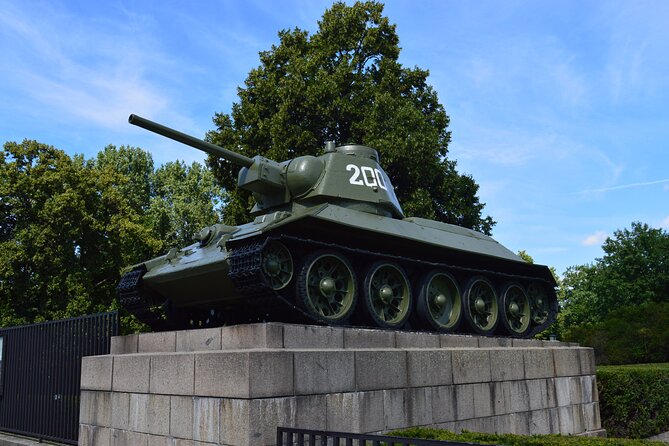
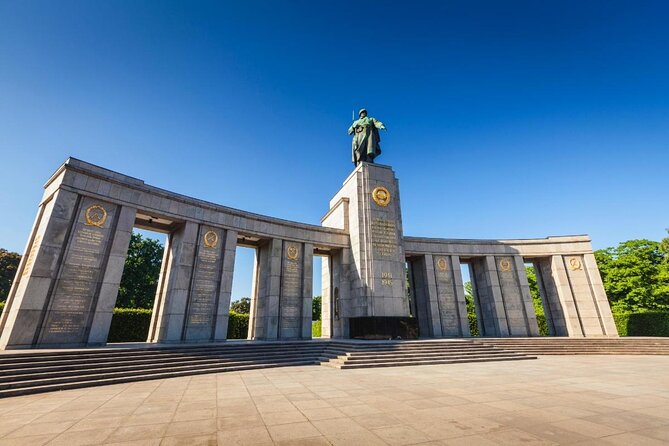
The next stop is the Soviet Memorial in the Tiergarten, where T-34/76 tanks and field artillery recall the Soviet victory in the Second World War. The stop is brief, about seven minutes, but it adds a different point of view to the tour.
Here you see how the Soviet Union memorialized its wartime sacrifice in the former German capital. The weapons are not abstract symbols on a plaque. They are physical military equipment placed in a central Berlin park, close to the areas where the final fighting for the city took place.
The memorial also helps explain the political mood of postwar Berlin. The city was occupied and divided among the victorious Allied powers, and Soviet influence shaped East Berlin for decades. This is a quick stop, so listen closely and ask questions as soon as the guide opens the discussion.
More walking tours around Berlin:
- Discover Berlin Half-Day Walking Tour
★ 5.0 · 9,624 reviews - Berlin City walk Government District and Places of Democracy
★ 4.7 · 8,467 reviews - Berlin: Third Reich & Cold War Guided Walking Tour
★ 4.9 · 8,378 reviews - Berlin: Discover Berlin Walking Tour
★ 4.9 · 5,998 reviews
The Victory Column and the unrealized city of Germania
The route also takes in the Victory Column, known in German as the Siegessäule. The guide explains why Albert Speer moved the column from its original location and connects that change to the Nazi vision for Berlin.
Speer planned a grand new capital called Germania. The project was meant to turn Berlin into a monumental world capital if Nazi Germany won the war. Much of that plan was never built, but the idea reveals how architecture and urban planning were used to project power.
This is one of the more unusual parts of the walk because it moves beyond famous landmarks and into the plans that might have reshaped Berlin. You get a sense of how Nazi ambition reached beyond military victory into the physical design of the city.
The Holocaust Memorial and the weight of the site
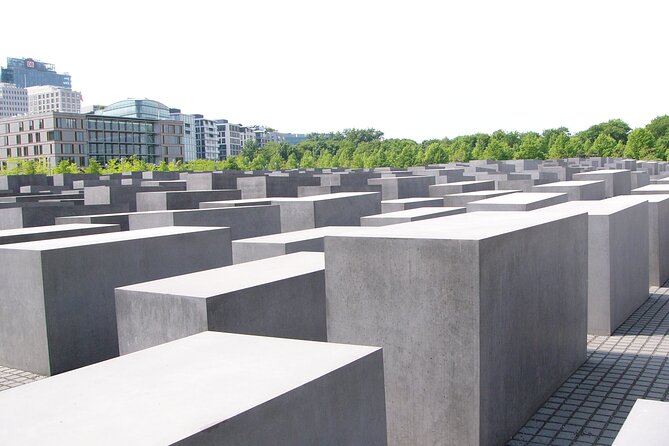
The Memorial to the Murdered Jews of Europe is one of the most affecting stops. You walk among its field of concrete slabs, a large outdoor memorial dedicated to the Jewish victims of the Holocaust.
The memorial is open and accessible without an admission ticket, but the experience is not a quick photo stop. The changing height of the slabs and the narrow paths create a serious, unsettled atmosphere. Your guide provides context while allowing the place to speak for itself.
The scheduled stop lasts about 10 minutes. That is enough to walk through part of the memorial and understand its purpose, though you may want to return later for more time. The tour treats the subject with care, and several guides are praised for balancing clear information with respect for the people represented here.
Above Hitler’s bunker
Near the Holocaust Memorial, you visit the site of Hitler’s former bunker. There is no grand entrance to see. You stand above the location and hear about the final days of the Second World War, Hitler’s suicide on April 30, 1945, and the end of the Nazi regime.
That lack of a dramatic ruin is part of the point. The site does not invite heroic storytelling or spectacle. It helps you think about how Germany has handled a place connected to Hitler while refusing to turn it into a shrine.
The guide also discusses how Germans have faced this destructive past in the decades since the war. That makes the stop about more than the final days underground. It becomes a lesson in memory, responsibility, and the careful way Berlin marks places linked to Nazi crimes.
The Aviation Ministry and East Germany’s birth
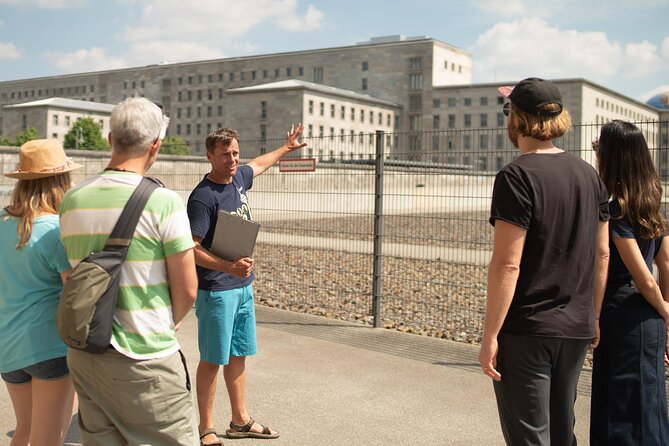
The route then reaches the former Aviation Ministry of Berlin, built for Hermann Göring’s air force. You walk along the length of the building and hear that the same site was used in 1949 for the proclamation of East Germany, officially the German Democratic Republic.
This is a striking example of Berlin’s layered past. A building tied to the Nazi state later became part of the political foundation of East Germany. The architecture and the events do not fit neatly into one period, and that is exactly what makes the stop useful.
The visit is short, about five minutes. It works best as a linking point between Nazi Germany and the Cold War rather than as a major stop on its own.
The Topography of Terror and Nazi institutions
At the Topography of Terror, you see the former headquarters area of the SS, Gestapo, and SD. The site now houses an exhibition about the crimes carried out by those institutions during the Nazi period.
The outdoor portion gives you the location and the basic context. If you have time after the tour, return to spend longer with the exhibition. The walking tour gives you the framework, while the museum can provide documents, photographs, and a slower account of persecution and state violence.
This is one of the most important stops for understanding that Nazi terror was organized through institutions, offices, records, and chains of command. It was not only the work of a few famous leaders. The site helps connect the broad political story to the machinery that carried it out.
The Berlin Wall on Niederkirchnerstraße
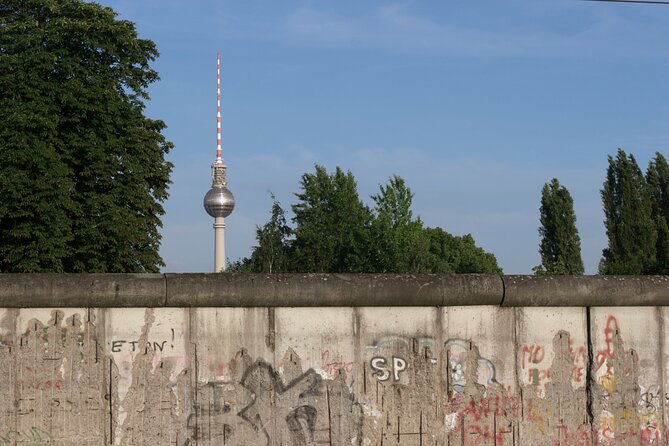
The Cold War section becomes especially clear at Niederkirchnerstraße, where you see a large remaining section of the Berlin Wall. The guide explains how people tried to escape from East Berlin to West Berlin and what happened to those who did not make it.
You also learn about daily life on both sides of the Wall. That matters because the division was not just a line on a map. It shaped work, family life, travel, education, politics, and the basic choices people could make.
This stop is relatively brief, around seven minutes, but the Wall gives the story a physical focus. You can see the barrier that divided streets, neighborhoods, and lives. Guides sometimes use historic images at stops like this, which can help you compare the present-day street with the divided city that once occupied it.
Checkpoint Charlie and the end of the divided city
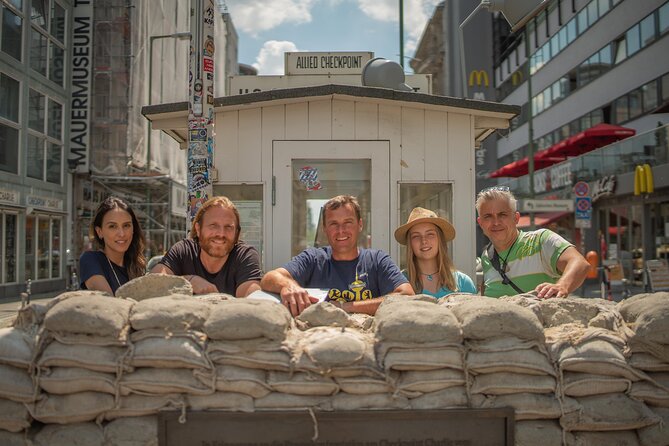
The tour ends at Checkpoint Charlie on Friedrichstraße. This was the best-known crossing point through the Berlin Wall and the scene of a tense confrontation between Soviet and American tanks in 1961.
Your guide also explains the night of November 9, 1989, when the Wall came down. The story is not simply that the barrier vanished and everything became easy. You hear how reunification unfolded and how Germany has dealt with the results over more than three decades.
Checkpoint Charlie is a logical endpoint because it brings together the military standoff, the Wall, foreign occupation, and reunification. It is also a useful place to continue exploring central Berlin, though the checkpoint area itself can feel more commercial than reflective.
What the guides do best
The strongest part of this experience is the guiding. Names that come up include Glen, Ben, Maggie, Rebecca, Tom, Joachim, Peter F., Simon, Paul, Mikey, Georgia, James, Jamie S., Mikhail, Eyan, Nickolai, Xavier, and Ronja.
You should not expect every guide to use exactly the same stories or style. The consistent aim is clear explanation, an easygoing manner, and room for questions. Glen and Mikhail use old photographs to show how places looked in the past. Maggie is praised for making difficult history accessible and offering fresh ways to think about Berlin. Mikey and James are noted for combining humor with respect at grim sites.
That balance matters. A tour about Nazi crimes, the Holocaust, Hitler’s death, and failed escapes across the Wall should not feel like a comedy routine. At the same time, a cold, crowded outdoor walk can become tiring if the guide speaks in a flat or overly formal way. The best guides keep the group alert without making light of suffering.
Families can also make this work. An 11-year-old and a 16-year-old were able to ask questions and stay involved, but parents should know that the subject includes murder, dictatorship, war, and death. The content is serious even when the guide uses a little humor to keep the walk moving.
Timing, walking comfort, and practical advice
Two hours is the tour’s great advantage. You can fit it into a busy Berlin day and quickly see many central landmarks. The route is also useful early in your visit because it gives you a map of places you may want to revisit.
The trade-off is limited time at each stop. The listed stops add up to short explanations, and the route includes many locations. You should think of this as a guided overview, not a museum visit or a slow architectural walk.
Wear sensible shoes. The walk is outdoors, and you may be standing while the guide speaks. In winter, bring a warm coat, gloves, and proper footwear. One practical tip is to use a restroom before starting, since the walk moves between public sites and does not list a planned restroom stop.
The meeting point is close to public transportation, and the end at Checkpoint Charlie is also central. The tour is offered in English only. Service animals are allowed, and the activity information says most people can participate.
Free cancellation is available if you cancel at least 24 hours before the start time. Cancellations made within 24 hours are not refunded, so check your plans before booking.
Is Berlin’s Best walking tour worth booking?
I would book this tour if you want a well-organized introduction to Berlin’s Nazi and Cold War past, especially on a first visit. The route covers Brandenburg Gate, the Reichstag, Soviet tanks, the Victory Column, the Holocaust Memorial, Hitler’s bunker site, the Topography of Terror, the Wall, and Checkpoint Charlie for $24.07.
You should skip it if you want extended time inside museums, a relaxed pace, or a tour focused only on architecture. Two hours moves quickly, and the outdoor format means weather can affect your comfort.
For most visitors, the value is strong. You get a connected story rather than a random list of landmarks, plus the chance to ask questions of a local English-speaking guide. Arrive early, wear good shoes, prepare for serious subject matter, and use the tour as your foundation for exploring Berlin in greater detail afterward.
FAQ
How long is the Berlin Third Reich and Cold War walking tour?
The tour lasts approximately two hours.
Where does the tour begin?
It begins at Brandenburg Gate, Pariser Platz, 10117 Berlin. Meet 15 minutes before the start in front of the Tourist Information office on the Pariser Platz side.
How do I find the guide?
Look for the guide carrying a pink umbrella.
Where does the tour finish?
The tour ends at Checkpoint Charlie, Friedrichstraße 43-45, 10117 Berlin.
Is the tour offered in English?
Yes. The tour includes an English-speaking local guide and is offered in English only.
What is the cancellation policy?
You can cancel at least 24 hours before the start time for a full refund. Cancellations or changes made within 24 hours are not accepted for a refund.
New walking tours around Berlin
- Berlin: 2.5-Hour Walking Tour through Kreuzberg 61★ 4.9 · 525 reviews
- From Berlin: Potsdam & Sanssouci half day Walking Tour★ 4.9 · 85 reviews
- East Berlin and the Wall: Walking Tour★ 4.9 · 407 reviews
- Cold War, Berlin Wall, Spies and the East Side Gallery★ 4.8 · 254 reviews
- Berlin: Walking Tour of the Top 10 Sightseeing Attractions★ 4.7 · 150 reviews
- Berlin: The Time of National Socialism Walking Tour★ 5.0 · 220 reviews
- Berlin: walking tour about Charité★ 4.4 · 537 reviews
- Berlin: Kreuzberg Guided Walking Evening Tour★ 4.7 · 555 reviews
Berlin Walking Tours, side by side.
Berlin City walk Government District and Places of Democracy
Read our review →
Berlin: Third Reich & Cold War Guided Walking Tour
Read our review →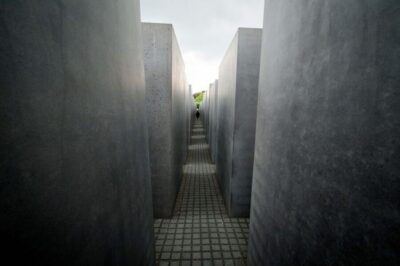
Explore Berlin: See All The Iconic Sights & Some Hidden Gems
Read our review →
Third Reich Berlin: Hitler and WWII Walking Tour
Read our review →
Berlin Center Food Tour with 8+ Authentic Local Tastings
Read our review →Lists this walk sits on