
Review · BERLIN
Berlin: David Bowie & 1970s Berlin Guided Walking Tour
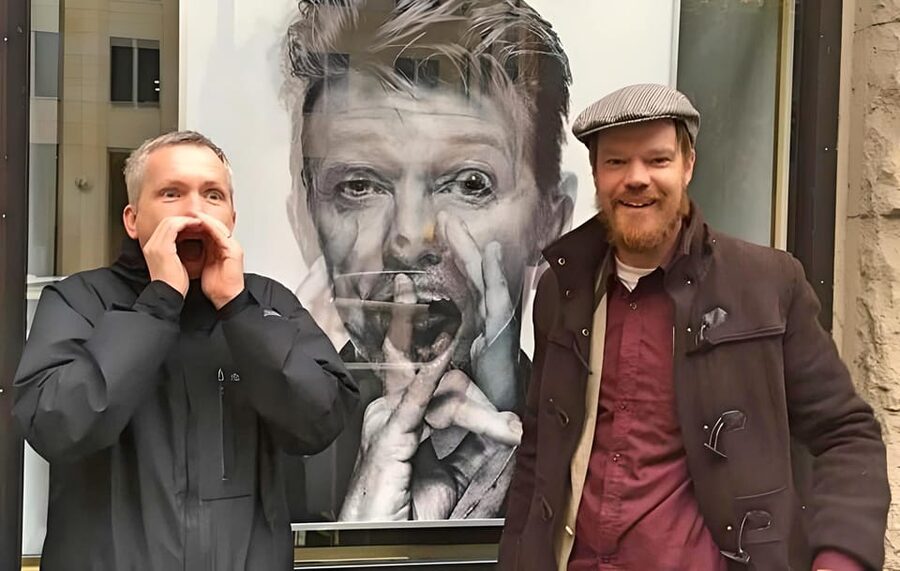
David Bowie’s Berlin is best understood as a city of divided streets, late-night clubs, cheap flats, artistic risk, and Cold War tension. This three-hour tour follows that story from Zoo Station and KaDeWe to Hansa Studios, the recording place tied most closely to Low and Heroes. The music is never treated as an isolated rock story. It is linked to the city Bowie found in 1976.
I like two things here. First, the route connects famous Bowie places with less obvious corners of Berlin, including the flat he shared with Iggy Pop and the Neues Ufer Café. Second, the guides use photographs, video, and music clips to give each stop a clear sense of time and place. Guides such as Dan, Lee, Ronen, Martin, and Klaus have been praised for their warmth, humor, and command of both Bowie and Berlin.
The main drawback is practical: this is not a gentle, single-neighborhood stroll. You will walk, ride trains and buses, and cross several parts of the city. You also need a public transport ticket, and the $135 price is easier to justify for a private booking or a small group than for a solo visitor who must pay for two places.
Key points to know before booking
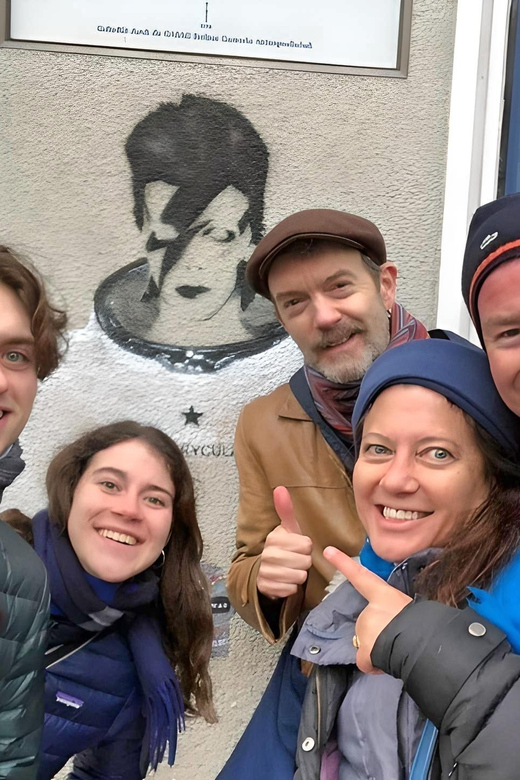
- Bowie’s Berlin comes with a Cold War soundtrack: Hear how Low, Heroes, and Lodger fit the divided city around them.
- Hansa Studios is the emotional center: See the recording area linked with Bowie’s most famous Berlin work.
- The route reaches beyond Bowie landmarks: Stop at Topography of Terror, Anhalter Bahnhof, Tränenpalast, KaDeWe, and Potsdamer Platz.
- Expect public transport, not just walking: Distances between key locations make trains and buses part of the experience.
- Guide quality matters: The tour uses professors, doctoral students, historians, journalists, art critics, and published authors.
- Best for serious fans and curious first-timers: Music, photographs, and Berlin context make the tour useful even if you do not know every album.
Starting with Bowie’s divided Berlin
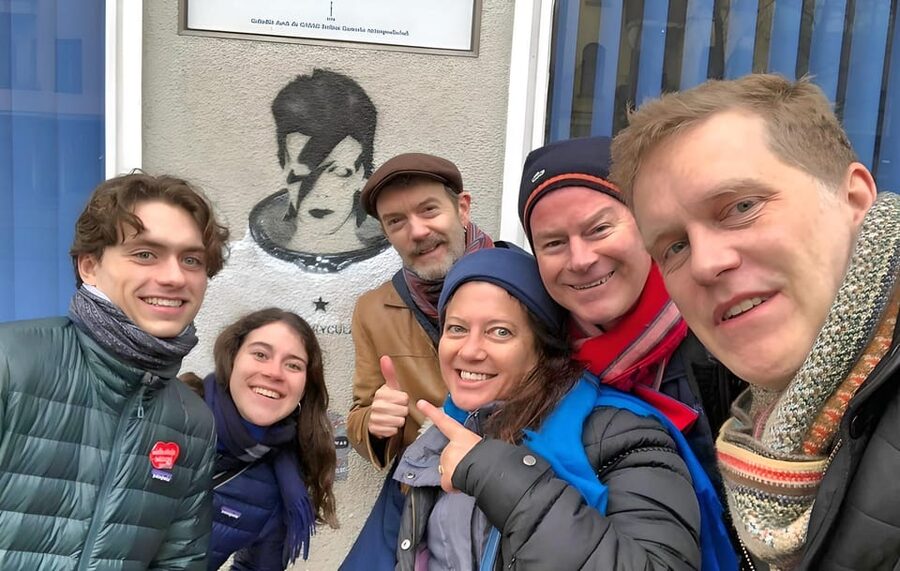
The stated meeting point is Ständige Vertretung, a memorabilia-filled café at Schiffbauerdamm 8. Depending on the option you book, the starting arrangement can vary, so check your confirmation carefully. The tour information also lists several central Berlin stops before the route heads toward Bowie’s western haunts.
This opening area helps establish the political mood. Bowie arrived in West Berlin in 1976, when the city was surrounded by East Germany and shaped by the Cold War. That isolation was part of its appeal. Berlin had a rougher, more permissive cultural life than many West German cities, and it gave Bowie distance from the celebrity machinery he wanted to escape.
The tour is strongest when it keeps both sides of the story in view. You hear about Bowie’s apartment, clubs, and collaborators, but you also see how checkpoints, walls, empty lots, and divided neighborhoods affected daily life. The result is not simply a pilgrimage to rock memorabilia. It is a way to read 1970s Berlin through one artist’s eyes.
More walks with a guide around Berlin:
- Berlin: Third Reich & Cold War Guided Walking Tour
★ 4.9 · 8,378 reviews - Berlin: Hidden Backyards Guided Walking Tour
★ 4.8 · 5,360 reviews - Berlin: City Street Art Guided Walking Tour
★ 4.8 · 1,051 reviews
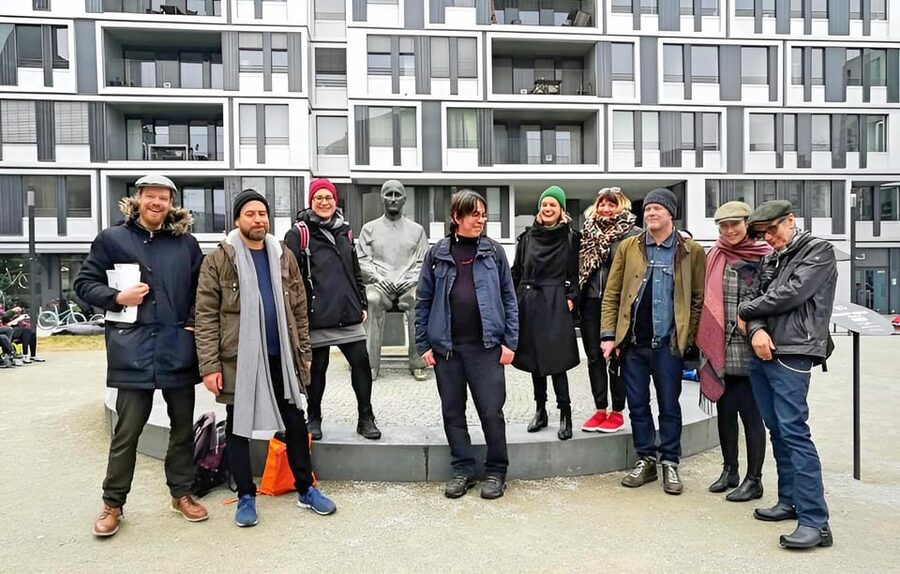
Bertolt-Brecht-Platz and the Tränenpalast
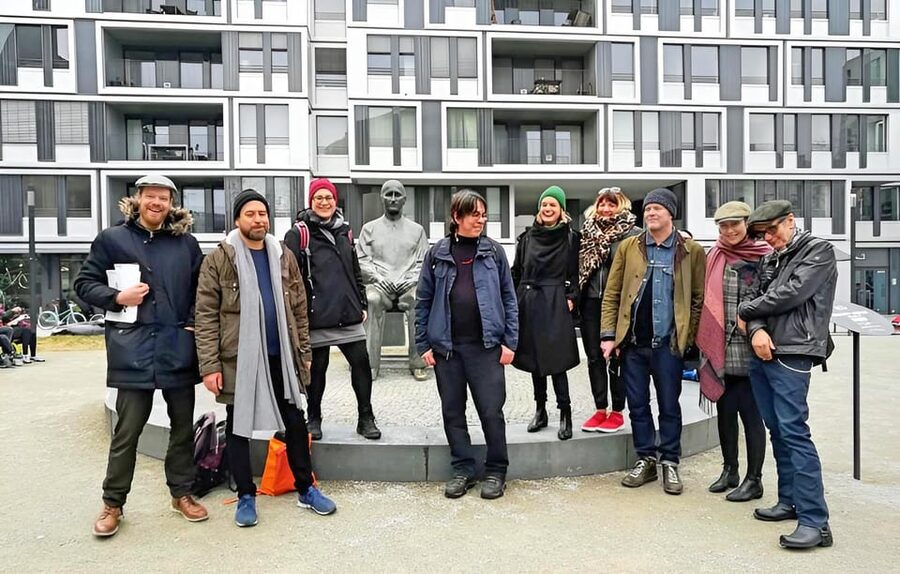
Bertolt-Brecht-Platz introduces Berlin’s theater and literary world. Its location near the Spree and Schiffbauerdamm makes it a fitting place to begin thinking about the city as a center for artists, writers, musicians, and political ideas.
The Tränenpalast, or Palace of Tears, adds a harder edge. This former border crossing was used for departures between East and West Berlin, and its name comes from the tearful farewells that took place there. It is not a Bowie site in the narrow sense, but it helps explain the emotional pressure surrounding the city.
I value stops like these because Bowie’s Berlin albums can sound abstract or futuristic if you hear them without context. The tour shows you a city where borders were not a historical footnote. They shaped where people could go, who they could meet, and how the city felt after dark.
Anhalter Bahnhof, Martin-Gropius-Bau, and the city’s scars
Anhalter Bahnhof was once one of Berlin’s major railway stations. Its remains now suggest the scale of wartime destruction and postwar division. The stop is useful because it shows how much of Bowie’s Berlin was made up of fragments: grand buildings beside vacant ground, restored streets beside damaged structures, and old institutions given new uses.
Nearby, Martin-Gropius-Bau brings in Berlin’s art and exhibition culture. The building has long been one of the city’s notable cultural addresses, and its inclusion broadens the tour beyond pop music. Bowie’s Berlin was also a place of visual art, theater, photography, fashion, and experimental performance.
You should not expect a long museum visit at each location. These are guided outdoor stops, designed to build a story while you move through the city. If you prefer to spend an hour inside each historical site, this tour will feel fast. If you like seeing how separate pieces fit together, the pace works better.
Topography of Terror and the weight of the past
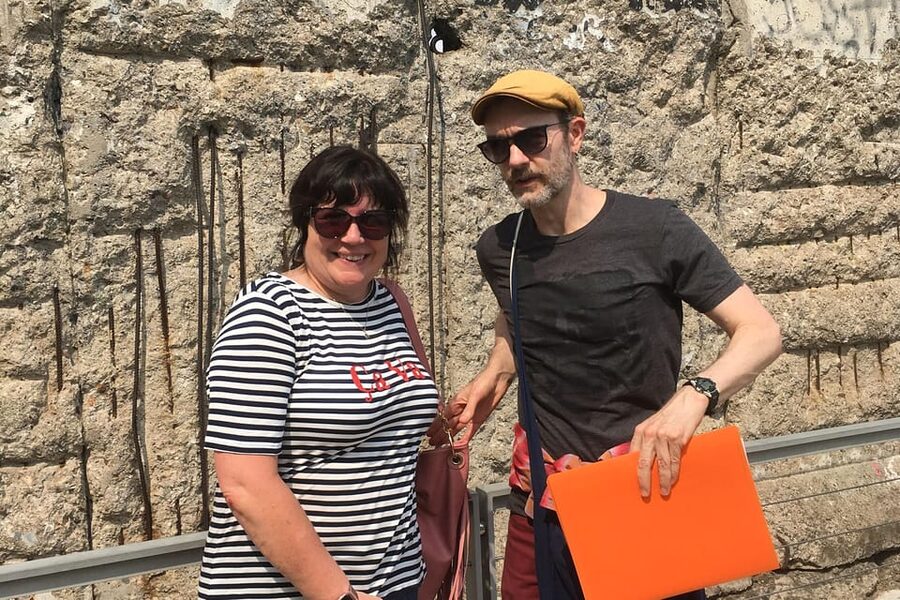
Topography of Terror occupies the former headquarters area of the Gestapo and SS. The site deals with Nazi persecution and the machinery of dictatorship. Its presence on the route makes an important point: 1970s Berlin was not only a playground for musicians. It was a city still living with the physical and moral consequences of the twentieth century.
This stop may seem far removed from Bowie, but it gives the tour needed balance. The city’s underground clubs and creative freedom existed alongside painful memories and political division. A guide who explains those layers can show why Berlin felt so different from a normal European capital.
The tour’s historians and writers are particularly valuable here. Names such as Dan, Lee, and Ronen appear repeatedly in the tour’s feedback, with praise for their ability to connect Bowie’s career to German history, art, and social life. The best guide for this route is not simply an encyclopedia of song titles. You want someone who can explain why the setting mattered.
More walking tours around Berlin:
- Discover Berlin Half-Day Walking Tour
★ 5.0 · 9,624 reviews - Berlin City walk Government District and Places of Democracy
★ 4.7 · 8,467 reviews - Berlin: Discover Berlin Walking Tour
★ 4.9 · 5,998 reviews - Berlin’s Best: 2 Hour Walking Tour Third Reich and the Cold War
★ 5.0 · 5,486 reviews
Hansa Studios and the sound of Heroes
Hansa Studios is the key music stop. Bowie recorded in the city during the period associated with Low, Heroes, and Lodger, though the albums were made under different circumstances and not all were recorded entirely at the same location. The tour presents Hansa as the place where the Berlin period reached a creative high point.
The studio’s location near the former Berlin Wall gives the visit extra force. Bowie was working close to a highly charged border, and that setting became part of the legend around Heroes. The song’s image of lovers meeting by the wall has made the building one of the most important Bowie sites in Berlin.
You may not enter the working studio itself. The value is in seeing the setting, hearing the story, and understanding the distance between the polished record and the tense city around it. Guides often use music clips and photographs here, which helps turn an exterior location into something more than a photo stop.
I especially like the way the music is used while walking. A short passage from Heroes or Low can make a street corner feel connected to the studio work without forcing the guide into a lecture. One guide, Lee, has been praised for using a large collection of photographs and video to show how the city has changed since Bowie’s years.
KaDeWe, Zoo Station, and West Berlin after dark
KaDeWe represents another side of West Berlin. The department store was a major symbol of Western consumer life, and its presence contrasts with the austere border sites and damaged buildings elsewhere on the route.
Zoo Station was the starting point for many stories of West Berlin nightlife. It is also tied to Bowie’s song Station to Station, though the tour focuses on the wider setting rather than reducing the stop to a single title. You will hear about the clubs, cafés, and streets that drew Bowie and Iggy Pop into the city’s artistic circle.
The former Dschungel Club is one of the most interesting nightlife references. It was a place where musicians and artists gathered, and it helps explain the social network around Bowie’s Berlin years. These places have changed, and not every original interior survives. That is worth knowing before you go: the tour is about location and memory, not a preserved 1970s theme park.
The movement between KaDeWe and Zoo Station also shows you how Bowie’s Berlin was spread out. The tour does not pretend that every important site is within an easy five-minute walk. You use public transport several times, which can be a bonus if you want a practical introduction to moving around Berlin, but it may tire you if you expected a compact stroll.
Bowie’s former home and Neues Ufer Café
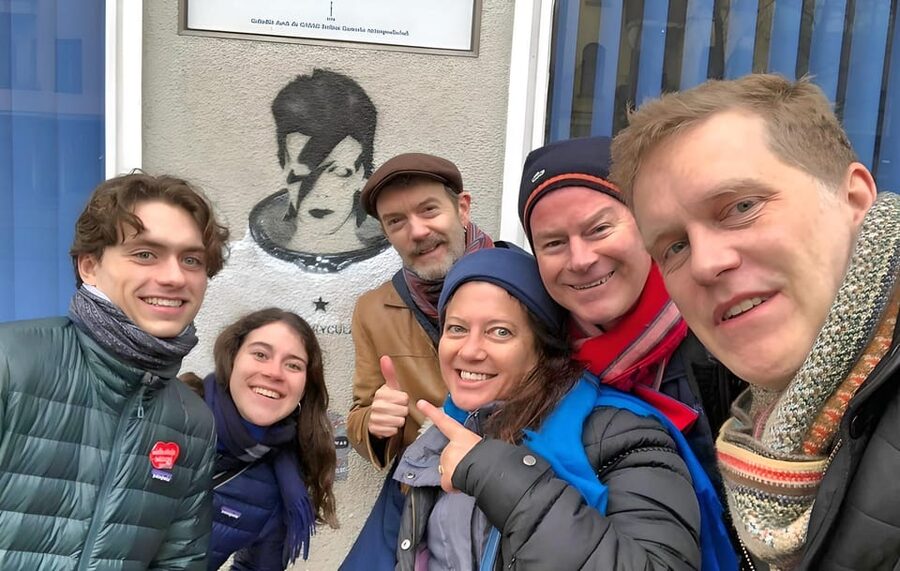
One of the most personal parts of the route is the stop at Bowie’s former home, the flat associated with his time in Berlin and his friendship with Iggy Pop. Seeing an ordinary residential building can be more revealing than visiting a grand landmark. Bowie was not living in a museum. He was trying to function as a working artist in a neighborhood where daily life continued around him.
The tour also visits Neues Ufer Café, associated with Bowie’s Berlin social world. It gives the afternoon a more relaxed setting after the political and architectural stops. You get a sense of the cafés and informal meeting places that helped make West Berlin attractive to musicians.
Do not expect every location to look exactly as it did in 1977. Berlin has changed dramatically, and part of the guide’s job is to separate what survives from what has vanished. The strongest explanations use old photographs alongside the present-day street, letting you compare the two rather than pretending the past is still intact.
A three-hour route that feels like a city tour
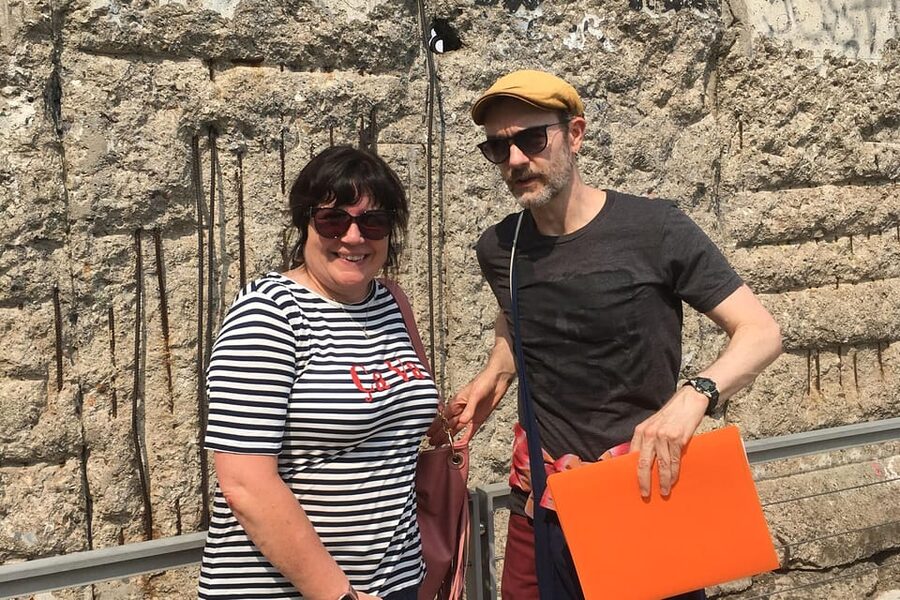
The advertised duration is three hours, but the route covers a lot of ground. You will walk between some stops and use public transport when the distances become too great. The practical lesson is simple: wear supportive shoes, dress for changeable Berlin weather, and arrive about ten minutes early.
Buying a day metro pass before the tour should save time. If you do not already have a visitor transit pass, the guide can help you buy one at the first station. Public transport is not included in the tour price.
The pace has clear advantages. You see several districts rather than one narrow pocket of Berlin, and you learn how the locations relate to one another. The tradeoff is that some stops may be brief, especially when the group needs to catch a train or bus.
The experience works best when you treat the transport as part of the route. You are not only getting from point A to point B. You are seeing how far apart Bowie’s home life, nightlife, recording work, and Cold War landmarks actually were.
What the guides add
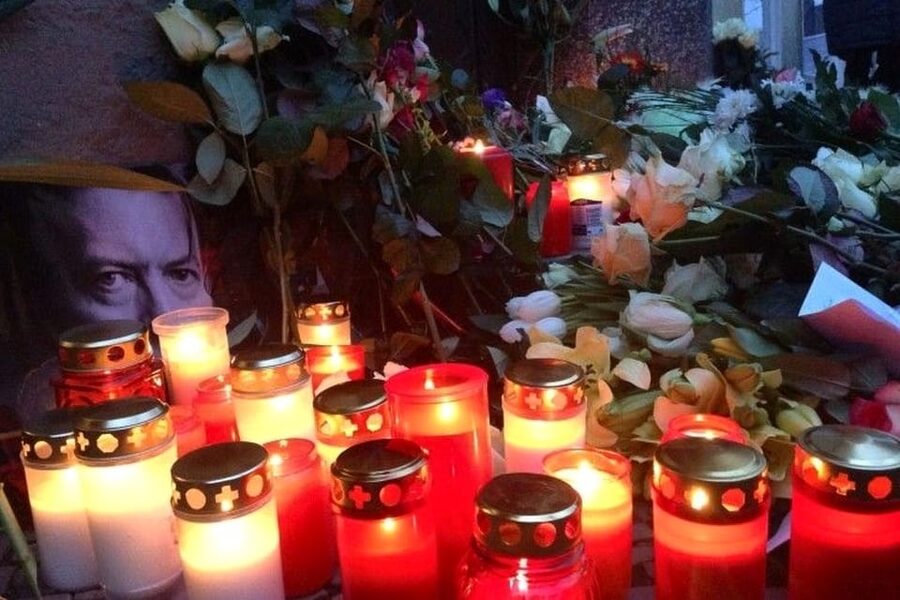
The guides are described as professors, doctoral students, historians, journalists, art critics, and published authors. That range matters because the tour needs more than fan enthusiasm. Bowie’s Berlin is tied to music theory, postwar politics, urban change, art, nightlife, and personal biography.
Dan receives repeated praise for making the story lively and for adding humor without losing the historical setting. Lee is often singled out for his music knowledge, photographs, and strong sense of the period. Ronen is praised for building a carefully connected story, while Martin is noted for patience, preparation, and a friendly manner. Klaus has used video and photos to add context.
Your guide is assigned by availability, so you may not receive one of these particular names. Still, the pattern is clear: guide quality is central to the experience. A good guide can make a changed street corner meaningful. A weaker one would leave you looking at ordinary buildings and wondering what you are supposed to notice.
Music is a major part of the presentation. Expect excerpts from Heroes and Low, along with images and stories that connect songs to places. This approach has worked well for couples where one person is a major Bowie fan and the other is simply interested in Berlin. You do not need to know every album, though some familiarity will make the musical references more satisfying.
Is $135 a fair price?
At $135 per person, this is not a cheap sightseeing walk. The price makes the most sense if you value a specialist guide, a small group, or a private experience that can respond to your questions.
The tour includes three hours with a historian guide, but not public transport, food, drinks, or hotel pickup. A solo visitor should check the booking rules closely, since one booking option has required payment for two people. That can make the experience expensive if you are alone.
For two Bowie fans, the price can be reasonable because you are getting a focused route that would be difficult to assemble efficiently on your own. You would need to research the locations, work out the transit connections, find the former clubs and café, and supply the historical context yourself. The tour saves that preparation time and adds access to the guides’ photographs, video, and personal research.
If your interest is only casual, you may find the price harder to defend. Berlin has many excellent free or low-cost historical sights, and you can visit parts of this route independently. The value rises sharply if Low and Heroes are important records in your life, or if you want music history tied to the city’s Cold War story.
Cancellation is flexible up to 24 hours before the tour for a full refund, and you can reserve now and pay later. Those policies help if your Berlin schedule is still shifting, but they do not change the need to budget for transport.
Who should book this experience?
I would recommend it most strongly to Bowie fans who want more than a list of addresses. You get the former home, Hansa Studios, nightlife references, and Neues Ufer Café, but the real payoff is the connection between those places and the city around them.
It also suits anyone interested in Berlin’s cultural history. Several stops are not Bowie sites at all, yet they explain the political and social setting that made his work there possible. If you have already taken a general Berlin Wall tour, this experience can build on that knowledge. If you have not, the guide will still provide useful Cold War context.
Families and mixed-interest groups can enjoy it, though three hours of walking and public transport may be a lot for very young children. One guide was specifically praised for accommodating a two-year-old, but the tour is still built around conversation and city movement rather than child-focused activities.
You should skip it if you want a short, fixed-location walk or a museum visit with a guaranteed indoor schedule. You should also think twice if you dislike public transport or need to know the exact finishing point for a restaurant booking. The route covers much of Berlin, and the final location may not be obvious enough for tight plans.
My verdict on Bowie’s Berlin
This tour succeeds because it treats David Bowie as part of Berlin, not as an excuse to ignore Berlin. Hansa Studios and the former apartment provide the star power, while the border crossings, memorial sites, department store, railway station, clubs, and cafés give the story substance.
I like the mix of walking, transit, music, photographs, and sharp historical context. The strongest moments should come when a guide plays a piece of Heroes or Low and then explains the street, wall, studio, or social world behind it.
Book it if you want a specialist experience and can accept the price, changing neighborhoods, and transport connections. If you do, buy your transit pass early, wear solid shoes, arrive ten minutes ahead, and leave room in your schedule afterward. You may want time to revisit one of the neighborhoods at your own pace, listen to the music again, and see what the guide helped you notice.
FAQ
How long is the David Bowie Berlin tour?
The tour lasts three hours.
What language is the tour conducted in?
The live tour guide speaks English.
Where does the tour meet?
The stated meeting point is Ständige Vertretung, a memorabilia-filled café at Schiffbauerdamm 8, 10117 Berlin. The starting point can depend on the selected option, so check your booking details.
Does the tour visit Hansa Studios?
Yes. Hansa Studios is one of the main stops, with a focus on its connection to Bowie’s Berlin recording period.
Will I see Bowie’s former home?
Yes. Bowie’s former home is included in the route.
Does the tour visit Neues Ufer Café?
Yes. Neues Ufer Café is one of the listed stops.
Is public transport included in the price?
No. You must pay for your own public transport ticket. The guide can help you purchase one at the first metro station if needed.
Do I need to use public transport during the tour?
Yes. The distances between several important locations are too great to walk, so the route uses public transport a few times.
Is the tour private or shared?
Private and small-group options are available.
Can I cancel for a refund?
You can cancel up to 24 hours in advance for a full refund.
Is food or drink included?
No. Food and drink are not included.
Is hotel pickup included?
No. Hotel pickup and drop-off are not included.
New walking tours around Berlin
- Berlin: 2.5-Hour Walking Tour through Kreuzberg 61★ 4.9 · 525 reviews
- From Berlin: Potsdam & Sanssouci half day Walking Tour★ 4.9 · 85 reviews
- East Berlin and the Wall: Walking Tour★ 4.9 · 407 reviews
- Cold War, Berlin Wall, Spies and the East Side Gallery★ 4.8 · 254 reviews
- Berlin: Walking Tour of the Top 10 Sightseeing Attractions★ 4.7 · 150 reviews
- Berlin: The Time of National Socialism Walking Tour★ 5.0 · 220 reviews
- Berlin: walking tour about Charité★ 4.4 · 537 reviews
- Berlin: Kreuzberg Guided Walking Evening Tour★ 4.7 · 555 reviews
Berlin Walking Tours, side by side.

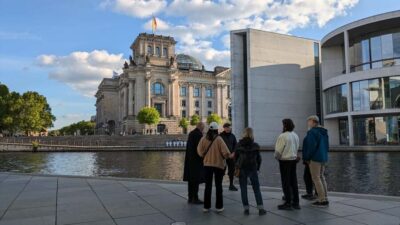
Berlin City walk Government District and Places of Democracy
Read our review →
Berlin: Third Reich & Cold War Guided Walking Tour
Read our review →

Berlin’s Best: 2 Hour Walking Tour Third Reich and the Cold War
Read our review →

Explore Berlin: See All The Iconic Sights & Some Hidden Gems
Read our review →
Third Reich Berlin: Hitler and WWII Walking Tour
Read our review →Lists this walk sits on