Review · TOKYO
Tokyo Tsukiji Fish Market Food and Culture Walking Tour
Tsukiji is less a single fish market than a whole food district, and that is exactly what makes this tour useful. You walk through the outer market, where seafood stalls, snack counters, kitchen shops, and small wholesalers crowd together. A guide helps you find the good stops without wasting your morning wandering in circles.
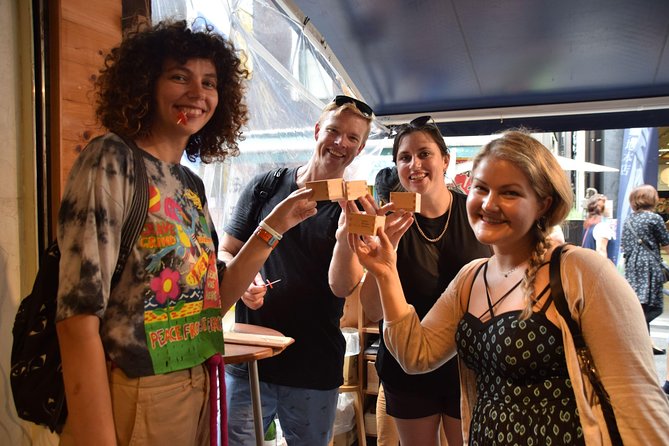
I like the mix of small tastings and food culture, especially the chance to try items you might skip on your own, such as fish cakes, seaweed, dashi, Japanese omelette, and seasonal fruit. I also like the guides’ local touch. Kiyo, Naz, Shoko, Masa, Yuki, and others have helped visitors understand ingredients, choose souvenirs, and find a good sushi or seafood bowl lunch.
The main catch is value. At $99.49 per person, this is not a cheap breakfast, and the amount of food can feel modest if you arrive very hungry. The tour also does not suit vegetarians, people avoiding fish, or anyone needing halal, gluten-free, or allergy-friendly meals.
Key points before you book
- Meet at Tsukiji Honganji Temple: The guide waits at the main gate, not the back of the temple.
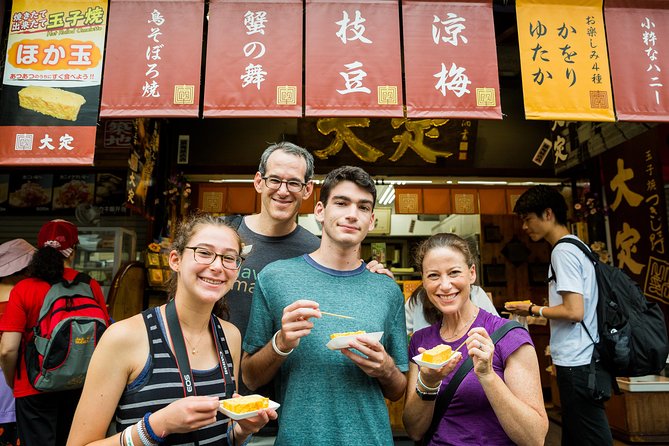
- Eat through the outer market: Tastings can include tuna, Wagyu beef, fish cakes, omelette, fruit, dashi, green tea, sushi, or a seafood bowl.
- Expect three hours on foot: Comfortable walking shoes matter, and the market can be crowded.
- The old wholesale market is not the main attraction: This experience focuses on Tsukiji’s outer stalls and food district.
- Lunch changes by day: You receive either sushi or a seafood bowl, depending on the schedule and available restaurant.
- Small groups help: The maximum is 20 people, though some departures may be much smaller.
Why Tsukiji works better with a guide
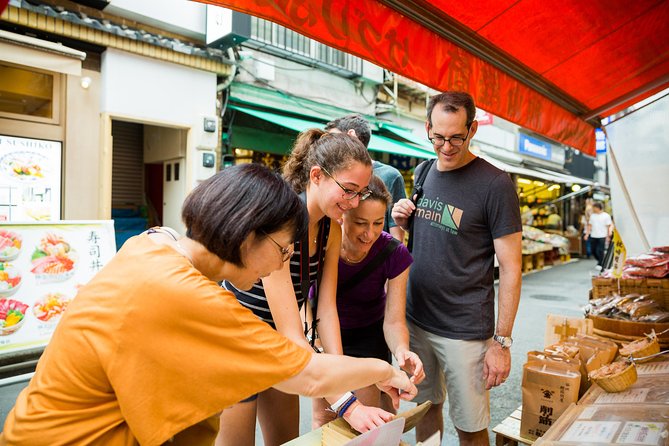
Tsukiji can look simple on a map, but the market area is a maze of narrow lanes and tightly packed shops. One stall may sell sea urchin, another kitchen knives, another dried seafood, and another a hot snack you would never recognize without help.
The guide gives the market a shape. You are not just looking at boxes of fish. You learn why chefs come here, how certain ingredients are used, and what makes one food different from another. Guides have also helped with practical choices, such as selecting ingredients to take home or finding a shop for kitchen tools.
I would especially consider this tour for a first visit to Tokyo. It gives you a useful introduction to Japanese eating habits without asking you to commit to a formal fine-dining meal. You get food, local context, and a walk through one of the city’s best-known food neighborhoods.
This is also a good choice if markets make you feel lost. The guide handles the route and points out food you could easily pass by. In a small group, you can usually hear explanations and ask questions. The maximum group size is 20, but some departures have been much smaller, including one group of only four.
More Food Walking Tours in Japan
- Tokyo: Tsukiji Fish Market Food and Walking tour
★ 5.0 · 1,724 reviews - Nishiki Market Brunch Walking Tour (7 Tastings + Brunch)
★ 5.0 · 1,355 reviews - Osaka Local Foodie Walking Tour in Dotonbori and Shinsekai
★ 5.0 · 985 reviews
Starting at Tsukiji Honganji Temple
The meeting point is the main gate of Tsukiji Honganji Temple, at 3-chōme-15-1 Tsukiji, Chuo City. This is a useful starting point because the temple gives you a calm landmark before you enter the market streets.
Pay close attention to the meeting instructions. The tour leaves at the scheduled start time, and the guide cannot wait for late arrivals or extend the tour. Google Maps may lead you to the back of the temple, so use the main gate on the front side.
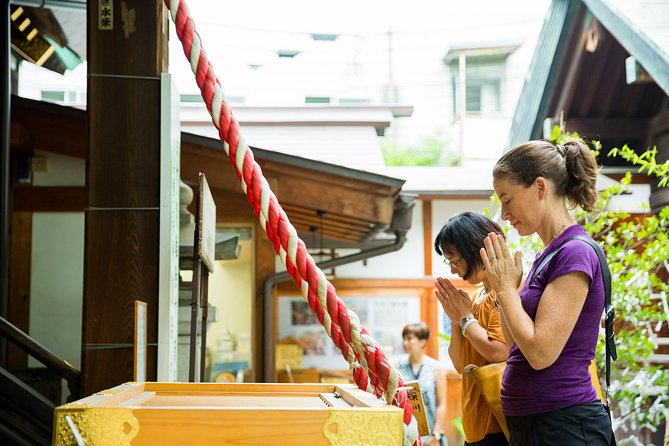
The temple itself adds a cultural note to the morning. Some guides include a short look at the site and explain features of its unusual building. That opening helps place Tsukiji in a wider setting before the food begins.
I recommend arriving early enough to find the correct gate without rushing. The tour is near public transportation, but your transportation to the meeting point is not included. Wear shoes that can handle three hours of standing and walking.
Tsukiji Jogai Market: the main 90 minutes
The first major section is Tsukiji Jogai Market, the outer market. You spend about an hour and a half here, taking in seafood displays, cooking ingredients, snacks, and the constant movement of shoppers and vendors.
This is where the tour earns its keep. A guide can explain what you are seeing as you pass trays of uni, tanks with pufferfish, large tuna being cut, and rows of shellfish. You might also see hundreds of types of fresh fish at the smaller wholesale section.
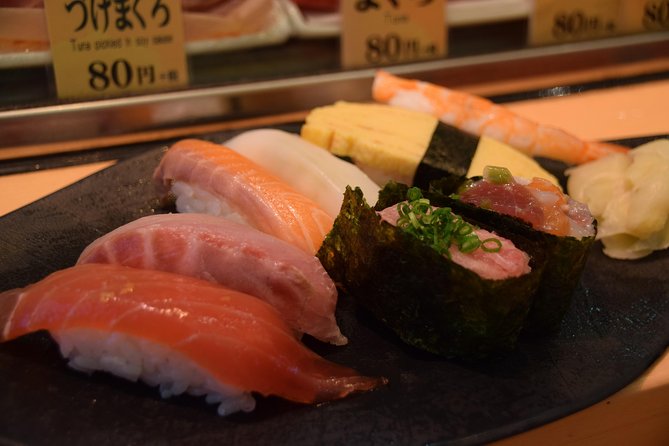
The food stops give the walk a steady rhythm. You may begin with green tea or dashi soup, then try seaweed, fish cakes, Japanese omelette, Wagyu beef on a skewer, or seasonal fruit. Tuna and other seafood may appear along the way. The exact selection depends on the day and which shops are open.
The best part is the range. You are not simply eating sushi at one restaurant and calling it a market tour. You get small tastes of everyday ingredients and prepared foods, along with a final meal. That helps you understand how Japanese cooking depends on freshness, texture, and careful preparation.
Still, keep your expectations realistic. One critical point about this experience is that it can feel more like a guided market walk with tastings than a long series of full portions. If you want a large breakfast, eat something light before meeting the guide. You will receive food, but the samples are not designed to replace several full meals.
Old Tsukiji Market and the food stops
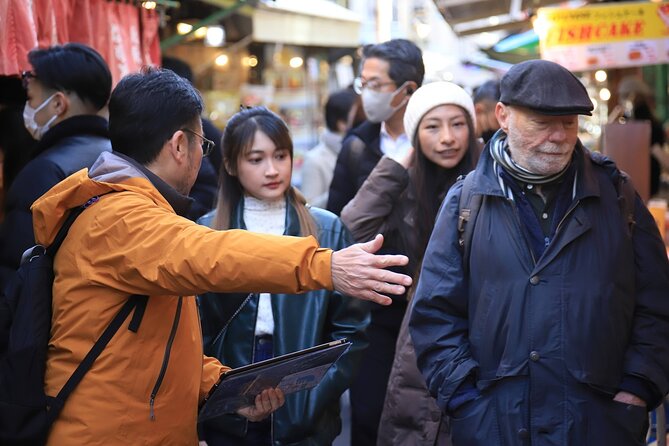
The itinerary allows about 30 minutes for the old Tsukiji Market area and its food-focused stops. This is a chance to explore the parts of the district that make Tsukiji more than a seafood counter.
You may stop for Japanese omelette, fish cake, fruit, or other market foods. These are useful tastes because they show the sweet, savory, and lightly seasoned side of Japanese food. A guide can also explain how ingredients are used at home, not just how they appear in a market display.
Shoko, one guide praised for her practical cooking advice, has helped people choose foods and spices to take home. That kind of help is more useful than a list of souvenir shops. If you see an ingredient you want to buy, ask how it is stored and used before putting it in your suitcase.
The market is also a good place to watch food preparation. One tour included a sea bass preparation demonstration followed by the chance to make sushi. Another finished with sashimi prepared by the owner of a local restaurant. These details may vary, but they show the sort of hands-on or behind-the-counter moment that can make the morning memorable.
Do not count on every possible tasting at every departure. The fish market section is closed on Wednesdays, Sundays, and other market holidays. On those days, Japanese omelette, fish cake, and fruit may not be available.
Same streets, a different story:
- Kyoto Geisha Walking Tour: Gion District & Hidden Gems
★ 4.7 · 3,273 reviews - Kyoto: Gion Magical Night Walking Tour with Geisha Trivia
★ 4.9 · 2,393 reviews - Tokyo: Imperial Palace and Shogun Historical Walking Tour
★ 5.0 · 2,251 reviews - Kyoto: Gion Geisha District Walking Tour – Stories of Geisha
★ 4.7 · 2,187 reviews
Tsukiji Uogashi and the wholesale side
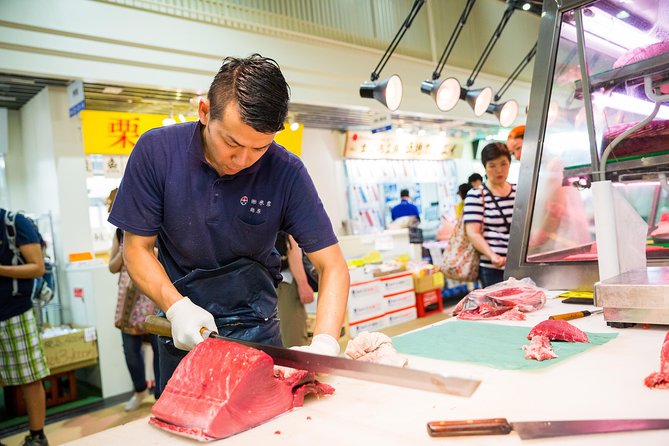
The route can include Tsukiji Uogashi, a small wholesale market where you may see a large selection of fresh fish. The visit is planned for about 30 minutes.
This is an important distinction when deciding to book. The tour takes place in Tsukiji’s outer market and related food areas. It is not a visit to the old inner wholesale market and tuna auction as many people may picture it. One description of the experience can leave that point unclear, so adjust your expectations before booking.
The Uogashi section is also not guaranteed every day. It is closed on Wednesdays, Sundays, and holidays. If seeing the wholesale side matters most to you, check the operating day before paying.
Even without that section, the outer market has plenty to see. You still get food stalls, retail shops, seafood displays, kitchen goods, and guidance through an area that can be confusing on your own. But if your main goal is the former wholesale market, this is not the right tour.
The final sushi or seafood bowl
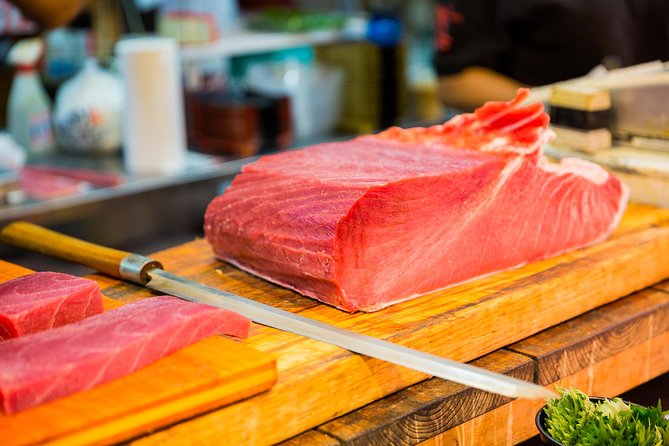
The last 30 minutes bring you to a meal of either sushi or a seafood bowl. The choice depends on the day and time, so you should not book expecting one fixed dish.
This ending works well. After walking and eating small samples, you sit down for a more substantial serving of fish. The seafood is the point here, and the tour clearly suits people who enjoy sushi and raw or lightly prepared seafood.
Some guides add useful details at this stage. You might watch fish being cut, learn how the restaurant handles a particular species, or make sushi yourself. A good guide can also explain what you are eating instead of leaving you with a plate of unnamed pieces.
The final meal is where opinions may vary most. One person may find it fresh and satisfying, while another may feel the restaurant is too tourist-oriented or that there was not enough choice. The group generally follows the arranged meal, so this is not a flexible restaurant crawl where you select every dish yourself.
The guides make the biggest difference
The food is important, but the guide shapes the morning. Strong guides turn a crowded market into a clear story. Kiyo, Naz, Miky, Kayoko, Joy, Mieko, Shoko, Sean, Take, Nick, Yuko, and others have been praised for friendly explanations, good pacing, local food advice, and a relaxed manner.
I would place special value on the guide’s ability to explain ordinary ingredients. Several guides have helped with questions about cooking, spices, shopping, and Japanese customs. That gives you something to use after the tour, not just a pleasant memory of breakfast.
Guiding quality can vary. A few experiences have felt slow, with long waits or a guide who seemed too quiet. Communication can also be uneven for some people. This is a group tour, so you cannot guarantee a particular guide when booking.
The upside is that guides often adjust to the group. Mieko was praised for keeping a comfortable pace for an older parent, while other guides have made room for shopping or helped arrange an extra sake tasting. Small groups make that flexibility more likely, though it is not promised.
Price, portions, and the real value
At $99.49 per person, the price is fair only if you want the explanation and direction as much as the food. You can enter the outer market on your own without an admission ticket. You can also buy many of the foods separately.
So why pay? You are paying for a three-hour route, several tastings, a meal, translation and explanation, and help finding places you might miss alone. You also avoid the work of deciding which stall is safe, open, or worth your time.
I would book it if you are visiting Tsukiji for the first time, enjoy seafood, and want a guided introduction rather than a do-it-yourself snack crawl. I would skip it if you already know the market, prefer to choose every dish yourself, or mainly want a large meal for your money.
The food amount is another key factor. Most people should finish with a full stomach, but the experience is built around tasting several items rather than receiving large portions at every stop. Arriving mildly hungry is smart. Arriving desperate for breakfast may leave you disappointed.
Who should book this morning walk
This tour fits food-focused visitors who want cultural context with their meals. It is especially useful for first-time Tokyo visitors, couples, families with older children, and people who feel unsure about ordering unfamiliar Japanese foods.
It can also suit repeat visitors. One person who had already visited Tsukiji found new shops with the guide, while others used the time to learn how locals shop and cook.
The tour is not suitable if you cannot eat fish. It also does not accommodate vegetarian, halal, gluten-free, or allergy-related requests. The minimum drinking age is 20, and another drink is offered to anyone under that age.
Because the walk lasts about three hours, you need moderate physical fitness. The route includes crowded market lanes and time on your feet. Comfortable walking shoes are not a minor suggestion here.
Booking details worth knowing
Confirmation is provided when you book, and the activity begins and ends at the temple meeting point. Hotel pickup, drop-off, transportation to Tsukiji, extra food, extra drinks, and personal purchases are not included.
You can cancel for a full refund up to 24 hours before the scheduled start time. Cancellations or changes made inside that 24-hour window are not accepted, and late arrivals on the day receive no refund.
The market schedule matters. Wednesdays, Sundays, and holidays may remove the Uogashi wholesale stop and several tastings. If those foods are central to your plan, choose another operating day.
Should you book the Tsukiji food tour?
Book this tour if you want a guided introduction to Tsukiji, enjoy fish and Japanese market food, and value local explanation over maximum food quantity. The strongest part is the combination of route-finding, cultural detail, and varied samples, especially with a good guide such as Shoko, Masa, Kiyo, or Nick.
Skip it if you want the old inner wholesale market, need strict dietary accommodations, or would rather spend $99.49 choosing your own breakfast stops. For everyone else, it is a practical way to get oriented, taste beyond the obvious sushi, and leave with a better sense of how Japanese food reaches the table.
FAQ
Where does the Tsukiji food tour begin?
It begins at the main gate of Tsukiji Honganji Temple, at 3-chōme-15-1 Tsukiji, Chuo City, Tokyo. Do not go to the back entrance, since map directions may point there.
How long does the experience last?
The tour lasts approximately three hours and ends back at the meeting point.
What food is included?
Included food can include dashi soup, green tea, seaweed, fish cakes, Japanese omelette, Wagyu beef skewers, seasonal fruit, sushi, or a seafood bowl. The final meal is either sushi or a seafood bowl, depending on the day and time.
Is lunch included?
Yes. Lunch and snacks are included in the experience.
Is this a visit to the old inner wholesale fish market?
No. The tour focuses on the outer Tsukiji Market and may include Tsukiji Uogashi, a smaller wholesale market. The Uogashi section is closed on Wednesdays, Sundays, and holidays.
Can people with dietary restrictions join?
The tour does not accommodate vegetarian, halal, gluten-free, or allergy-related requests. You also cannot join if you cannot eat fish.
What should you wear?
Wear comfortable walking shoes. The experience is mainly on foot, and you should expect time standing and walking through market streets.
More Cultural Walking Tours around Japan
- Kyoto Gion: 2-Hour Geisha Culture & History Walking Tour
★ 5.0 · 1,186 reviews - Kyoto Gion Cultural Walk & Geisha Show with Dining Options
★ 5.0 · 518 reviews - Nara: Half-Day UNESCO Heritage & Local Culture Walking Tour
★ 4.8 · 250 reviews - Hiroshima: Food and Culture Guided Walking Tour with Dinner
★ 4.9 · 212 reviews
More Market Walking Tours around Japan
- Tokyo: Tsukiji Fish Market Guided Walking Tour
★ 4.9 · 1,397 reviews - Bangkok: City Highlights Temple and Market Walking Tour
★ 4.5 · 3,990 reviews - London Bridge & Borough Market Food Tour with 7 Authentic Dishes
★ 5.0 · 1,972 reviews - Air Raid Shelter + St. Nicholas Market Walking Tour
★ 5.0 · 1,950 reviews
New walking tours around Japan
- Nara: Half-Day UNESCO Heritage & Local Culture Walking Tour★ 4.8 · 250 reviews
- Nagasaki: Private Walking Tour with a Local★ 4.7 · 79 reviews
- Hiroshima: Miyajima Half-day Historical Walking Tour★ 4.7 · 100 reviews
- Kyoto: Private Walking Tour with a Local★ 4.6 · 118 reviews
- Kyoto: Private 2.5 Hour Historical Walking Tour★ 4.9 · 121 reviews
- Kyoto: Imperial Palace & Nijo Castle Guided Walking Tour★ 4.7 · 453 reviews
- Kyoto: Izakaya Bars Guided Walking Tour★ 4.9 · 815 reviews
- Kyoto: Gion Sunset Walking Tour with Local Guide★ 4.7 · 351 reviews
Tokyo Walking Tours, side by side.

Tokyo: Imperial Palace and Shogun Historical Walking Tour
Read our review →
Tokyo: Shinjuku Local Bar and Izakaya Guided Walking Tour
Read our review →
Tokyo: Tsukiji Fish Market Food and Walking tour
Read our review →
Tokyo: Asakusa Walking Tour with Sensoji Temple Visit
Read our review →
Tokyo: Imperial Palace Japanese History Walking Tour
Read our review →
Tokyo: Private Custom Walking Tour with Local Guide
Read our review →