
Review · BERLIN
Berlin: Hitler’s Berlin The Rise & Fall Guided Walking Tour
Berlin is the city where Hitler’s government took power and where that government collapsed. This 150-minute walking tour connects the political rise of Nazism with the machinery of terror and the final street fighting of 1945. You move from grand symbols such as the Reichstag and Brandenburg Gate to quieter memorials and the unmarked site of Hitler’s bunker.
I like the way the route joins politics, ideology, and military history instead of treating World War II as a string of disconnected dates. I also like the use of historic maps and Then & Now photographs, which help you picture streets that were damaged, rebuilt, or radically altered. The main drawback is simple: this is an outdoor walk with a considerable amount of walking, so rain, cold, heat, or tired feet can affect the experience.
Key points at a glance
- A clear 1933 to 1945 story: The tour explains how the Nazis dismantled democracy, built a dictatorship, and lost the war.
- Major sites in one route: You visit the Reichstag, Hitler’s bunker site, the Holocaust Memorial, the Soviet War Memorial, and the former Gestapo and SS headquarters.
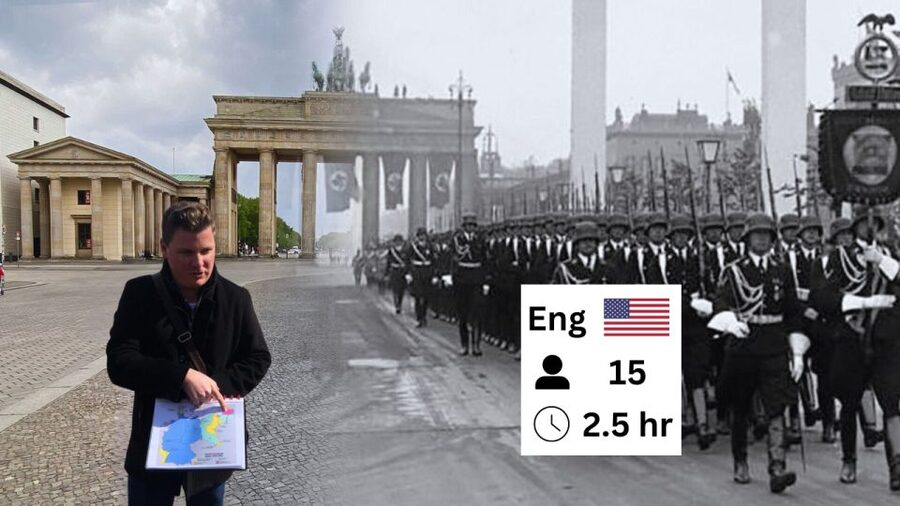
- History brought to street level: Maps and Then & Now photographs help connect present-day Berlin with the city of the Third Reich.
- Strong guide-led teaching: Guides including Scott, Hannah, Matt, Mark, and others are praised for clear explanations, warmth, and patient answers.
- A serious, reflective experience: The route deals directly with persecution, mass murder, repression, and defeat without turning the subject into spectacle.
- Practical format: The tour costs $47 per person, runs in English, allows free cancellation up to 24 hours before departure, and is wheelchair accessible.
Starting beneath the Brandenburg Gate
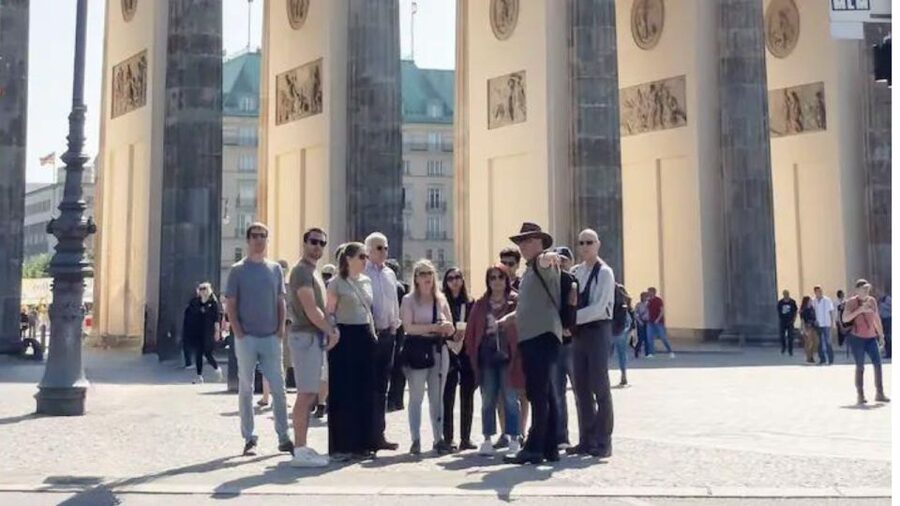
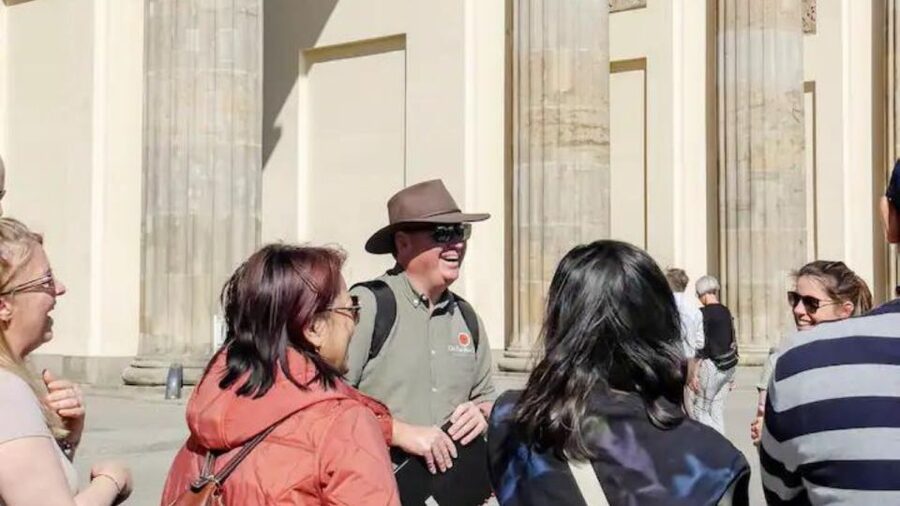
You meet at the Tourist Office by the Brandenburg Gate and look for the blue umbrella. This is a sensible starting point. The gate is one of Berlin’s most famous sights, but here it is treated as more than a photo backdrop.
Your guide uses the area to explain the changing meaning of public power in Berlin. The Brandenburg Gate witnessed monarchy, democracy, dictatorship, war, division, and reunification. That makes it a useful first stop for a tour built around the rise and fall of a political system.
The guides are the heart of this experience. Names that appear repeatedly in the tour’s feedback include Scott, Hannah, Matt, Mark, Jörg, Ben, and Matthew. The strongest pattern is not one particular guide, but a shared style: clear explanations, a friendly manner, and plenty of time for questions. Scott is especially praised for keeping people engaged while walking, while Hannah is noted for adding personal stories and giving more than one angle on difficult subjects.
The small-group format matters here. Berlin’s central monuments can be crowded and noisy, and a guide who can hear your question and bring you into the discussion is worth paying for. Still, group size can vary, so do not assume this will feel like a private tour.
More walks with a guide around Berlin:
- Berlin: Third Reich & Cold War Guided Walking Tour
★ 4.9 · 8,378 reviews - Berlin: Hidden Backyards Guided Walking Tour
★ 4.8 · 5,360 reviews - Berlin: City Street Art Guided Walking Tour
★ 4.8 · 1,051 reviews
The Sinti and Roma memorial
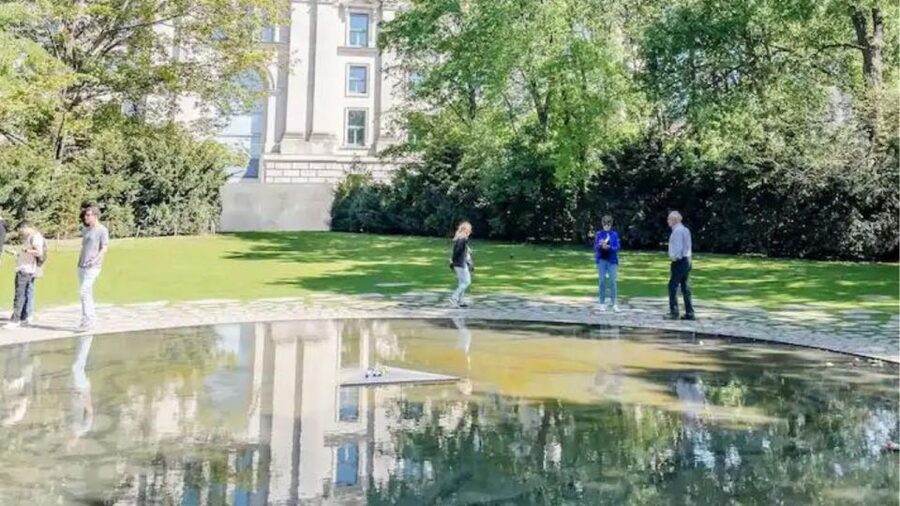
The first memorial stop honors the Sinti and Roma victims of National Socialism. It is a short visit, but an important one because it broadens the story beyond the persecution of Jewish people, which becomes the focus at the Holocaust Memorial later in the walk.
Your guide places Nazi racial policy in a wider setting. The regime persecuted several groups, and the Sinti and Roma memorial makes that point without requiring a separate museum visit.
This stop is also a reminder that the tour is not only about Hitler’s buildings or military decisions. It asks you to think about the people targeted by the regime and the human cost behind official language, laws, and propaganda.
The Reichstag and the destruction of democracy
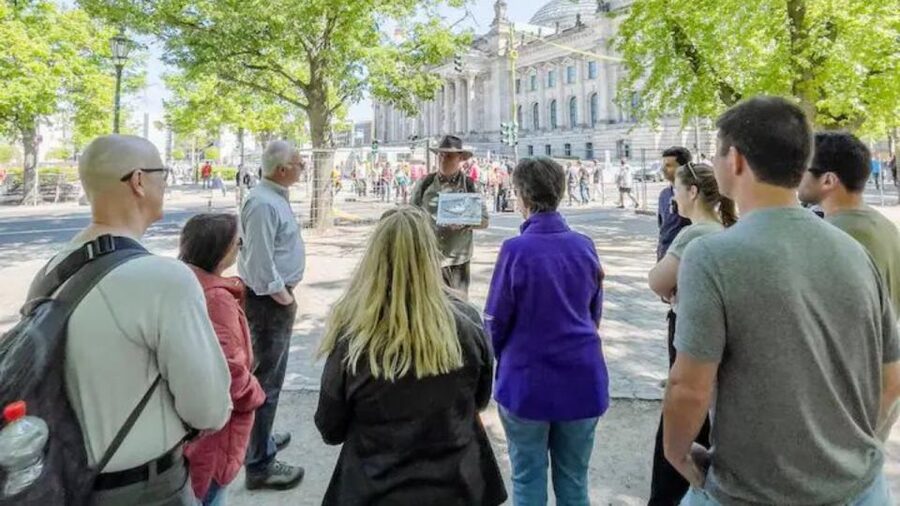
At the Reichstag, the tour examines the building as a symbol of democracy, dictatorship, and unity. You do not simply hear that democracy ended in Germany. You learn how power was taken, concentrated, and used to remove opposition.
The Reichstag is especially useful because its history helps explain how a modern state can change from a parliamentary system into a dictatorship. Your guide links the building to the early Nazi period and shows how political institutions were weakened while the regime claimed legal authority.
The stop is listed as a 20-minute visit, though the exact pace can depend on the group and surroundings. It is not an indoor parliament tour, and access to indoor museum exhibitions is not included. You are paying for the outdoor interpretation of the area, not entry to the Reichstag building.
For anyone who knows the basic dates but struggles to connect them, this is one of the most valuable parts of the walk. The guide’s job is to make the sequence understandable: political opportunity, rapid consolidation of control, repression, and the removal of meaningful opposition.
The Soviet War Memorial in Tiergarten
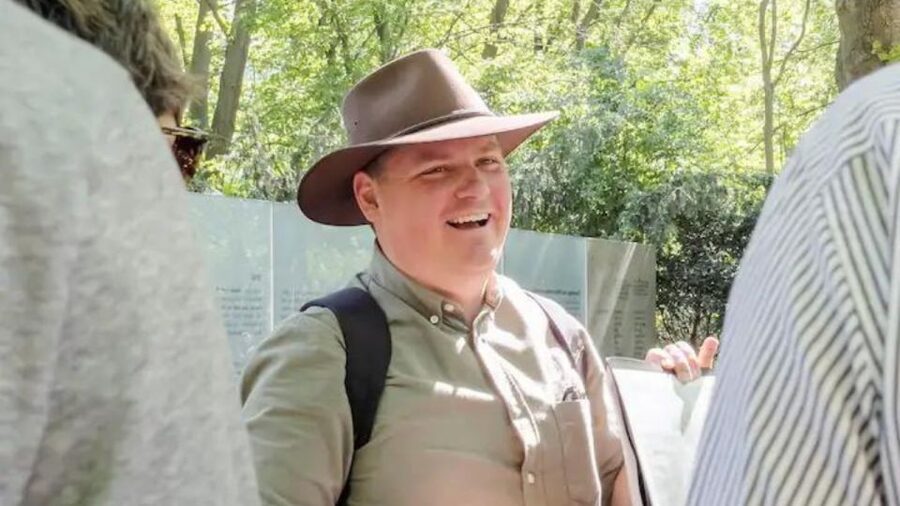
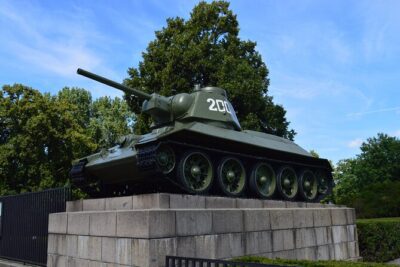
The Soviet War Memorial in Tiergarten shifts the focus from political control to the final military phase of the war. It is a striking reminder of the Battle of Berlin and the enormous Soviet role in defeating Nazi Germany.
Here, I would expect a guide to explain how the war reached Berlin and why the city became the final major battlefield in Europe. The memorial also provides a chance to look at how postwar Berlin remembered victory, sacrifice, and defeat.
This stop includes time for photographs and a guided visit. You should keep your camera respectful. The tour deals with a brutal period, and the memorial is not just another attractive place to pause.
The route’s order works well. You have just considered how the Nazis gained control. Now you are looking at the force that destroyed the regime militarily. The tour keeps moving between political history and physical places, which helps prevent the story from becoming a lecture detached from the city.
More walking tours around Berlin:
- Discover Berlin Half-Day Walking Tour
★ 5.0 · 9,624 reviews - Berlin City walk Government District and Places of Democracy
★ 4.7 · 8,467 reviews - Berlin: Discover Berlin Walking Tour
★ 4.9 · 5,998 reviews - Berlin’s Best: 2 Hour Walking Tour Third Reich and the Cold War
★ 5.0 · 5,486 reviews
The Holocaust Memorial and the question of remembrance
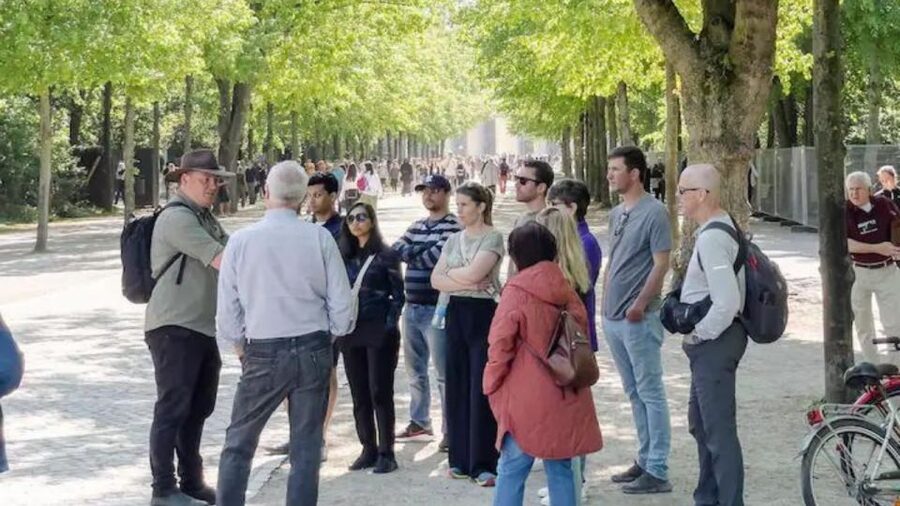
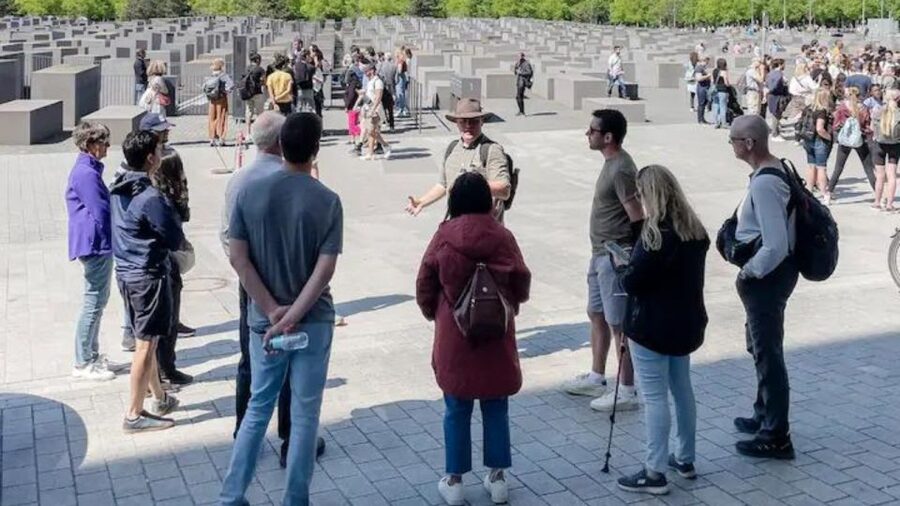
The Memorial to the Murdered Jews of Europe is one of the most important stops. Its field of concrete blocks creates an unsettled, changing space rather than a single statue with one easy message.
The guide uses the memorial to discuss the systematic targeting of Jewish people. This is a key point. The tour does not present persecution as a sudden wartime event. It explains how exclusion, racial ideology, state power, and terror developed into mass murder.
You have time to walk through the memorial area, look around, and reflect. The experience is more meaningful if you resist rushing from one corner to the next for photographs. Your guide can explain the memorial’s purpose and place it within the wider history of Nazi Germany.
The memorial is near other major sights, but the emotional tone changes sharply here. That is one reason this tour suits people who want more than a general city walk. It gives the sites time to breathe, even within a packed route.
Hitler’s bunker site and the end of the war
The former location of Hitler’s bunker is one of the most curious stops because there is no grand ruin to enter. The site is now marked in a deliberately restrained way. You visit the location, learn what happened there, and consider how the war in Europe ended in Berlin.
This is not a bunker tour. Indoor access is not included, and the experience takes place outside. That may disappoint anyone expecting underground rooms or preserved wartime interiors, but the lack of a dramatic attraction fits the subject. The site does not turn Hitler’s final days into a spectacle.
The guide explains the collapse of the regime and the final days of the war. The stop lasts about 15 minutes, enough to establish the facts and answer questions without letting the whole tour become centered on Hitler personally.
That balance is important. The title may draw people who are curious about Hitler, but the better purpose of the tour is to show the wider system around him: government offices, security agencies, racial policy, propaganda, military decisions, and the people who carried them out.
Johann Georg Elser and the risks of resistance
The memorial to Johann Georg Elser adds a different voice to the story. Elser attempted to kill Hitler in 1939, before the war had reached its later stages. His memorial gives the tour a chance to discuss resistance and the personal risks involved in opposing the Nazi regime.
This is a valuable stop because it prevents the story from suggesting that everyone accepted Nazi rule passively. Resistance took different forms, and it could be lonely, dangerous, and unsuccessful.
You spend roughly 10 minutes here. It is a brief stop, but it expands the tour beyond government buildings and battle sites. If you are already familiar with the broad story of Hitler’s Germany, this may be one of the details that gives the walk extra depth.
The German Finance Ministry and the machinery of power
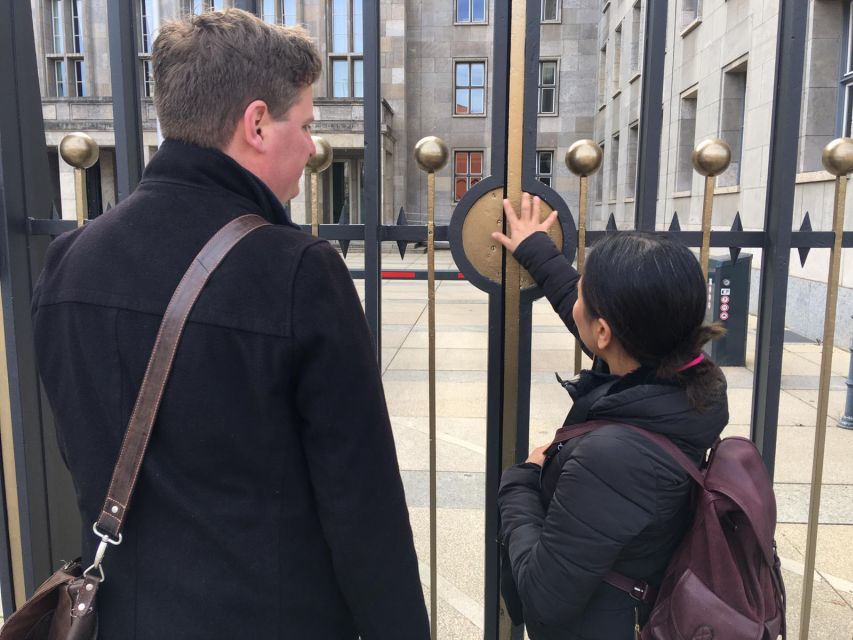
The German Finance Ministry is a shorter photo and explanation stop. Its value lies in showing that Nazi rule operated through ordinary-looking government offices as well as notorious security headquarters.
A dictatorship needs more than speeches and soldiers. It needs administration, money, records, laws, and officials. This stop helps make that machinery visible in the modern city.
You should not expect a long architectural visit here. The scheduled time is only about five minutes. Instead, treat it as a link between the political story and the later stop at the former Gestapo and SS headquarters.
The Topography of Terror and the nerve center of repression
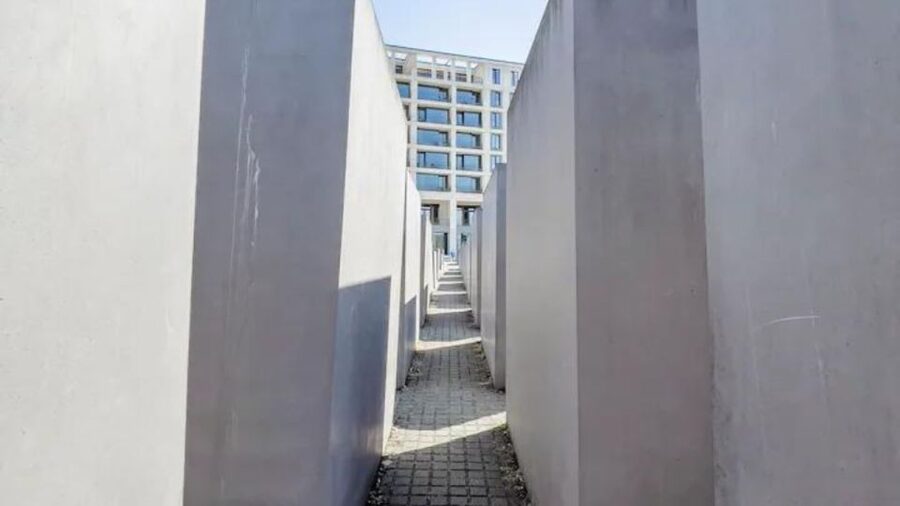
The tour ends at the Topography of Terror, located at the former headquarters of the Gestapo and SS. This was a central office for Nazi terror and repression, making it a fitting final stop.
The outdoor portion gives you the historical setting and explains what operated here. Indoor museum exhibitions are not included, so you will need extra time if you want to explore the Topography of Terror museum afterward.
That is one of my practical suggestions: if your schedule allows, remain in the area after the walking tour and visit the indoor exhibition separately. The guided walk gives you a structured account of Nazi Germany, while the museum can add documents, photographs, and further detail. The two experiences complement each other, but they are not the same visit.
Ending here also gives the route a strong shape. It begins with democratic institutions and public symbols, passes through persecution and war, and finishes at the offices that helped organize terror. You leave with a clearer sense of how a regime functioned, not just where famous events occurred.
What the $47 price buys you
At $47 per person, this is not the cheapest way to see central Berlin. You can walk past many of these sites without paying anything. The value comes from the explanation between the monuments.
A good guide turns the Reichstag from a photograph into part of a political story. The bunker site becomes more than a patch of pavement. The Holocaust Memorial gains context, and the Soviet War Memorial becomes part of the final battle for Berlin rather than an isolated monument.
The price also includes a specialist guide with an academic background in World War II history, a small-group setting, historic maps, Then & Now images, and time for questions. The strongest praise for this tour centers on the guides’ ability to explain difficult subjects in simple, interesting language. Some guides have gone beyond the scheduled time to answer questions or give the group more context, but you should view that as a bonus, not a promise.
I consider the price fair if you want a serious introduction to Berlin’s Nazi history and do not already have a firm plan for these sites. It is less useful if you prefer to read quietly on your own or want indoor museum access included.
Walking conditions, weather, and access
The route is outdoors and involves considerable walking. Wear comfortable shoes, bring water, and dress for the forecast. Berlin weather can change quickly, and the tour continues in rain unless conditions force a change.
The feedback includes people enjoying the tour despite heavy rain and an unexpected downpour. That tells you the guide can keep the group moving and engaged, but it does not make wet weather comfortable. Bring your own umbrella if needed, since personal umbrellas and walking sticks are not included.
The tour is wheelchair accessible, though an outdoor route through central Berlin can still involve crowds, pavement, and changing conditions. If you use a wheelchair or walking aid, contact the provider before booking if you need route-specific details.
The tour is in English. Public transportation, hotel pickup, food, and drinks are not included, so plan your route to the Brandenburg Gate and arrange your return from the Topography of Terror.
Who should book this Berlin history walk?
I recommend it most strongly to first-time visitors who want a clear framework for Berlin’s Nazi period. It also suits people who have read about World War II but want to connect the history to actual places.
Families with older children and teenagers can enjoy it if they are ready for serious material. One guide has been praised for keeping teenagers interested, but this is not a light sightseeing walk. The subjects include dictatorship, persecution, mass murder, and war.
People who already know the major dates can still benefit from the way the tour connects politics, ideology, daily life, repression, resistance, and military defeat. The guide-led question period is useful if you want to test your understanding or ask about points that books often treat separately.
I would skip it if you want a short photo walk, a fully indoor experience, or a tour focused mainly on architecture. The sites are important, but the teaching is the main reason to book.
Should you book it?
Book this tour if you want Berlin’s Nazi history explained in a firm chronological structure, with serious memorials and government sites tied together by a historian-led narrative. The guides, especially Scott, Hannah, Matt, and Mark, have a strong record of clear delivery, warmth, and thoughtful answers.
The main cautions are the outdoor format, the walking, and the fact that indoor museums are not included. Bring good shoes, water, and weather protection, then consider adding the Topography of Terror exhibition afterward.
With a $47 price, a 150-minute duration, flexible cancellation up to 24 hours ahead, and an English-speaking guide, this is a solid choice for understanding Berlin rather than merely photographing it.
FAQ
How long does the Hitler’s Berlin walking tour last?
The tour lasts 150 minutes, or two and a half hours.
What language is the tour conducted in?
The live tour guide speaks English.
Where does the tour meet?
You meet at the Tourist Office at the Brandenburg Gate. Look for the blue umbrella.
Where does the tour finish?
The tour finishes at the Topography of Terror, at the former Gestapo and SS headquarters.
Does the tour include entry to the bunker?
No. You visit the former site of Hitler’s bunker outdoors. Indoor museum access is not included.
Is the tour wheelchair accessible?
Yes, the activity is listed as wheelchair accessible.
What should I bring?
Wear comfortable shoes and weather-appropriate clothing, and bring a water bottle. Food, drinks, public transportation, hotel pickup, and personal umbrellas or walking sticks are not included.
New walking tours around Berlin
- Berlin: 2.5-Hour Walking Tour through Kreuzberg 61★ 4.9 · 525 reviews
- From Berlin: Potsdam & Sanssouci half day Walking Tour★ 4.9 · 85 reviews
- East Berlin and the Wall: Walking Tour★ 4.9 · 407 reviews
- Cold War, Berlin Wall, Spies and the East Side Gallery★ 4.8 · 254 reviews
- Berlin: Walking Tour of the Top 10 Sightseeing Attractions★ 4.7 · 150 reviews
- Berlin: The Time of National Socialism Walking Tour★ 5.0 · 220 reviews
- Berlin: walking tour about Charité★ 4.4 · 537 reviews
- Berlin: Kreuzberg Guided Walking Evening Tour★ 4.7 · 555 reviews
Berlin Walking Tours, side by side.
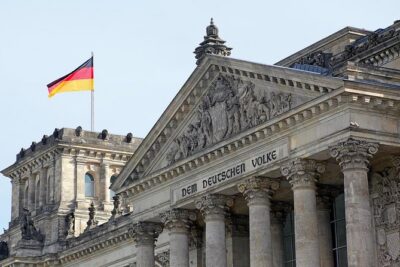
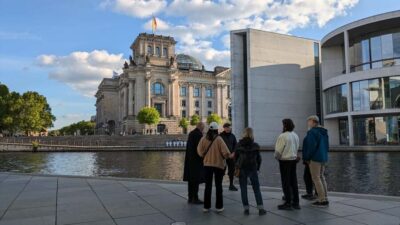
Berlin City walk Government District and Places of Democracy
Read our review →
Berlin: Third Reich & Cold War Guided Walking Tour
Read our review →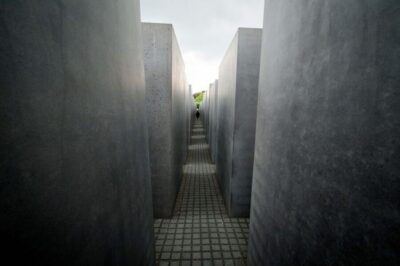
Berlin’s Best: 2 Hour Walking Tour Third Reich and the Cold War
Read our review →

Explore Berlin: See All The Iconic Sights & Some Hidden Gems
Read our review →
Third Reich Berlin: Hitler and WWII Walking Tour
Read our review →Lists this walk sits on