Review · BERLIN
Berlin: Sightseeing Walking Tour of the Top 20 Attractions
Berlin’s past is packed into this three-hour walk. You move from the government quarter and Brandenburg Gate to the Holocaust Memorial, Checkpoint Charlie, the former Gestapo headquarters, and Museum Island. It is a fast way to see how Prussian power, Nazi terror, Cold War division, and reunification shaped one city. I especially like the personal storytelling and the chance to ask questions as you go, rather than listen to a fixed script.
I also like the route’s range. You get major photo stops, serious memorials, grand squares, and practical tips on neighborhoods, food, and nightlife. The tradeoff is clear: about 6 kilometers in 180 minutes is a brisk pace, and some stops receive an outside look rather than a long visit. You need comfortable shoes and a willingness to keep moving.
Key points to know before booking
- Six kilometers on foot: This is a proper walking tour, not a gentle stroll between two nearby sights.
- A strong first-day introduction: The route links Berlin’s major landmarks with the city’s Nazi and Cold War past.
- Private or small-group format: You can ask questions and request more attention to your interests.
- Guides with personality: Carlos, Carlo, Antonella, and Max are among the guides praised for warm, lively explanations and personal Berlin insight.
- No museum admission included: The focus is outdoor sightseeing and guided interpretation, with time to look around selected memorials.
- A useful starting point: The tour begins opposite the Federal Chancellery and ends near Museum Island, leaving you well placed to continue sightseeing.
Why this three-hour route works
I see this experience as a city orientation with a strong history lesson built in. Berlin can feel scattered, especially on a first visit. The main sights sit in different districts, and the city’s story is spread across streets, memorials, surviving buildings, and reconstructed landmarks.
This walk connects those pieces. You begin in the modern government district, move toward the old royal center, then pass through places tied to Nazi rule and the Cold War. By the end, you have a basic map of central Berlin in your head and a better sense of which sites deserve a return visit.
The guide is central to the value. A good explanation can turn a government building, empty square, or section of wall into part of a larger story. The guides on this tour use history, local anecdotes, dry Berlin humor, and practical suggestions. Past guide names include Carlos and Carlo, along with Antonella and Max. The strongest comments describe guides who were warm, attentive, and able to add personal memories, including memories of Berlin before and after the Wall fell.
The route is offered daily at 10:00 AM and 2:00 PM. The morning departure gives you a useful introduction before a full day of sightseeing. The afternoon option can work well after a late arrival or a slow first morning, though you finish later and may want to plan dinner nearby.
More City Highlights Walking Tours in Germany
- Explore Berlin: See All The Iconic Sights & Some Hidden Gems
★ 5.0 · 4,429 reviews - Explore Berlin: Walking Tour of All The Iconic Sites
★ 4.9 · 855 reviews - Berlin Historical Highlights Walking Tour
★ 4.9 · 657 reviews
From the Paul-Löbe-Haus to the German Chancellery
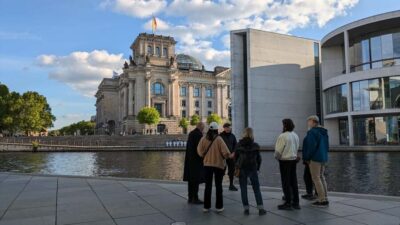
Meet in front of the main entrance of the Paul-Löbe-Haus on Konrad-Adenauer-Straße, opposite the Federal Chancellery. This is an important practical detail. Do not simply aim for the Reichstag or Brandenburg Gate. The meeting point is in the government quarter, and you need to look for a TourguideMe guide.
The Paul-Löbe-Haus is part of the modern parliamentary district. From here, the guide introduces the German Chancellery and the institutions that run present-day Germany. It is a fitting start because Berlin’s story is not only about vanished empires and divided streets. The city is also the current political center of the country.
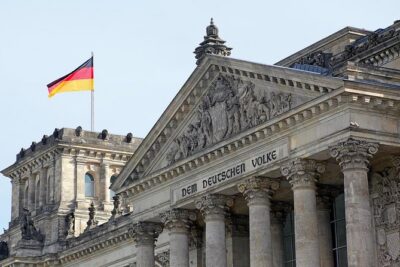
You then reach the Reichstag. The tour includes guided sightseeing here, but it does not promise entry to the building or a visit to the glass dome. Treat this as an exterior stop unless your guide tells you otherwise. The building is one of Berlin’s essential landmarks, and the explanation helps place the modern German parliament within the city’s long political story.
Brandenburg Gate and the weight of the Holocaust Memorial
Brandenburg Gate is one of the main highlights and one of Berlin’s best-known images. It once marked a city entrance and later became a powerful symbol of division and reunification. Your guide uses the gate to explain changing political power in Berlin, rather than leaving it as a quick photo stop.
The nearby Holocaust Memorial changes the mood. The concrete stelae create a space for quiet thought, and the tour includes some free time here. That pause matters. Berlin’s difficult past should not be reduced to jokes or quick facts, and the route gives you room to experience the memorial on your own.
You should expect the guide to discuss Nazi persecution and the memorial’s place in the city. This is not a museum visit, and there is no promise of a long interpretive session inside the memorial’s information center. Still, the outdoor setting is a major part of the central Berlin experience.
Potsdamer Platz and the divided city
Potsdamer Platz shows how dramatically Berlin changed after reunification. It is a modern urban center, and its large buildings contrast with the historic spaces earlier in the walk. The guide uses it to explain the city’s rebuilding and the physical gaps created by war and division.
This stop is useful because it keeps Berlin from becoming only a story about old monuments. You see a city that has been rebuilt, redesigned, and stitched back together. The visit is primarily guided sightseeing, so you will not have much time for shopping or a long architectural study.
The pace becomes more noticeable here. With many stops still ahead, the guide needs to keep the group moving. If photography matters to you, tell the guide early. One booking by a pair of visitors became a private tour because they were the only people signed up that day, giving them more time for photographs. That sort of flexibility may occur with small numbers, but it cannot be guaranteed.
More City Highlights Walking Tours in Berlin:
- Berlin: Walking Tour of the Top 10 Sightseeing Attractions
★ 4.7 · 150 reviews - Berlin : Must-see attractions Walking Tour
★ 4.8 · 83 reviews - Ho Chi Minh City Street Food Tour & Sightseeing By Motorbike
★ 5.0 · 9,413 reviews - Historic Charleston Guided Sightseeing Walking Tour
★ 5.0 · 6,216 reviews
Checkpoint Charlie and the Berlin Wall story
Checkpoint Charlie is a familiar name, but the real value is the explanation around it. This former crossing point became one of the clearest symbols of Cold War Berlin. Your guide explains how the city was divided and how the border affected everyday life.
The route also includes longer sections of the Berlin Wall than a basic top-sights walk. That makes this version more useful for anyone who wants Cold War context, not just a quick picture at a famous sign. You hear about the Wall’s fall and the changes that followed, with the guide adding local detail where possible.
Do not expect a full museum visit at Checkpoint Charlie. The stop is outdoor sightseeing and storytelling. The area can also feel more commercial than other historic sites, which is exactly why a guide helps you separate the historical importance from the modern tourist displays.
Martin-Gropius-Bau and the Topography of Terror
The route continues past Martin-Gropius-Bau, a striking exhibition building near the former border zone. The building itself is part of the architectural story, while its location helps connect the modern cultural district with Berlin’s darker past.
The Topography of Terror is one of the most serious stops. It sits on the grounds of the former Gestapo and SS headquarters. The tour uses this place to explain Nazi repression and the machinery of terror that operated from Berlin.
This is an outdoor guided visit, not a promised full museum tour. If you want to read every panel at the Topography of Terror, return later with more time. During the walk, listen closely to the guide’s overview and note the site for a separate visit. The combination of this stop and the Holocaust Memorial gives the tour more historical weight than a standard monument circuit.
Gendarmenmarkt, Bebelplatz, and Unter den Linden
Gendarmenmarkt brings the tour back to grand Berlin architecture. The square is known for its formal design and major buildings, and it offers a welcome change after the heavier memorial sites. Your guide explains Berlin’s Prussian and royal past while pointing out the role of the square in the city center.
Bebelplatz carries a different kind of weight. It is associated with the Nazi book burning of 1933, and the guide explains why this seemingly elegant square is also a place of memory. The stop is a good example of Berlin’s habit of placing difficult history in ordinary public spaces.
The walk along Unter den Linden adds another layer. This historic boulevard leads toward the old royal center and Museum Island. You see how Berlin’s grand avenue links political power, universities, churches, museums, and state buildings. There is a lot to absorb, so do not expect every building to receive a full architectural lecture.
Lustgarten, the New City Palace, and Berlin Cathedral
Lustgarten places you at the heart of Berlin’s historic center. The square sits among major landmarks and gives the guide a useful setting for explaining the city’s royal and cultural development.
The New City Palace is included among the major sights. Because Berlin has rebuilt and altered so much of its center, the guide’s context is especially helpful here. You learn how the old royal center fits into the city’s changing identity rather than seeing the building as an isolated attraction.
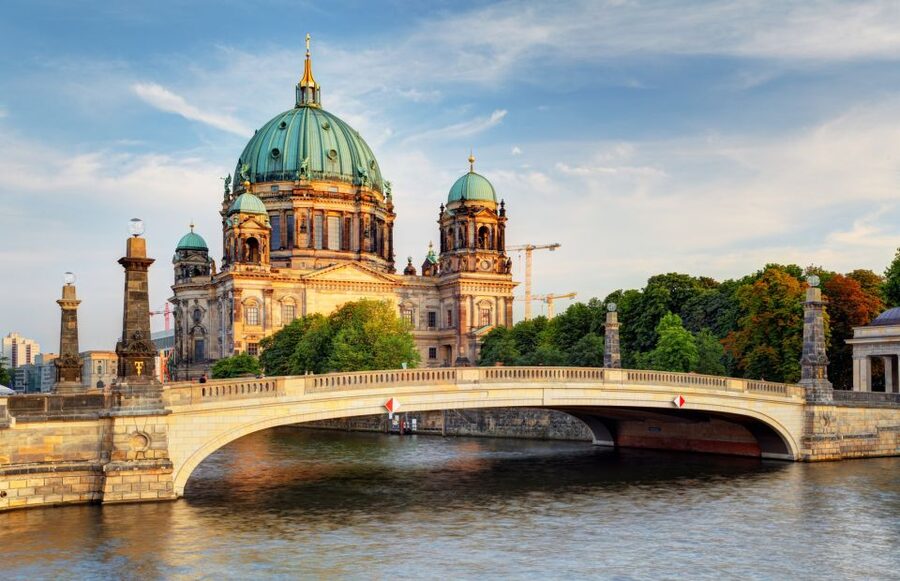
Berlin Cathedral is one of the route’s most impressive exterior stops. Its scale and setting beside the Spree make it an easy landmark to remember. The tour includes sightseeing, not an interior visit, so plan a separate visit if you want to explore the cathedral inside.
Museum Island and the finish at Friedrichsbrücke
Museum Island brings together several of Berlin’s major museums, including the Alte Nationalgalerie. The route passes the island’s buildings and explains their place in Berlin’s cultural center. It is a useful preview if you plan to return for museum visits.
The Alte Nationalgalerie is included as a guided sightseeing stop, but admission is not listed. You should not expect to see the collections during this walk. Instead, use the guide’s comments to decide which museum deserves your limited time later.
The tour finishes at Friedrichsbrücke. This is a practical ending point near Museum Island, the Spree, and central transport connections. You can continue with a museum visit, stop for a meal, or walk through the historic center without needing to retrace the route back to the government district.
The pace, group size, and walking conditions
The published distance is about 6 kilometers, covered in three hours. That works out to a brisk but manageable pace for many people, with frequent stops for explanations and photographs. Still, one person described feeling tired after the walk, and another noted that the tour was worth every step despite the effort.
Wear comfortable walking shoes. Bring water, a camera, and clothing suitable for the weather. Tours run in all weather, and a past walk continued through rain and wind, with a guide stopping for a hot drink. That sort of break may depend on the guide and schedule, so do not count on it as part of the formal plan.
The experience is described as suitable for all ages and fitness levels and is wheelchair accessible. Even so, six kilometers outdoors can be demanding. If you have limited mobility, ask about the exact route and stopping arrangements before booking.
Private and small-group options make the walk more personal. A small group gives you a better chance to ask questions and request more time at a site. It may also allow the guide to shape the conversation around food, nightlife, neighborhoods, politics, or Berlin’s everyday life.
Is the $94 price fair?
At $94 per person, this is not Berlin’s cheapest sightseeing option. Its value depends on what you want from the day. You are paying for a three-hour private or small-group experience, a certified local guide, and a route that combines the city’s top landmarks with Nazi and Cold War sites.
The price makes more sense for first-time visitors who want a strong overview without arranging several separate visits. It can also work well for couples, families, friends, or a small team who value conversation and flexibility. If you prefer to move at your own pace, spend an hour inside a museum, or stop often for coffee, a self-guided day may suit you better.
The experience offers free cancellation up to 24 hours before the start time and reserve-now, pay-later booking. English, Spanish, and German tours are available. There are no advertised entrance fees in the tour price, so budget separately for museums or interiors you choose to visit later.
Who should book this Berlin walk?
Book it if you are visiting Berlin for the first time and want to understand the city before choosing which sites to explore in depth. The route gives you the major photographs, but its real strength is the connection between them.
It is also a good fit if you enjoy history explained by a person who can answer questions. Past guides such as Carlos and Carlo were praised for personal stories and strong local insight, while Antonella and Max were described as warm and engaging. Guide assignments can change, so book for the format and subject matter rather than one named guide.
I would hesitate if you dislike brisk walking or want long indoor visits. You will see a great deal, but you will not have time to tour every museum or linger at every memorial. For most first-time visitors with three hours to spare, though, the route offers a useful, serious, and often funny introduction to Berlin for the price.
FAQ
How long is the Berlin sightseeing walking tour?
The tour lasts three hours, or 180 minutes.
How far do you walk?
The route covers approximately 6 kilometers on foot.
Where does the tour begin?
It begins in front of the main entrance of the Paul-Löbe-Haus, opposite the Federal Chancellery, at Konrad-Adenauer-Straße 1 in Berlin.
Where does the tour finish?
The walk finishes at Friedrichsbrücke near Museum Island.
What time does the tour start?
Tours are offered daily at 10:00 AM and 2:00 PM.
Which languages are available?
The tour is available in English, Spanish, and German.
Is the tour private or shared?
Private and small-group options are available.
Is the tour wheelchair accessible?
The activity is listed as wheelchair accessible. Because the route covers about 6 kilometers, you should confirm the exact arrangements if you have specific mobility needs.
Can I cancel the booking?
You can cancel up to 24 hours in advance for a full refund. Reserve-now, pay-later booking is also available.
New walking tours around Berlin
- Berlin: 2.5-Hour Walking Tour through Kreuzberg 61★ 4.9 · 525 reviews
- From Berlin: Potsdam & Sanssouci half day Walking Tour★ 4.9 · 85 reviews
- East Berlin and the Wall: Walking Tour★ 4.9 · 407 reviews
- Cold War, Berlin Wall, Spies and the East Side Gallery★ 4.8 · 254 reviews
- Berlin: Walking Tour of the Top 10 Sightseeing Attractions★ 4.7 · 150 reviews
- Berlin: The Time of National Socialism Walking Tour★ 5.0 · 220 reviews
- Berlin: walking tour about Charité★ 4.4 · 537 reviews
- Berlin: Kreuzberg Guided Walking Evening Tour★ 4.7 · 555 reviews
Berlin Walking Tours, side by side.
Berlin City walk Government District and Places of Democracy
Read our review →
Berlin: Third Reich & Cold War Guided Walking Tour
Read our review →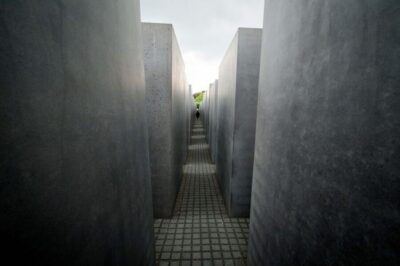
Berlin’s Best: 2 Hour Walking Tour Third Reich and the Cold War
Read our review →

Explore Berlin: See All The Iconic Sights & Some Hidden Gems
Read our review →