
Review · BERLIN
Berlin: Third Reich, Hitler, and WWII Walking Tour
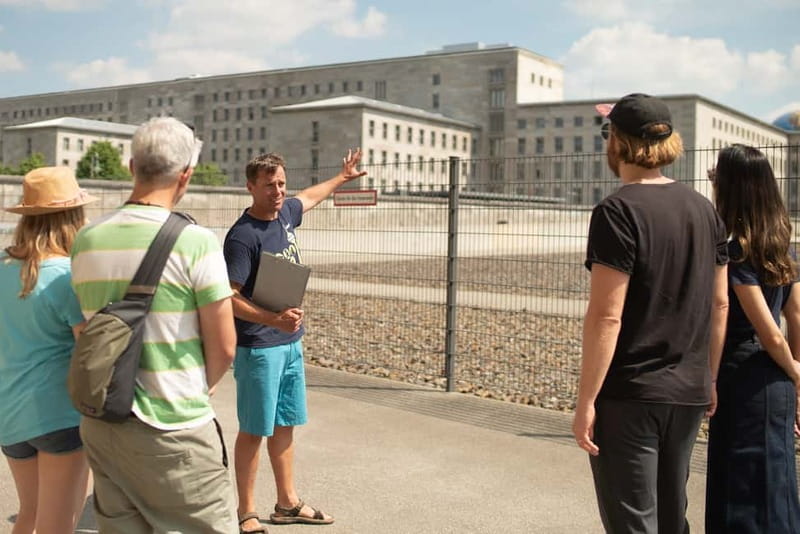
Berlin’s past becomes startlingly clear on this walk because the story unfolds at the actual places where Nazi power was planned, carried out, and defeated. You’ll stand above the site of Hitler’s Führer’s Bunker, follow the route of the Soviet assault, and see the buildings once used by the Luftwaffe, propaganda ministry, SS, and Gestapo.
I like the careful, site-by-site storytelling, which links ordinary-looking streets to major events. I also like the way guides such as Maggie, Jamie G, Emma, JR, and Nikolai have kept groups involved with questions, extra details, and a little humor when the subject allows. The main drawback is simple: three hours outside can feel long in cold, wet, or windy weather, and the tour covers serious material at a steady pace.
Key points to know before you book
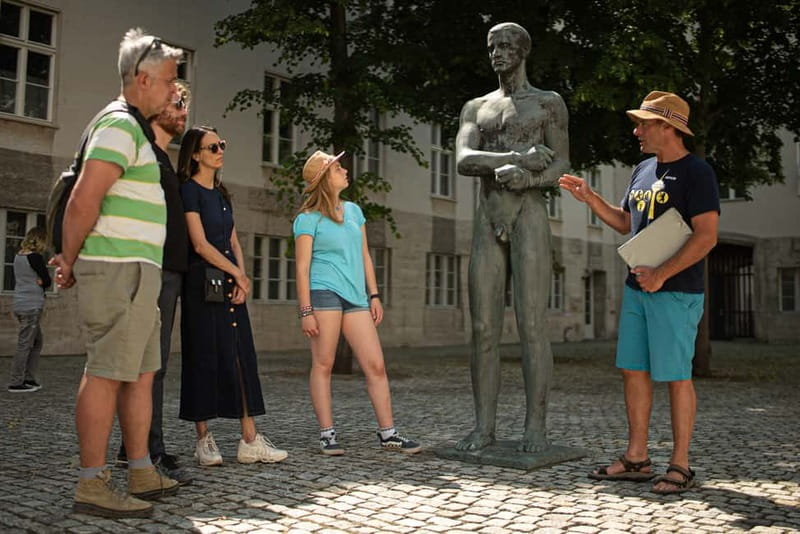
- Hitler’s bunker site: You see the location of the Führer’s Bunker and hear the account of Hitler’s final days and the fate of his remains.
- Nazi power centers: The route passes former sites linked to Goering, Goebbels, Himmler, the SS, and the Gestapo.
- Soviet victory route: The Reichstag, Brandenburg Gate, and Soviet War Memorial connect the final battle to Berlin’s later political history.
- A serious but lively guide style: Guides explain difficult subjects clearly, invite questions, and use personal stories to make the wider events easier to follow.
- Three hours on foot: Wear good shoes and prepare for changing weather. The walk runs in rain or shine.
- Strong value at $19: For the price of a casual meal, you get a guided route through several central sites and a clear historical framework.
Why this walk matters in Berlin
Berlin does not always reveal its wartime past at first glance. Many Nazi buildings were destroyed, rebuilt, renamed, or absorbed into modern city streets. Without a guide, you can walk past an important site and see only an office block, a parking area, or an ordinary road.
This tour helps you read those spaces. The guide explains who worked there, what decisions were made, and how the Nazi state turned Berlin into the administrative center of terror and war. You are not simply looking at monuments. You are learning how power operated through ministries, military offices, police agencies, propaganda, and architecture.
The subject is grim, and the tone needs care. The best guides keep attention on the victims and the consequences of Nazi rule rather than treating the period as a collection of shocking stories. Several guides have been praised for explaining difficult material in plain language, answering questions directly, and keeping the presentation respectful.
The route also avoids treating the war as an isolated German story. It connects Nazi planning with the Allied and Soviet advance, the final fighting in Berlin, and the political division that followed. That wider view is one of the tour’s strongest features.
More walking tours around Berlin:
- Discover Berlin Half-Day Walking Tour
★ 5.0 · 9,624 reviews - Berlin City walk Government District and Places of Democracy
★ 4.7 · 8,467 reviews - Berlin: Third Reich & Cold War Guided Walking Tour
★ 4.9 · 8,378 reviews
Friedrichstraße: begin beside the Palace of Tears
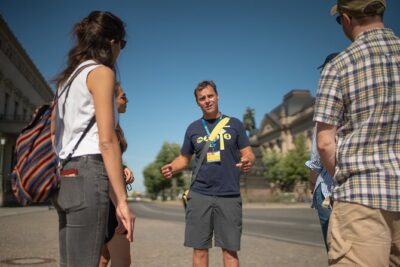
The meeting point is outside Friedrichstraße train station, on the square between the station and the Tränenpalast, also called the Palace of Tears. Look for a guide wearing a blue lanyard and yellow name tag, usually with yellow umbrellas.
This is a useful starting point because Friedrichstraße sits in a part of central Berlin shaped by both Nazi rule and the later division of the city. The guide begins setting the scene here before leading you toward the major government and military sites.
The first stop is listed as a short guided visit of about 15 minutes. Do not expect a museum admission at this point. It is an outdoor orientation stop, so arrive ready to listen while standing.
The Reichstag and the final battle for Berlin
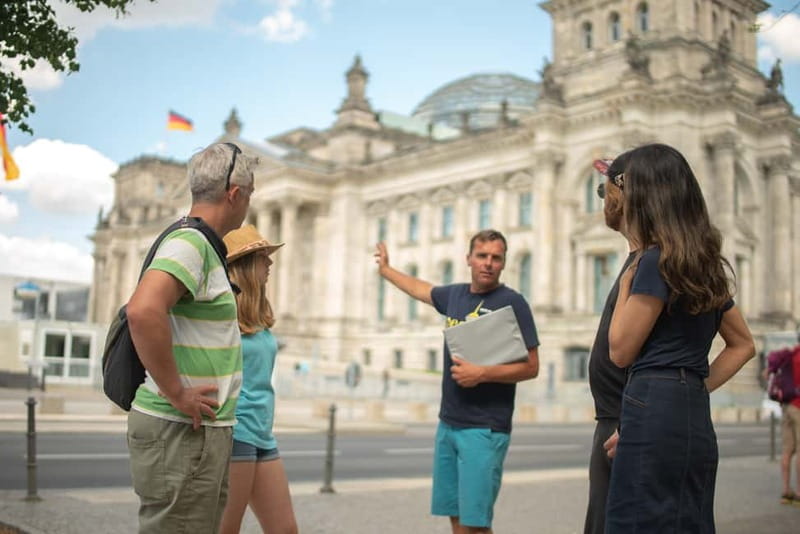
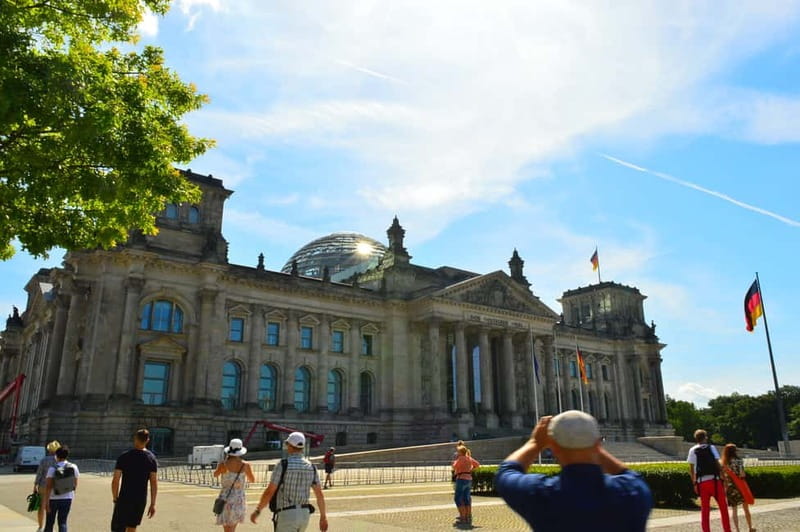
The Reichstag is one of Berlin’s most familiar buildings, but on this tour you see it through the final days of Nazi Germany. The building became a key symbol during the Soviet assault on Berlin, and its capture helped mark the collapse of the regime.
The guide places the Reichstag within the final battle rather than discussing it only as a grand civic building. That makes the stop especially useful if you know the broad outline of the war but want to understand how Berlin itself became the last battlefield.
The guided portion here lasts about 15 minutes. You should have time for photographs, but the real value comes from the explanation of the surrounding streets and the last phase of the war. Since this is an outdoor stop, the building’s interior is not presented as part of the tour.
The Soviet War Memorial in Tiergarten
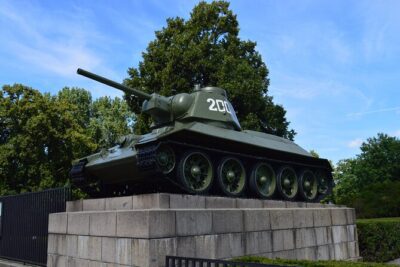
The Soviet War Memorial in Tiergarten gives the walk a powerful change of focus. Here, the story turns to the Red Army’s role in the defeat of Nazi Germany and the cost of the battle for Berlin.
The memorial is flanked by T-34 tanks and Red Army howitzers. Those pieces of military hardware make the site easy to understand visually, even before the guide explains its purpose and setting. The memorial also reminds you that Berlin’s end in 1945 was not an abstract political event. It came through a huge military assault and heavy loss of life.
The stop lasts about 15 minutes. I would take time to look beyond the central monument and notice how the memorial sits within modern Berlin. The contrast between the quiet park and the violence associated with the site is part of what makes this stop so affecting.
Same streets, a different story:
- Berlin: Discover Berlin Walking Tour
★ 4.9 · 5,998 reviews - Berlin’s Best: 2 Hour Walking Tour Third Reich and the Cold War
★ 5.0 · 5,486 reviews - Berlin: Hidden Backyards Guided Walking Tour
★ 4.8 · 5,360 reviews - Explore Berlin: See All The Iconic Sights & Some Hidden Gems
★ 5.0 · 4,429 reviews
Brandenburg Gate and Hitler’s planned Berlin
The route passes through the Brandenburg Gate, one of Berlin’s best-known landmarks. Its meaning changed sharply over time. It was used as a symbol by the Nazi regime, later stood near the Cold War divide, and now functions as a familiar emblem of reunified Berlin.
The guide also discusses Hitler and architect Albert Speer’s plans for Germania, a rebuilt capital designed to display Nazi power. You will hear how the planned axis was meant to reshape Berlin and project the image of a dominant empire.
This section helps connect architecture with politics. Monumental buildings and grand avenues were not just decoration. They were intended to influence how people saw the state and its leaders. Much of the planned city was never completed, but the ambition tells you a great deal about the regime.
The Holocaust Memorial and the limits of a walking tour
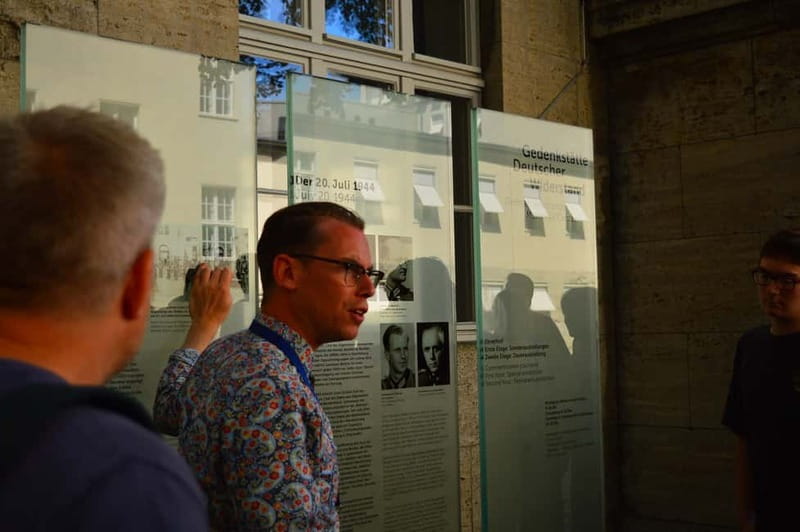
The tour includes a stop at Berlin’s Memorial to the Murdered Jews of Europe, commonly called the Holocaust Memorial. The guide uses the site to place Nazi racial policy and mass murder within the wider story of the regime.
The memorial is a place where a short explanation cannot cover everything. You may want to return later, walk through the field of concrete blocks at your own pace, and visit the underground Information Centre if it fits your schedule. That extra visit is not listed as part of this walking tour, so treat the stop as an introduction rather than a full museum visit.
This is also a point where the guide’s manner matters. The material is painful, and a good presentation should avoid spectacle. The strongest approach is clear, direct, and focused on people rather than Nazi drama.
Hitler’s Bunker site and the end of the regime
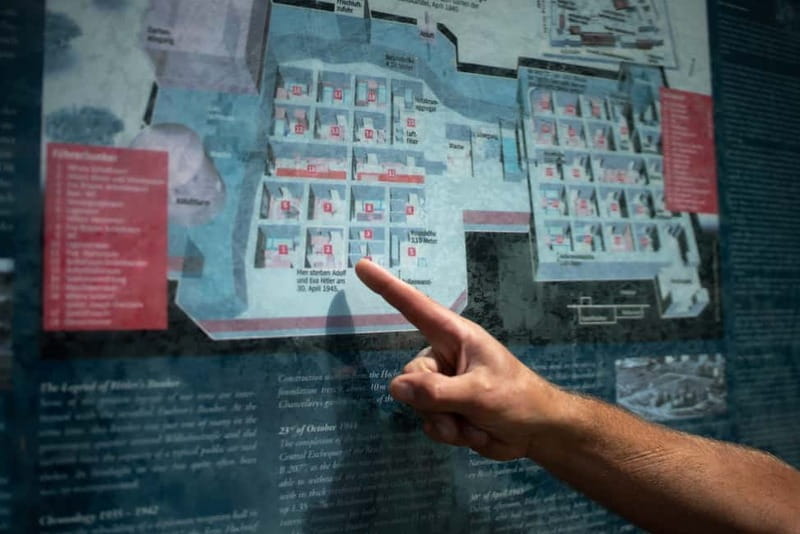
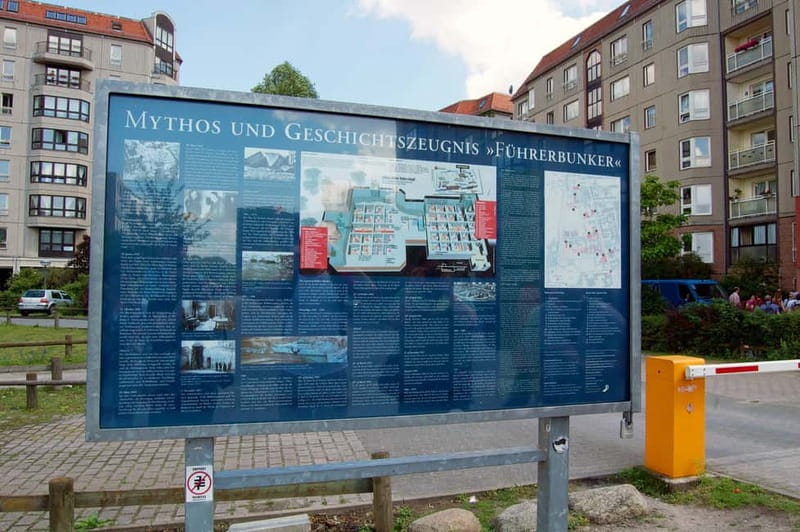
One of the tour’s most anticipated stops is the site of Hitler’s Führer’s Bunker. You will not enter a preserved underground bunker. The location is marked by an unremarkable area near modern buildings, and the guide explains what was beneath the ground and what happened there in the final days of the war.
That plain setting is part of the lesson. There is no grand ruin to photograph and no theatrical memorial designed to celebrate the dictator. Instead, you get a careful account of the bunker’s final period, Hitler’s suicide, and the fate of his remains.
The guide’s explanation helps separate fact from popular myths. Guides such as Maggie and Rebecca have been praised for telling this part in a direct, accessible way, while keeping the focus on the collapse of the Nazi state and the damage it had caused.
Expect about 15 minutes here. This is a stop where you should listen closely rather than expect a dramatic visual attraction.
Detlev-Rohwedder-Haus and Nazi economic power
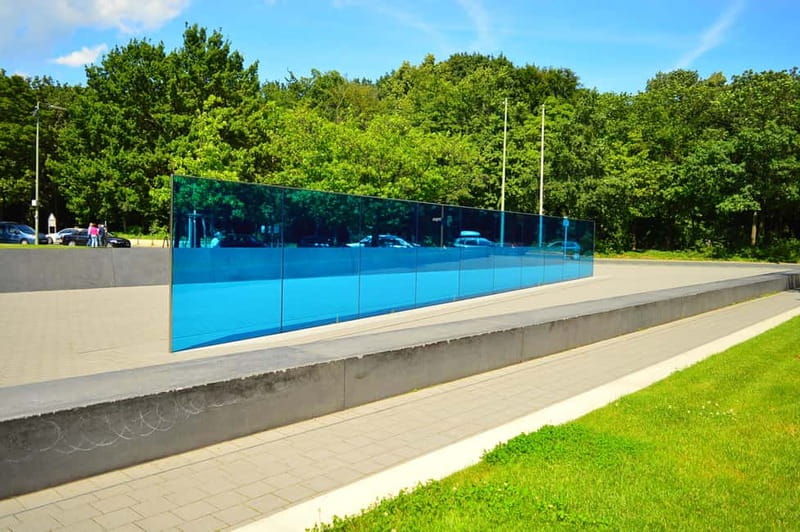
The former Detlev-Rohwedder-Haus brings the story back to the machinery of government. The building is associated with Hermann Goering’s Air Ministry, where the Luftwaffe was directed and the Blitz was planned.
The building’s later history is also part of the Berlin story. The city repeatedly reused and repurposed structures connected to earlier regimes, so a modern building may carry several layers of meaning. Your guide helps explain those changes and points out details you could easily miss alone.
The guided stop lasts about 15 minutes. This is one of the route’s most useful pauses for understanding that the Nazi war effort depended on offices, civil servants, military planners, and administrative systems, not just speeches and battlefield commanders.
Former propaganda, SS, and Gestapo headquarters
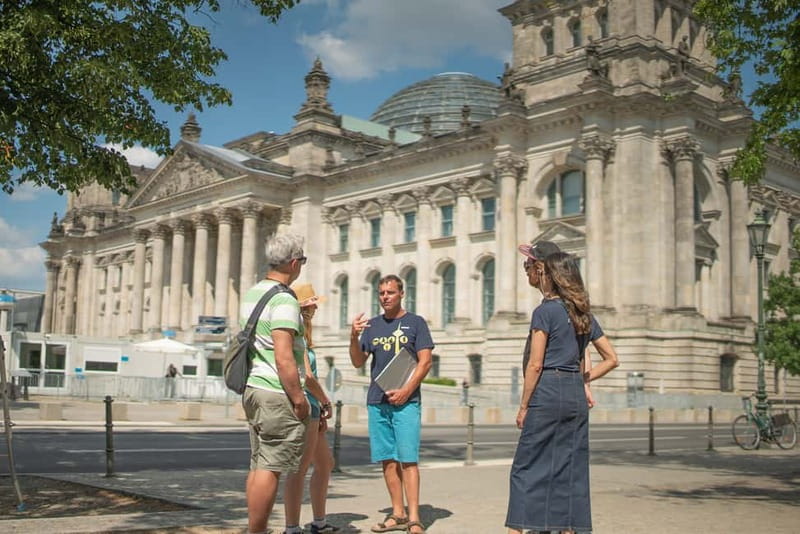
Along the route, you pass the former locations of Joseph Goebbels’ Propaganda Ministry and Heinrich Himmler’s SS and Gestapo headquarters. These were key sites in the spread of Nazi messaging, political control, persecution, and terror.
Some of these locations no longer look like the headquarters of a dictatorship. That can make them more valuable as teaching stops. The guide reconstructs the role each office played and shows how propaganda and policing worked together.
The walk does not treat the Nazi leadership as a set of isolated villains. It explains the network of agencies and officials that turned ideology into policy. That approach gives you a clearer picture of how an authoritarian system gains power and maintains it.
Because the route covers several sites in a limited time, expect broad explanation rather than a full lecture on every office. If you have a strong interest in one agency or individual, use the question periods to ask for more detail.
Topography of Terror: finish at a major documentation site
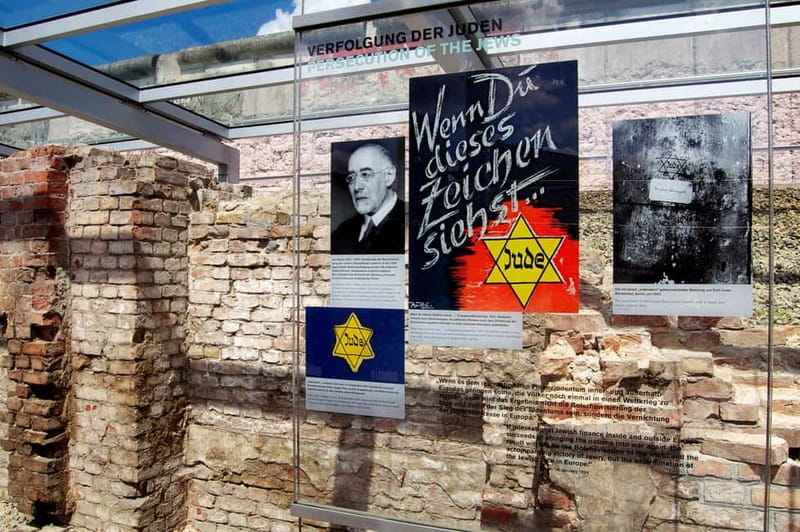
The tour ends at the Topography of Terror, a documentation center on the site of the former SS and Gestapo headquarters. The stop lasts about 16 minutes as part of the walking route, and the listed endpoint is the documentation center.
This is a fitting place to finish because the center focuses on the institutions that carried out Nazi persecution and terror. It gives the route a clear endpoint, moving from the rise of the regime and its grand plans to the systems of repression that operated behind them.
The walking tour itself includes the guide and route, not a separate museum admission. If you want more time with the exhibits, plan to return after the tour or arrange your day so you can continue independently. The endpoint is also practical because you can finish with more historical material nearby rather than ending at a purely scenic landmark.
How the three hours feel
Three hours is enough time to cover a lot, but not enough to linger at every site. The route is divided into short stops, usually around 15 minutes, with walking between them. That structure helps prevent the experience from becoming one long speech.
You should still expect a substantial amount of walking. Comfortable shoes are essential, and you need weather-appropriate clothing. The tour runs in rain, and several people have completed it in snow, freezing wind, and temperatures well below zero. That is a reason to choose your clothing carefully, not a reason to expect the schedule to change.
A refreshment break has been included on at least some outings after roughly two hours. Guides may point out nearby cafés, bathrooms, or public buildings, but the exact break arrangements can vary. Bring water and do not start the walk hungry.
Private and small-group options are available. A private tour gives you more control over questions and pace, while a small group can offer a good balance between social energy and personal attention. The standard price is $19 per person, making the regular group format especially good value for a three-hour guided history walk in central Berlin.
Guide quality and the tone of the experience
The guide can make or break a history walk, and this one depends heavily on who leads your group. The available languages are English, German, and Spanish. Guides named in recent bookings include Maggie, Campbell, Hannah, Emma, Nikolai, JR, Jamie G, Rebecca, Callum, Ariel, Jimmy, Klaus, Paul, Ru, and others.
The strongest guide style combines facts with stories about individuals and institutions. Rebecca, for example, has been praised for using personal stories to explain the larger picture. JR has been noted for stopping in difficult weather and pointing out other places worth seeing later. Jamie G has been especially effective for families with school-age children studying Nazi Germany.
You should also expect questions. Several guides make a point of asking the group questions and encouraging discussion. That works well for teenagers and adults who already know some WWII history, but it can mean the pace feels less like a lecture and more like an active lesson.
The humor is usually light and carefully placed. This is not a cheerful sightseeing walk, and it should not be. Still, a warm guide can keep three serious hours from becoming emotionally exhausting. One guide ended by reminding the group not to carry the weight of the subject through the rest of the day. That is a sensible way to handle difficult material.
Who should book this walk?
I would choose this tour if you want a clear introduction to Nazi Berlin and prefer learning while moving through the city. It suits first-time visitors, history students, families with older children, and anyone who wants to connect familiar landmarks with the events of 1933 to 1945.
It is also a good choice for WWII enthusiasts, but you should keep your expectations in check. The tour provides context, locations, and added stories. It is not a specialist military seminar, and no single three-hour walk can cover every campaign, political decision, or personal account in detail.
Families can do well with it if children are prepared for serious subject matter. One guide has kept pre-teens engaged, and another helped a 13-year-old connect the sites with school history. Younger children may find the length and subject matter difficult.
You may want a different plan if you dislike walking, need a fully indoor activity, or want long museum visits at each stop. Most of the route is outdoors, and the tour is focused on explanation rather than entering every building.
Should you book the Third Reich, Hitler, and WWII Walking Tour?
Book it if you want the history of Nazi Berlin explained at the places where decisions were made and the war ended. At $19, the value is strong, especially if you are willing to spend extra time at the Topography of Terror or Holocaust Memorial afterward.
Bring warm layers, comfortable shoes, and a willingness to listen to difficult material. If possible, choose a small-group or private option when you want more time for questions. For a serious, well-organized introduction to Berlin’s Nazi and WWII sites, this is a smart first history tour.
FAQ
How long does the Berlin Third Reich and WWII walking tour last?
The tour lasts three hours.
How much does the tour cost?
The listed price is $19 per person.
Where does the tour meet?
The meeting point is outside Friedrichstraße train station, on the square between the station and the Tränenpalast, or Palace of Tears.
How do I recognize the guide?
The guides wear a blue lanyard and yellow name tag and hold yellow umbrellas.
Which languages are available?
The tour is available in English, German, and Spanish.
Is hotel pickup available?
Pickup is available only with private tour options. For those options, you should wait in the hotel lobby five minutes before the scheduled pickup time.
Is the tour private or shared?
Private and small-group options are available.
Does the tour enter Hitler’s bunker?
No. The tour visits the location above the former Führer’s Bunker and explains what happened there.
Does the tour include entry to the Topography of Terror?
The tour finishes at the Topography of Terror documentation center, but the included services list only the walking tour and guide. A separate museum visit is not specified.
What should I bring?
Bring comfortable shoes, comfortable clothes, and clothing suited to the weather. The tour operates rain or shine.
New walking tours around Berlin
- Berlin: 2.5-Hour Walking Tour through Kreuzberg 61★ 4.9 · 525 reviews
- From Berlin: Potsdam & Sanssouci half day Walking Tour★ 4.9 · 85 reviews
- East Berlin and the Wall: Walking Tour★ 4.9 · 407 reviews
- Cold War, Berlin Wall, Spies and the East Side Gallery★ 4.8 · 254 reviews
- Berlin: Walking Tour of the Top 10 Sightseeing Attractions★ 4.7 · 150 reviews
- Berlin: The Time of National Socialism Walking Tour★ 5.0 · 220 reviews
- Berlin: walking tour about Charité★ 4.4 · 537 reviews
- Berlin: Kreuzberg Guided Walking Evening Tour★ 4.7 · 555 reviews
Berlin Walking Tours, side by side.
Berlin City walk Government District and Places of Democracy
Read our review →
Berlin: Third Reich & Cold War Guided Walking Tour
Read our review →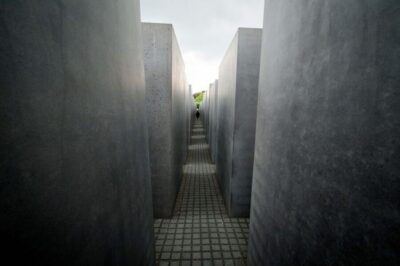
Berlin’s Best: 2 Hour Walking Tour Third Reich and the Cold War
Read our review →
Explore Berlin: See All The Iconic Sights & Some Hidden Gems
Read our review →
Third Reich Berlin: Hitler and WWII Walking Tour
Read our review →Lists this walk sits on