Review · BERLIN
Berlin: History of the Third Reich Guided Walking Tour
Berlin’s Nazi past is not tucked away in one museum. It is scattered across ordinary streets, office blocks, memorials, and empty spaces. This walking tour connects those places into a clear story, ending at the site of Hitler’s bunker, where the regime collapsed in 1945. The most striking detail is how much of the former power center now looks like everyday Berlin.
I like the visit to the Luftwaffe headquarters, a huge surviving example of Nazi-era architecture, and I like the way the tour links buildings to the Nazi rise to power rather than treating them as isolated sights. The stop at the former SS and Gestapo headquarters is also valuable, since its basement exhibition explains how repression worked.
The main drawback is that two hours is a tight schedule for such a large subject. You will spend much of the time standing and walking, and the route requires an AB transport ticket. Groups can also vary in size, although large groups have sometimes been split between guides.
Key points at a glance
- Hitler’s bunker location: End at the unmarked site where Hitler died as Soviet forces closed in on Berlin.
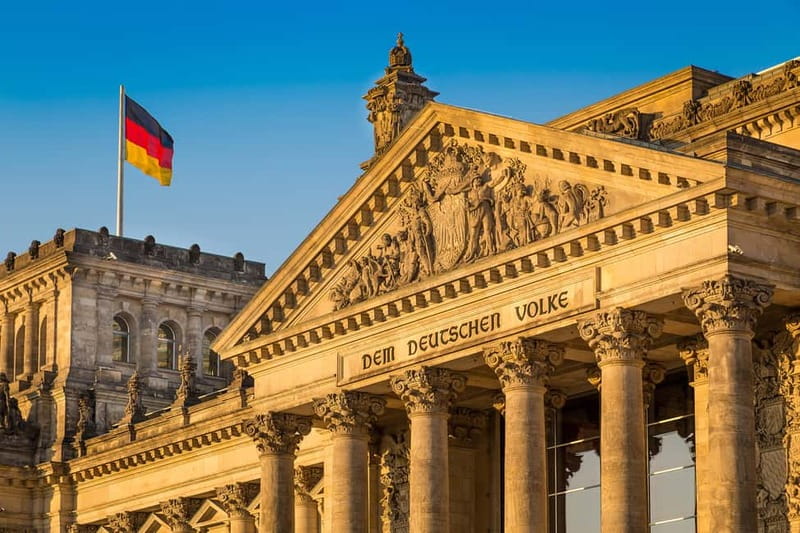
- Luftwaffe headquarters: See one of the best-preserved examples of Third Reich architecture in the city.
- SS and Gestapo remains: Visit the former center of Nazi terror and an exhibition in the surviving basement areas.
- Soviet memorial: Hear about the Battle of Berlin beside artillery pieces and tanks honoring Soviet soldiers.
- Strong guide-led storytelling: Guides including Dani, India, Theo, Elizabeth, and Martin have been praised for clear, engaging explanations.
- Practical format: Expect about two hours on foot, a break partway through, and a required AB transport ticket.
Why this tour helps you read Berlin differently
Berlin can be confusing at first. The Brandenburg Gate, Reichstag, Holocaust Memorial, Berlin Wall remains, and grand government buildings sit within a fairly compact central area, but their connections are not always obvious when you walk alone.
This tour gives you a timeline. You begin with the Nazi seizure and control of government, then move into the machinery of propaganda and terror, before reaching the war’s final destruction. That order matters. You are not simply collecting dark tourist sights. You are learning how a dictatorship took hold, how it maintained power, and how its war ended in ruins.
I find that approach more useful than a tour focused only on military facts. The strongest guides explain how ordinary institutions were redirected, how propaganda helped shape public life, and how terror operated through organizations such as the SS and Gestapo.
The subject is serious, and the tour does not treat it as entertainment. Good guides bring warmth and occasional light humor to the presentation without making light of the crimes. Several guides have been praised for making difficult material understandable, including Dani for his storytelling, India for her clear and friendly teaching, and Theo for handling questions with energy and care.
More History Walking Tours in Germany
- Berlin Historical Highlights Walking Tour
★ 4.9 · 657 reviews - Berlin Private Complete History All Day Walking Tour
★ 5.0 · 474 reviews - Berlin: Charité Hospital Walking Tour of Medical History
★ 4.9 · 276 reviews
Meeting near the Brandenburg Gate
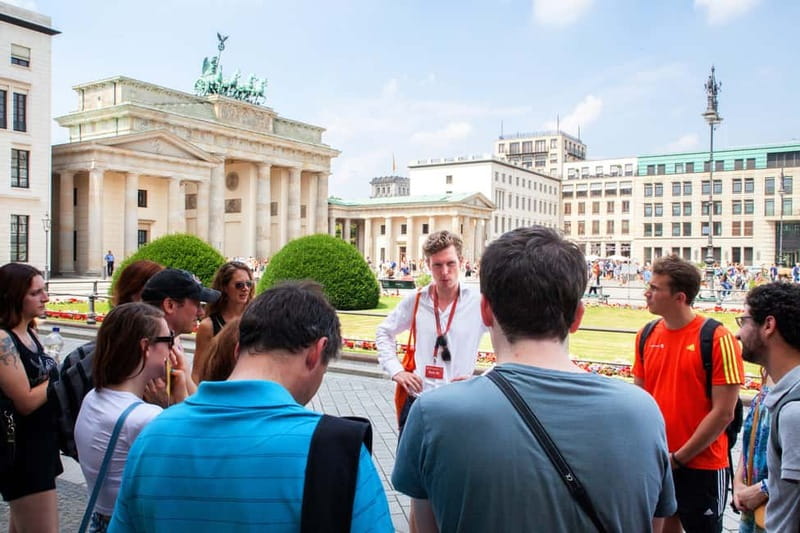
The meeting point is in front of the Starbucks Café near the Brandenburg Gate. Look for the local operator’s team wearing red shirts and carrying red umbrellas.
This is an easy place to find, but the area can be busy. Give yourself a few minutes to locate the guide, especially if you are arriving from another part of Berlin. The tour is conducted in English, and the guide leads the group through central Berlin on foot, with public transport used as part of the route.
The tour is listed as wheelchair accessible, though you should still consider the walking distance, street conditions, and public transport involved. The supplied information does not give a detailed route map, so anyone with specific mobility needs should confirm the practical details before booking.
The Luftwaffe headquarters and Nazi-era architecture
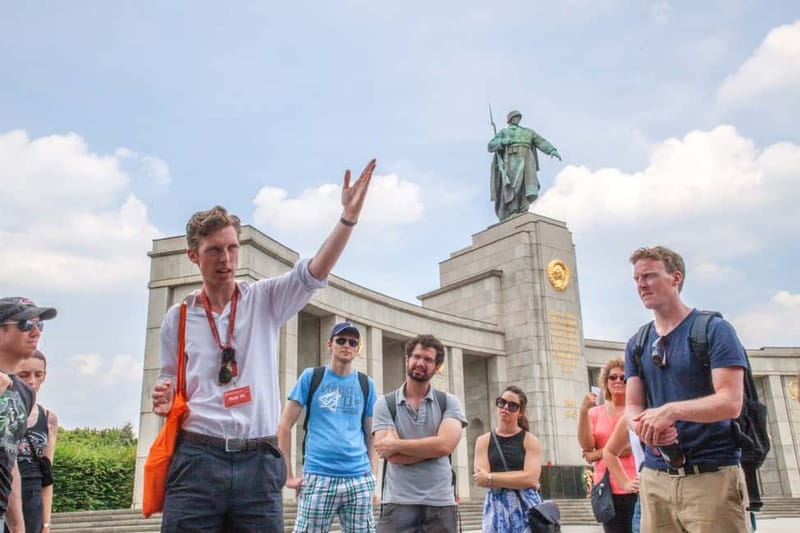
The first major stop is the former Luftwaffe Air Force headquarters, associated with Hermann Göring. The building survived Allied bombing and remains one of the clearest examples of monumental Third Reich design in Berlin.
This is a useful early stop because the building itself shows how architecture was used to project power. Its size and formal style were meant to suggest order, authority, and permanence. Your guide explains the structure within the wider system of Nazi government and war planning.
Do not expect a museum interior visit here. The value comes from seeing the surviving exterior and understanding what the building represented. It is still in use, which gives the stop an unusual quality: a building created for dictatorship now sits within a modern city, stripped of its original political purpose.
For me, this is one of the tour’s strongest details. You may pass such a building alone and notice only its scale. With a guide, you begin to see the choices in its design and why it was built to intimidate.
Goebbels’ former Propaganda Ministry
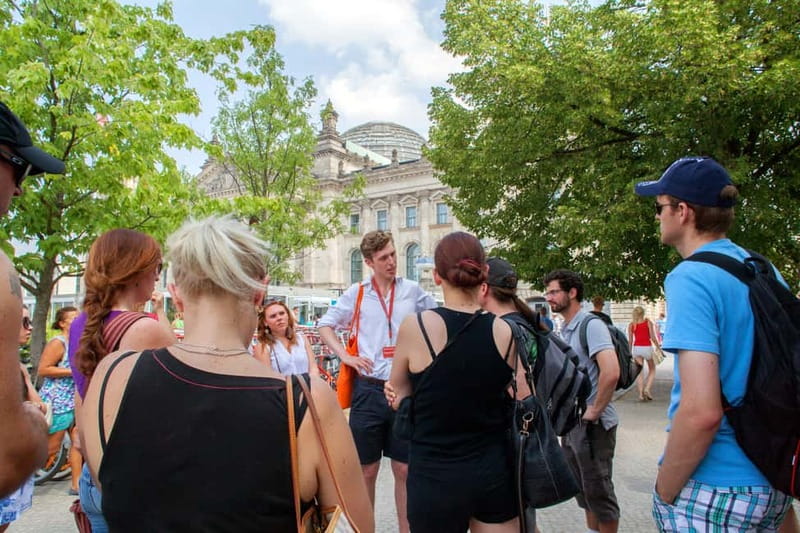
The route continues to the former Propaganda Ministry of Joseph Goebbels. Before the war, the building served as the Berlin Press Office. The Nazis quickly converted it into the central office of their propaganda machine.
This stop moves the story beyond battlefield history. It shows how the regime worked to control information after taking power. Your guide discusses the methods used to shape public opinion, reinforce loyalty, and limit opposition.
That context is especially useful if you have already visited memorials connected with the Holocaust or the Second World War. Memorials show the human cost. This stop helps explain some of the political machinery that made those crimes possible.
The building is another reminder that the Nazi system did not operate only from dramatic monuments or military barracks. It also relied on offices, press statements, government departments, and repeated messages. The ordinary appearance of the setting can make the explanation more unsettling.
More History Walking Tours in Berlin:
- Berlin: Historic Center Walking Tour with a Real Berliner
★ 5.0 · 134 reviews - History and Hauntings of Salem Guided Walking Tour
★ 5.0 · 14,564 reviews - Lisbon: History, Stories and Lifestyle Walking Tour
★ 4.8 · 10,902 reviews - Boston: Freedom Trail History Small Group Walking Tour
★ 5.0 · 6,450 reviews
The SS and Gestapo headquarters
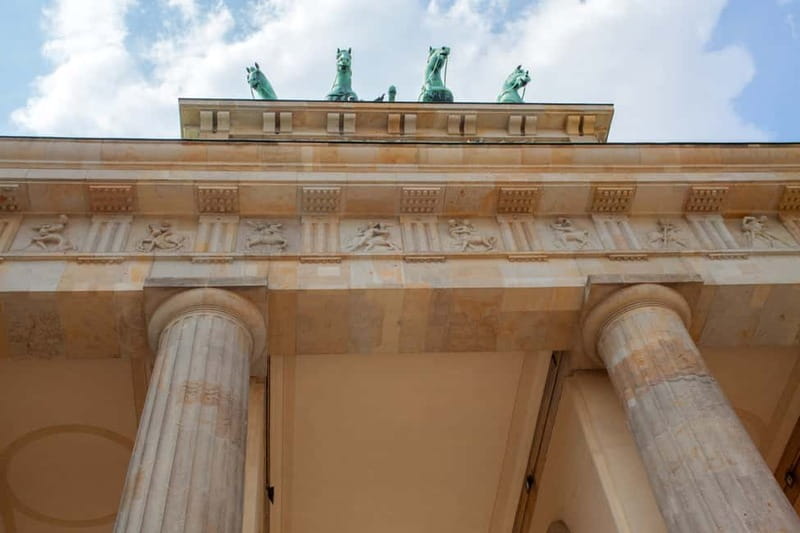
One of the heaviest parts of the route is the area once known as Prinz-Albrecht-Straße, home to the SS and Gestapo headquarters. These organizations became symbols of Nazi political terror, surveillance, imprisonment, and persecution.
The surviving basement remains have been incorporated into an exhibition documenting the Nazi rise to power. This is an important distinction: you are not touring an intact headquarters, but seeing what remains and using the exhibition to understand the site.
The stop works best when your guide keeps the focus on systems and victims, not on Nazi personalities alone. The guides praised most strongly by past participants, including Dani, Elizabeth, and India, appear to have done this by explaining events in chronological order and answering questions carefully.
The area also includes one of the few surviving stretches of the Berlin Wall. That creates a link between two different dictatorships and two different periods of Berlin’s divided past. The tour does not turn them into the same story, but the location helps you see how the city’s political scars overlap.
Expect this part to be emotionally difficult. The exhibition and the subject matter are not light sightseeing. I would avoid scheduling this tour when you are rushing to a celebratory event immediately afterward.
The Soviet memorial and the Battle of Berlin
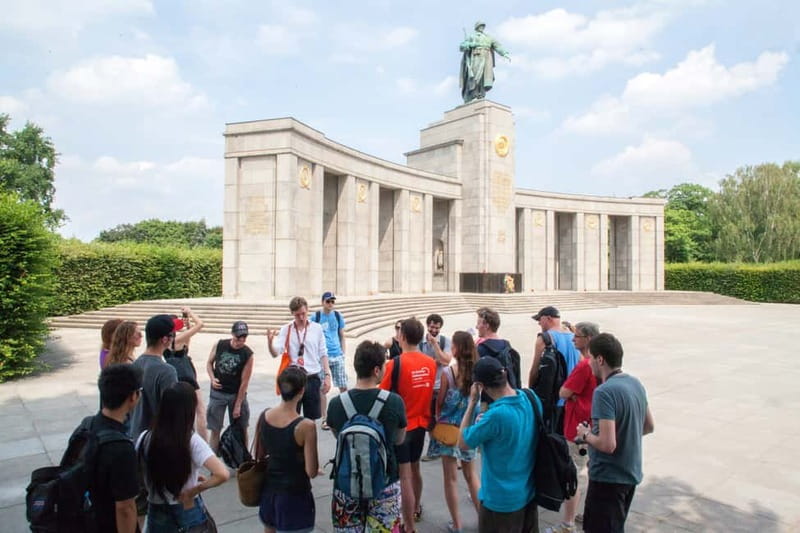
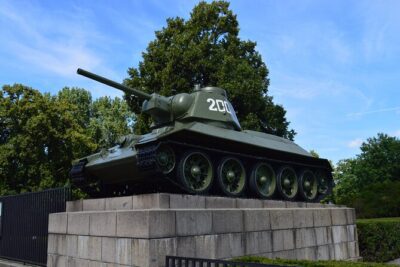
The tour then turns to the final fighting in Berlin and one of the city’s Soviet memorials. The Battle of Berlin cost more than 80,000 Soviet soldiers their lives. The memorial honors those who died while fighting to defeat Nazi Germany.
Two artillery pieces and two tanks stand guard at the site. These objects make the military story more concrete than a lecture alone. You can see the tools of the final battle while hearing about the cost of the Soviet advance.
This stop adds needed balance to a route that otherwise focuses heavily on Nazi institutions. The liberation of Berlin was not a clean or simple moment, and the human cost was enormous. Your guide can place the memorial within the final phase of the war and explain why Soviet remembrance remains an important part of Berlin’s public spaces.
The tone here is naturally more reflective. You may also notice how a memorial built by the victorious Soviet state fits into a reunified German city. The tour gives you a useful starting point, though you should not expect a full treatment of every postwar political debate in a two-hour walk.
Hitler’s bunker location and the end of the regime
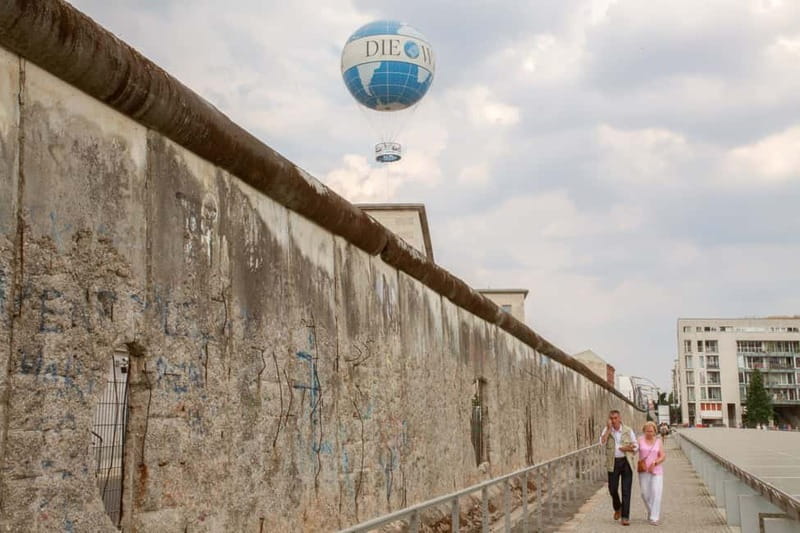
The final stop is the site of Hitler’s former bunker. The bunker itself is not open as a visitor attraction. You stand above the location where Hitler ended his life as Soviet troops closed in, marking the collapse of Nazi Germany.
The setting is deliberately plain. There is no grand entrance and no dramatic underground tour. That restraint is important. It prevents the site from becoming a shrine and keeps attention on the historical facts and the destruction caused by the regime.
Your guide explains the Battle of Berlin and the final days of the dictatorship. After seeing the imposing Luftwaffe headquarters and the offices of propaganda and terror, ending at the bunker creates a strong sense of collapse. The buildings and institutions that once claimed permanence ended in defeat and ruin.
This is not the sort of stop that needs a large monument. The absence of one makes the location more powerful. You are left with the contrast between the huge historical consequences and an ordinary patch of central Berlin.
The guides make or break the experience
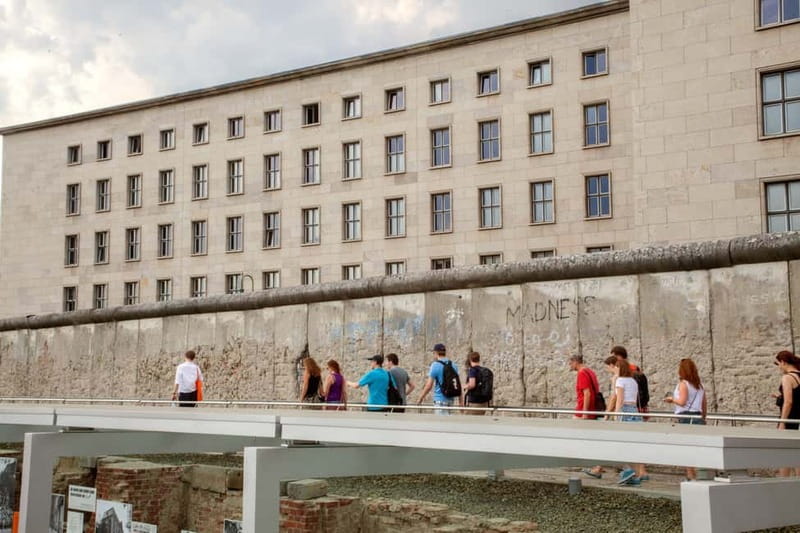
This tour depends heavily on the person leading it. The route has strong material, but a poor guide could turn it into a list of dates and names.
The best accounts describe guides who use stories, clear chronology, and plain explanations. Dani is repeatedly praised for his grasp of the subject and ability to keep answering questions. India is described as passionate, organized, and easy to follow. Theo is praised for a lively approach and strong command of the sites. Elizabeth is noted for explaining difficult information in detail without making it hard to understand.
Other guides, including Marcel, Hannah, Martin, Chris, Max, Amy, and Lucy, have also been singled out for friendly and engaging presentations. You cannot choose your guide in advance from the information provided, so expect some variation in style.
Group size matters. Some departures have been small, with around a dozen people or even fewer. Other departures have become large when a guide was absent, though the operator has sometimes divided the group. A small group makes it easier to hear, ask questions, and stay close to the guide. In a larger group, stand near the front and make sure you can see the guide’s face.
Timing, walking, and transport
The activity is advertised as lasting two hours, though parts of the description refer to a half-day format. I would plan around the stated two-hour duration while allowing extra time for the meeting point, the break, and public transport.
The route involves plenty of standing and walking. Comfortable shoes are essential, not optional. The tour includes a break partway through, but you should still bring water, especially in warm weather. In winter, wear more than you think you need. A past participant specifically advised wrapping up well in cold weather, and Berlin’s open central spaces can feel raw when the wind picks up.
You need to buy an AB transport ticket for the tour. That extra cost is easy to overlook when comparing the $30 tour price, so include it in your budget. Food and drinks are not included, and there are no entrance fees included because the experience is primarily an outdoor walking tour with the exhibition stop described as part of the route.
The route may change slightly depending on the guide and the needs of the group. That is normal for a walking tour, but it means the exact order or amount of time at each stop may differ.
Is $30 a good value?
At $30 per person, this is a fair price if you want a guided introduction to Nazi-era Berlin. You are paying for a live English-speaking guide, not for admission to a major museum or a private vehicle.
The value comes from the connections. You can visit many of these sites independently, but the buildings often offer little explanation on their own. A guide gives you the political and military context, points out locations you might otherwise miss, and helps you understand why an unmarked site matters.
The price is less attractive if you already have a strong grasp of Berlin’s Nazi history and prefer to read at your own pace. You will not receive a long museum visit or an extensive interior tour. For most first-time visitors, though, the mix of major sites and less obvious locations makes the cost sensible.
Who should book this walking tour?
I would recommend it to anyone with a serious interest in the Second World War, the Holocaust, modern German history, or the way dictatorships gain control. It is also a good first historical tour in Berlin because it gives you a framework for later visits to museums and memorials.
Families can bring children up to age 13 free of charge, though the operator may ask for identification. I would use your judgment about the subject matter. The tour is educational, but the material about persecution, terror, and mass violence is heavy.
You should also book it if you want a guide who can answer questions. The strongest experience comes when you ask about details that puzzle you, such as why certain buildings survived, how propaganda supported power, or how Berlin remembers the Soviet victory.
I would skip it if you want a relaxed stroll with little historical detail, dislike standing outdoors, or have only a very short window before another fixed appointment. The subject requires attention, and the pace can feel full even when the tour runs to schedule.
FAQ
How long does the Berlin Third Reich walking tour last?
The activity is listed as lasting two hours. The description also uses the term half-day, so allow some extra time around the tour for meeting up, the break, and public transport.
What language is the tour conducted in?
The live tour guide speaks English.
Where does the tour meet?
Meet in front of the Starbucks Café near Berlin’s Brandenburg Gate. The local operator’s team wears red shirts and carries red umbrellas.
Do I need a public transport ticket?
Yes. You need to purchase an AB transport ticket for this tour.
Are children allowed to join?
Yes. Children up to 13 years old can join for free. The local partner may request valid identification for children taking part.
Is the tour wheelchair accessible?
The activity is listed as wheelchair accessible. Since the route includes walking and public transport, confirm any specific mobility requirements before booking.
Should you book it?
Book this tour if you want Berlin’s Nazi past explained as a connected story rather than a series of disconnected buildings. The Luftwaffe headquarters, Propaganda Ministry, SS and Gestapo site, Soviet memorial, and bunker location each show a different part of the period.
The best reason to go is the guide. A strong leader such as Dani, India, Theo, or Elizabeth can turn a difficult subject into a clear and thoughtful lesson. Bring comfortable shoes, allow for an AB ticket, dress for the weather, and expect serious material. If that sounds like the right way to spend two hours in Berlin, this is a worthwhile choice.
New walking tours around Berlin
- Berlin: 2.5-Hour Walking Tour through Kreuzberg 61★ 4.9 · 525 reviews
- From Berlin: Potsdam & Sanssouci half day Walking Tour★ 4.9 · 85 reviews
- East Berlin and the Wall: Walking Tour★ 4.9 · 407 reviews
- Cold War, Berlin Wall, Spies and the East Side Gallery★ 4.8 · 254 reviews
- Berlin: Walking Tour of the Top 10 Sightseeing Attractions★ 4.7 · 150 reviews
- Berlin: The Time of National Socialism Walking Tour★ 5.0 · 220 reviews
- Berlin: walking tour about Charité★ 4.4 · 537 reviews
- Berlin: Kreuzberg Guided Walking Evening Tour★ 4.7 · 555 reviews
Berlin Walking Tours, side by side.
Berlin City walk Government District and Places of Democracy
Read our review →
Berlin: Third Reich & Cold War Guided Walking Tour
Read our review →
Berlin’s Best: 2 Hour Walking Tour Third Reich and the Cold War
Read our review →
Explore Berlin: See All The Iconic Sights & Some Hidden Gems
Read our review →