
Review · BERLIN
Discover Berlin Half-Day Walking Tour
Berlin’s story is too large for a single museum, but this three-and-a-half-hour walking tour gives you a strong first map of it. You move from Prussian boulevards and royal buildings to Nazi memorials, Cold War border sites, and the city’s present-day rebirth.
I like the route’s sheer range, from Museum Island and Unter den Linden to the Berlin Wall and Checkpoint Charlie. I also like the human touch: guides such as Tobi, Georgia, Rebecca, and Ruaridh are praised for clear explanations, humor, personal stories, and careful treatment of Germany’s darkest years. The catch is simple: this is a serious amount of walking, and much of it happens outdoors.
Key points to know before you book
- A full tour of central Berlin: See Museum Island, Brandenburg Gate, the Reichstag, the Holocaust Memorial, Checkpoint Charlie, and the Topography of Terror in one outing.
- History told in sequence: The route moves from Prussian Berlin through Nazism, division, and reunification instead of treating each monument as an isolated sight.
- Strong guide-led storytelling: Guides including Tobi, Georgia, Rebecca, Emma, Anika, and Ruaridh are praised for humor, clear English, personal insight, and thoughtful explanations.
- A useful first-day choice: The route helps you decide which places deserve a longer visit later in your stay.
- No attraction admissions included: You see the sites from outside, and the professional guide is included. Food and drinks are extra.
- Plan for outdoor conditions: Cold and snowy days have not stopped people from enjoying it, but proper shoes and warm clothing will make a real difference.
Why this Berlin walk works so well
The best feature here is the way the tour links Berlin’s past instead of presenting a pile of disconnected landmarks. You begin among the old royal and cultural districts, pass through the political heart of the German capital, and then follow the physical scars left by dictatorship and division.
That order matters. Brandenburg Gate means one thing when you first see it as a grand 18th-century entrance to the city. It means something else after you have heard about Nazi ceremonies, the Berlin Wall, and the crowds who gathered there when the Wall fell.
At $24.19 per person, the price is modest for a professional guide and several hours of walking. You are not paying for museum entry, food, or transport, so the value depends on how much you want context. If you only want photographs of famous buildings, you can walk much of this route alone. If you want someone to explain what happened at each corner, the cost is easy to justify.
The tour is offered in English, with a maximum stated group size of 25. Some tour accounts describe larger groups, so the actual feel may vary. A group of 25 can still work well, but you should stay close to the guide at busy crossings and crowded squares.
More half-day walks around Berlin:
- Rio De Janeiro: Half-Day Rocinha Favela Walking Tour
★ 4.7 · 2,272 reviews - Istanbul: Fener Balat Half-day Guided Walking Tour
★ 4.9 · 1,711 reviews - La Paz Half-Day Walking Tour
★ 4.8 · 591 reviews
Starting at Hackescher Markt and Museum Island
Meet at Neue Promenade 3, near Hackescher Markt. The first stops include Hackescher Markt, James Simon Park, and Museum Island, where the guide sets the scene for Berlin’s long development.
This opening section gives you a useful introduction to the city’s cultural center. Museum Island includes the Neues Museum, Pergamonmuseum, Altes Museum, and Berliner Dom, along with the surrounding gardens and grand public buildings. You do not receive admission to the museums, but the exterior views and historical explanation help you decide which one deserves your time later.
The route also points out the Berlin State Library, once associated with Albert Einstein, and the Neue Synagoge Berlin. These stops broaden the story beyond kings and government. You get reminders of Berlin’s Jewish life, scholarship, art, and public culture.
The Berliner Fernsehturm appears from this central district as a very different kind of landmark. Its television tower speaks to East Berlin and the postwar division of the city, while the nearby Stadtschloss recalls the royal past. Seeing those two eras in the same section of town is one of Berlin’s useful visual lessons.
You also pass the Rotes Rathaus, Nikolaiviertel, Lustgarten, Schlossbrücke, and the Deutsches Historisches Museum. Some of these are brief orientation stops rather than long visits. That is helpful if you want a broad city introduction, but it also means you should not expect detailed time inside every museum or building.
Walking Unter den Linden into Berlin’s political center
From Museum Island, the route follows Unter den Linden. This broad boulevard once linked the royal palace with the western gateway at Brandenburg Gate, and it remains one of the clearest places to read Berlin’s changing ambitions.
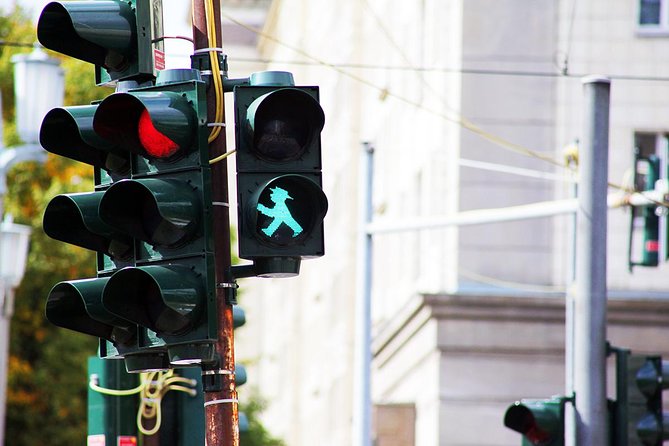
The stops along this stretch include Neue Wache, Bebelplatz, the Staatsoper, St. Hedwig’s Cathedral, Humboldt University, and the Ampelmann Shop. The guide explains how royal power, education, religion, and state ceremony gathered along the same avenue.
Neue Wache is especially important. Its stark memorial interior and central sculpture give the guide a natural place to explain how Germany has remembered war and political violence. Bebelplatz brings a darker lesson. The square was the site of the Nazi book burning in 1933, and the Book Burning Memorial keeps that event tied to the ground beneath your feet.
The nearby university and opera house help show how the Nazi attack on free thought did not happen in some distant corner. It took place in the heart of a city built around learning, music, and public debate. That contrast is one reason a guide adds real value here.
The walk down Unter den Linden is also one of the more pleasant stretches physically, with major buildings spaced along a broad avenue. Still, the short stops add up. Wear shoes that can handle pavement for several hours, and do not count on having time to explore each site at length.
Brandenburg Gate, Pariser Platz, and the Reichstag
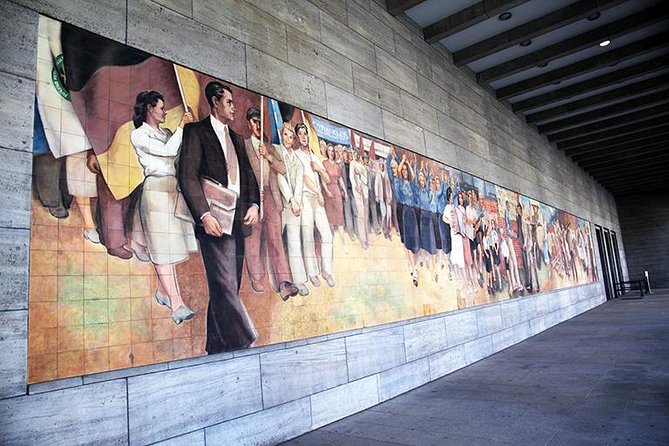
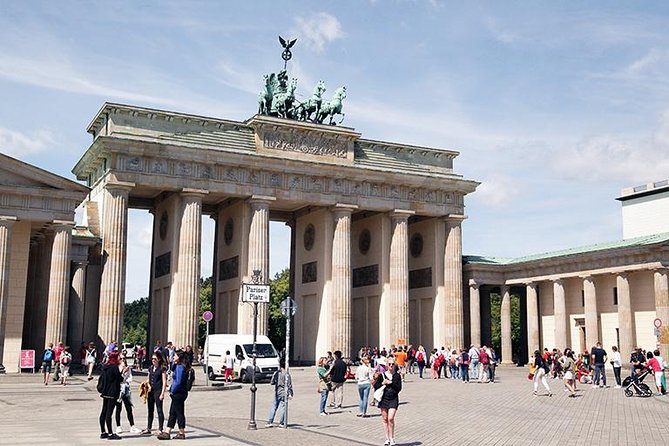
Pariser Platz and Brandenburg Gate form the visual center of the tour. The gate once marked the edge of Berlin, then became a symbol used by emperors, Nazis, East Germany, and the reunified republic.
Your guide explains that changing role while pointing out the buildings around the square. This is a good place to pause for photographs, though it can be crowded and exposed to wind.
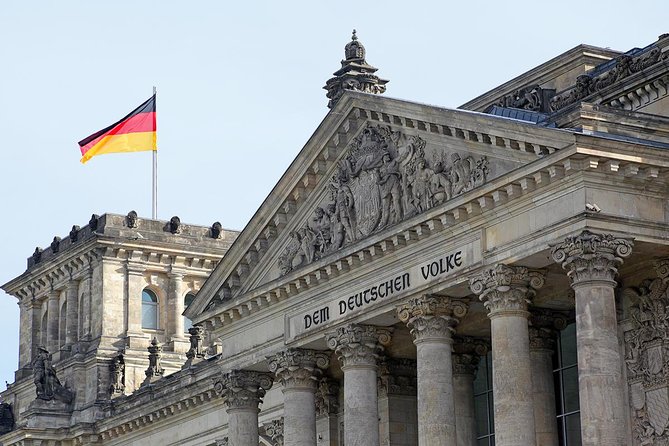
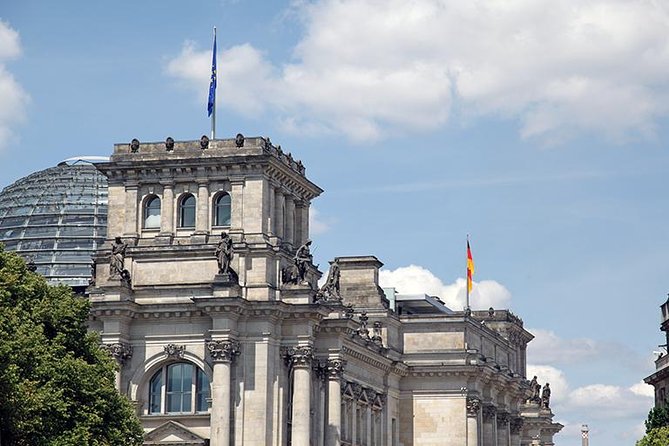
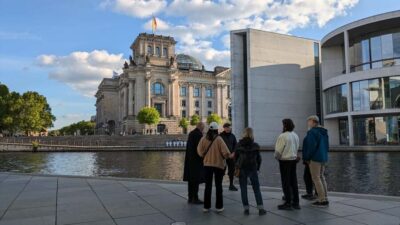
The nearby Reichstag is home to Germany’s parliament. The tour does not include entry, but you get time to see the building and understand its place in modern German government. The Victory Column is also included as a sight along the route, though the itinerary gives it only a short explanation.
This section works best when you listen for the political shifts. Berlin’s grand public spaces were built to project authority, but the same spaces later became places for protest, division, and democratic renewal. A strong guide makes those changes easy to follow without turning the walk into a lecture.
More walking tours around Berlin:
- Berlin City walk Government District and Places of Democracy
★ 4.7 · 8,467 reviews - Berlin: Third Reich & Cold War Guided Walking Tour
★ 4.9 · 8,378 reviews - Berlin: Discover Berlin Walking Tour
★ 4.9 · 5,998 reviews - Berlin’s Best: 2 Hour Walking Tour Third Reich and the Cold War
★ 5.0 · 5,486 reviews
The Holocaust Memorial and the site of Hitler’s bunker
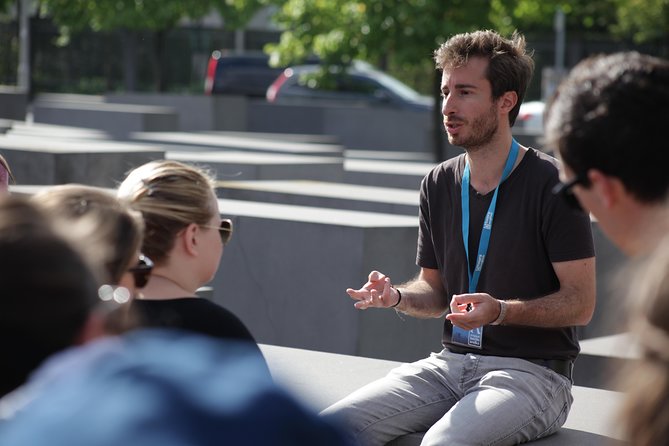
The Memorial to the Murdered Jews of Europe is one of the tour’s most moving stops. The field of concrete blocks is open to walk through, but the experience is not presented as a simple photo opportunity. Your guide explains the memorial’s purpose and the murder of Europe’s Jews under the Nazi regime.
Nearby, you learn about the former Führerbunker. There is no grand ruin to visit. The site is marked in a much more restrained way, which gives the guide room to explain what happened without turning it into a spectacle.
These stops require a respectful attitude. Berlin does not hide its worst history, but it also does not make that history easy or comfortable. I value the fact that the tour places the memorial and bunker within the wider city rather than treating them as separate attractions.
The itinerary allows about ten minutes at the Holocaust Memorial and a shorter explanation at the bunker. That is enough to establish the setting, but not enough for a full museum visit or extended reflection. If this subject is a major reason for your trip, plan to return on your own.
Following the Cold War line to Checkpoint Charlie
The walk then turns toward the former border between East and West Berlin. You pass the site connected with the 1953 East German uprising, the former Aviation Ministry, and the Memorial of the Berlin Wall before reaching Checkpoint Charlie.
This is where the route shifts from Nazi Germany to the divided city. The guide explains the death strip, the border system, and the risks faced by people trying to cross from East Berlin to the West. The stories become more personal here, especially when a guide has lived in East Berlin or can add first-hand family and city perspectives.
Several guides have been praised for bringing everyday life in divided Berlin into the tour. Gregor, for example, is noted for personal stories about East Berlin, while another guide offered an East Berliner’s point of view. Ruaridh is praised for discussing difficult German history with care and respect. Those details matter because the Cold War was not only about concrete, guards, and geopolitics. It shaped where people worked, shopped, studied, and saw family.
Checkpoint Charlie itself can feel commercial and busy. The guardhouse is a famous symbol, but the surrounding area has changed greatly since the Wall fell. The guide helps separate the real historical role of the crossing from the modern tourist setting.
The Berlin Wall section gives you a more grounded sense of the border. You hear about the Wall’s fall in 1989 and the way Berlin moved from separation toward reunification. The exact amount of time at the Wall may be limited, so keep your expectations focused on explanation and orientation rather than a long, quiet visit.
Topography of Terror and the final stretch

The Topography of Terror sits at the former Gestapo and SS headquarters. The museum’s location is part of its message: Berlin chose to expose the machinery of Nazi persecution rather than erase it.
The tour takes you to the excavated cellars, where political prisoners were tortured and killed. The stop is brief, but it gives a powerful physical sense of what the written history means. You can return later if you want to study the exhibitions in detail.
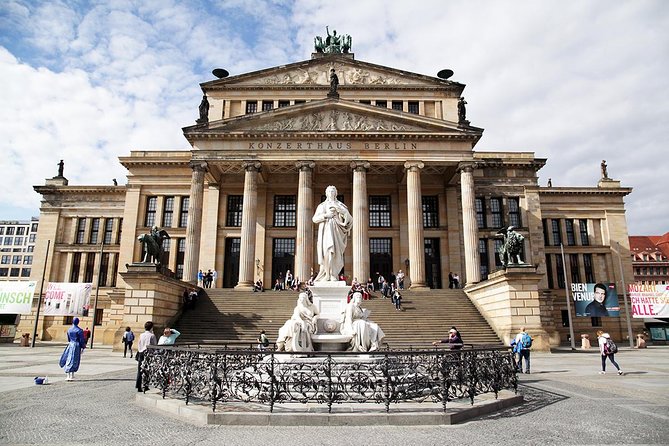
The final part includes the Französischer Dom, with the tour ending in a different location from the starting point. Since the exact end point is not specified in the booking details, do not plan a tight connection immediately afterward.
A guide may offer a short break at a bakery or coffee shop, based on how the day is run. That is not listed as an included feature, and you should expect to pay for anything you order. It can be welcome on a cold day, especially since the walk covers a large part of central Berlin.
The guides make the difference
The strongest praise for this experience goes to the guides. Amanda is described as funny and passionate. Emma is praised for making complex history clear without making the walk feel rushed. Georgia receives repeated approval for her warmth and command of the subject.
Tobi is praised for attending to individual needs and using more than one language when useful. Anika adds both historical background and observations about everyday life. Glenn is noted for clear instructions and for helping people decide which sights to revisit later.
That range tells you what to look for in a good guide: clear speaking, a sense of proportion, and the ability to connect dates with actual places. The best accounts also mention humor, but the humor is used to keep a long walk lively, not to make light of painful events.
You cannot select a particular guide in advance from the information provided. The names above give you a sense of the style you may encounter, not a promise about who will lead your departure.
Who should book this walk?
I would choose this tour early in a Berlin visit. It gives you a city map, introduces the major districts, and helps you decide where to spend more time. Several people have found it useful as a first-day orientation, and that makes sense given the number of landmarks covered.
It suits first-time visitors, families with older children, history fans, and anyone who wants the main story before tackling museums alone. Teenagers can follow the route well when the guide keeps the pace lively, and the mix of architecture, war history, and everyday Berlin gives the day variety.
It is less suitable if you have limited mobility, dislike long periods outdoors, or want extended time inside museums. Most people can participate, and service animals are allowed, but the practical challenge remains the walking distance and the weather.
Confirmation arrives at booking, and the tour is near public transport. Cancellation is free up to 24 hours before the start time. Inside that window, no refund is provided, so check your plans before booking.
Should you book the Discover Berlin Half-Day Walking Tour?
Book it if you want a strong first look at Berlin’s central history for a reasonable price. The route covers an unusual amount of ground, and the guide’s explanations turn famous buildings into connected chapters.
Do not book it expecting museum entry, a relaxed stroll, or a deep visit at every stop. Think of it as a well-paced city introduction that leaves you with a better sense of what to revisit. Bring comfortable shoes, weather protection, and enough curiosity to listen carefully at the darker sites. For many visitors, that is exactly the right start to Berlin.
FAQ
How long does the Discover Berlin Half-Day Walking Tour last?
The tour lasts approximately 3 hours and 30 minutes, though some tour accounts describe it as close to four hours.
Where does the tour start?
The meeting point is Neue Promenade 3, 10178 Berlin, Germany.
Where does the tour end?
The activity ends in a different location from the starting point. The exact final meeting point is not specified in the provided details.
What language is the tour offered in?
The tour is offered in English.
What is included in the price?
A professional guide is included.
Are food and drinks included?
No. Food and drinks are not included unless specifically stated. A guide may arrange a break at a bakery or coffee shop, but any purchase is extra.
What landmarks does the tour visit?
The route includes Museum Island, Unter den Linden, Bebelplatz, Brandenburg Gate, the Reichstag, the Holocaust Memorial, the former Führerbunker site, the Berlin Wall, Checkpoint Charlie, and the Topography of Terror, along with many other central Berlin sights.
Is museum admission included?
No. The itinerary provides guided explanations at the museums and other landmarks, but admission tickets are not included.
How large is the group?
The stated maximum is 25 participants.
Can I cancel for a full refund?
Yes. You can cancel at least 24 hours before the start time for a full refund. Cancellations or changes made less than 24 hours before the start time are not refunded or accepted.
New walking tours around Berlin
- Berlin: 2.5-Hour Walking Tour through Kreuzberg 61★ 4.9 · 525 reviews
- From Berlin: Potsdam & Sanssouci half day Walking Tour★ 4.9 · 85 reviews
- East Berlin and the Wall: Walking Tour★ 4.9 · 407 reviews
- Cold War, Berlin Wall, Spies and the East Side Gallery★ 4.8 · 254 reviews
- Berlin: Walking Tour of the Top 10 Sightseeing Attractions★ 4.7 · 150 reviews
- Berlin: The Time of National Socialism Walking Tour★ 5.0 · 220 reviews
- Berlin: walking tour about Charité★ 4.4 · 537 reviews
- Berlin: Kreuzberg Guided Walking Evening Tour★ 4.7 · 555 reviews
Berlin Walking Tours, side by side.
Berlin City walk Government District and Places of Democracy
Read our review →
Berlin: Third Reich & Cold War Guided Walking Tour
Read our review →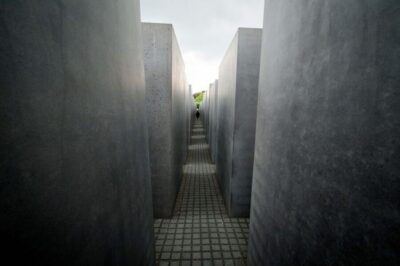
Berlin’s Best: 2 Hour Walking Tour Third Reich and the Cold War
Read our review →

Explore Berlin: See All The Iconic Sights & Some Hidden Gems
Read our review →
Third Reich Berlin: Hitler and WWII Walking Tour
Read our review →
Berlin Center Food Tour with 8+ Authentic Local Tastings
Read our review →Lists this walk sits on